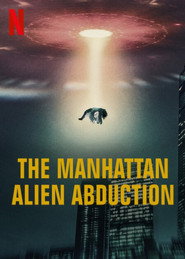
Limited Series
3 episodes Oct 30, 2024 6.1
- 1 Part 1
- 2 Part 2
- 3 Part 3

A woman claims to have been abducted from her bedroom in Manhattan. This docuseries explores whether it was an elaborate hoax — or proof of alien life.
Latest episode: S1 E3 Part 3 (Oct 30, 2024)
Official
I’ve watched The Manhattan Alien Abduction three times now, and each viewing leaves me with the same unsettling question: What do we do with a story that refuses to resolve itself? The three-part Netflix docuseries doesn’t just revisit Linda Napolitano’s 1989 claim that she was abducted by aliens from her 12th-floor Lower Manhattan apartment—it lingers inside the ambiguity, letting the unresolved tension become the point. That choice, intentional or not, turns what could have been a sensational UFO procedural into something stranger: a documentary about the weight of belief itself.
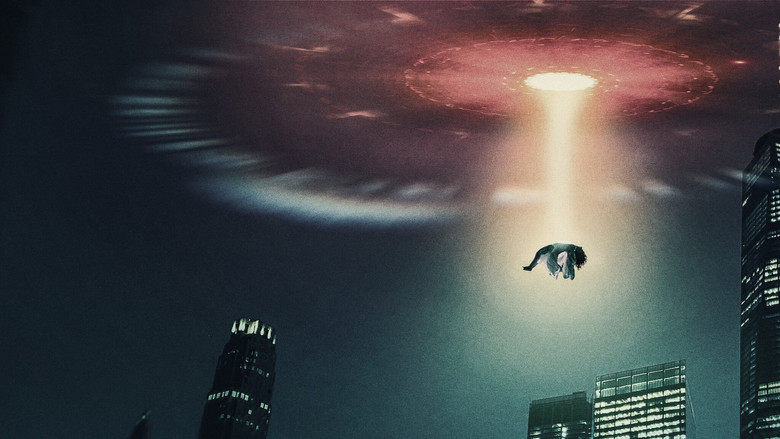
The series opens with a stylistic flourish that immediately signals its retro-futurist ambitions. Director Daniel Vernon and cinematographer Tim Cragg shoot the reenactments with ARRI Mini LF cameras and Cooke FF anamorphic lenses, giving the footage a cinematic, almost archival quality. The effect is deliberate: the grainy textures and warm, diffused lighting evoke 1980s sci-fi, the era when Napolitano’s story first took hold.
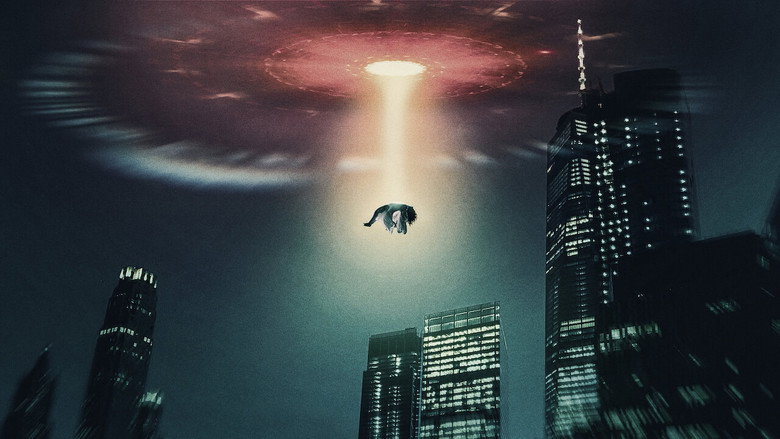
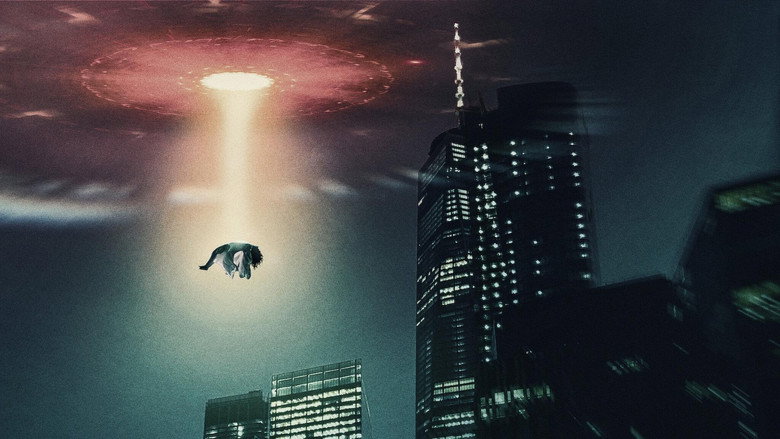
It’s as if the filmmakers are trying to recreate not just the events, but the feeling of the era—the way UFO lore was consumed, debated, and mythologized before the internet turned every conspiracy into a meme. The VFX, too, lean into this aesthetic, using 80s-style "cloud tank" effects to visualize the abduction. The result is eerie, not because it looks realistic, but because it looks familiar—like a half-remembered dream of a movie you might have seen as a kid.
That dreamlike quality is central to the series’ power. The Manhattan Alien Abduction isn’t interested in proving or debunking Napolitano’s story. Instead, it treats the case as a kind of cultural Rorschach test, a story that reveals more about the people who believe (or disbelieve) it than about the alleged events themselves. The most compelling thread isn’t the abduction—it’s the bitter, decades-long feud between Napolitano and Carol Rainey, the late ex-wife of ufologist Budd Hopkins, who became one of the case’s most vocal skeptics.
Their conflict, which the series frames as the emotional core of the story, is less about aliens and more about trust, betrayal, and the way personal grievances can curdle into public spectacle.
Rainey’s presence in the series is fascinating, not least because she’s positioned as both a witness and an antagonist. She describes Hopkins’ investigation as flawed, even manipulative, and her interviews are laced with a weariness that feels earned. (At one point, she sighs and says, "I’ve been fighting this battle for 30 years, and I’m tired.") The series doesn’t shy away from the uglier aspects of their conflict—Rainey’s legal battles with Napolitano and Hopkins’ estate, the accusations of alcoholism and personal vendettas—but it also doesn’t fully take sides.
Instead, it lets the contradictions hang in the air, like the unresolved tension of a bad breakup. Decider’s take on the series captures this dynamic perfectly: "The docuseries is essentially two now-senior citizens litigating a decades-old beef... they’re both so entrenched in their viewpoints that they will go to their graves thinking they’re right".
That refusal to land on a definitive answer is either the series’ greatest strength or its most frustrating flaw, depending on your tolerance for ambiguity. For some viewers, the lack of resolution will feel like a cop-out. Leisurebyte, for instance, dismissed the series as "sensationalised insanity that feels like you're in a fever dream," awarding it a mere 2 out of 5 stars.
And it’s true—the series doesn’t deliver the kind of closure that true-crime documentaries often promise. There’s no smoking gun, no "gotcha" moment, no definitive proof that Napolitano was either telling the truth or lying. Instead, the filmmakers seem content to let the mystery linger, like a half-remembered nightmare.
But what if the mystery is the point? The series’ most haunting moments aren’t the reenactments of the abduction—they’re the quiet, almost mundane details of Napolitano’s life in the aftermath. We see her sitting in her apartment, surrounded by the same furniture, the same view of the Manhattan skyline, decades later.
The camera lingers on her face as she describes the lingering trauma, the way the experience has shaped her sense of reality. It’s a reminder that, for her, this isn’t just a story—it’s a lived experience, one that has defined her life in ways that can’t be easily dismissed or verified.
The series also benefits from the cultural moment in which it arrives. UFOs are having a renaissance, thanks in part to the Pentagon’s recent disclosures and the mainstreaming of once-fringe theories. In that context, The Manhattan Alien Abduction feels less like a relic of the past and more like a conversation starter—a way to grapple with the questions that UFO lore has always raised.
What does it mean to believe in something that can’t be proven? How do we reconcile personal experience with objective truth? And what happens when the people who claim to have the answers are just as flawed and human as the rest of us?
That last question is where the series stumbles, if only slightly. The legal battle between Napolitano, Hopkins’ estate, and Netflix looms over the production like a dark cloud, and the series doesn’t do enough to address the ethical implications of its own storytelling. The lawsuit, which alleges that the filmmakers "egregiously deceived" Napolitano and Hopkins’ estate about the scope of the documentary, raises uncomfortable questions about consent and exploitation.
Did the filmmakers have a responsibility to present a more balanced view, or is the very nature of documentary filmmaking inherently exploitative? The series doesn’t engage with these questions in any meaningful way, which feels like a missed opportunity.
Still, for all its flaws, The Manhattan Alien Abduction is a fascinating artifact—a time capsule of a moment when belief and skepticism collided in the heart of New York City. It’s not a series that will convert skeptics, nor is it one that will satisfy true believers looking for definitive proof. Instead, it’s a meditation on the stories we tell ourselves to make sense of the world, and the people who get caught in the crossfire.
In that sense, it’s less about aliens and more about us—the way we cling to narratives, the way we weaponize doubt, and the way we never quite let go of the things that haunt us.
I keep coming back to that shot of Napolitano in her apartment, the camera lingering on the ordinary details of her life. There’s something deeply human about it, a reminder that no matter how extraordinary the claims, the people at the center of them are just that—people. Flawed, complicated, and still trying to make sense of it all.
Maybe that’s the real abduction: the way a story can take hold of you and never let go.
"A niche documentary whose unconventional take on a famous UFO case polarizes viewers."
The series revisits the 1989 Manhattan alien abduction case with archival footage and new interviews. Some value its commitment to fringe theories; others find it uneven and sluggish. Linda Napolitano and Budd Hopkins add credibility, but it struggles to engage a broad audience.
Netflix’s latest true-crime-meets-sci-fi docuseries, The Manhattan Alien Abduction (2024), revisits one of the most hotly debated UFO encounters in modern history. latestnetflix.com's read is that the three-part miniseries, directed by Daniel Vernon and Vivienne Perry, centers on Linda Napolitano’s 1989 claim that she was repeatedly abducted by aliens in the heart of New York City—a case that divided skeptics, believers, and even the witnesses themselves.
Linda Napolitano (previously known by the pseudonym Linda Cortile) alleged that in November 1989, she was levitated from her Manhattan apartment and taken aboard a spacecraft. Her story gained traction after UFO investigator Budd Hopkins, who appears in the series, claimed that two high-profile witnesses—later identified as United Nations diplomats—saw the abduction from a nearby car. The case became a lightning rod in UFO circles, with some hailing it as irrefutable proof of extraterrestrial contact and others dismissing it as a hoax or psychological episode.
The Netflix series promises to unpack the incident through Napolitano’s own testimony, alongside interviews with Hopkins, journalist Carol Rainey, and X-Files child star Peter Robbins (who later became a UFO researcher). But with no physical evidence beyond witness accounts, the docuseries walks a tightrope between compelling storytelling and unverified claims.
The Manhattan Alien Abduction arrives at a time when UFO documentaries are having a cultural moment, but this case is uniquely polarizing. Forbes’ Monica Mercuri, a self-described skeptic, called Napolitano’s story "fake" in a recent piece, arguing that the lack of corroborating evidence makes it hard to take seriously. Meanwhile, outlets like TIME and Collider frame the series as a deep dive into a case that "sparked a lot of debate" within the UFO community.
The series’ creators, Vernon and Perry, appear to lean into the ambiguity, letting viewers decide for themselves. But with no new forensic evidence or breakthroughs, the docuseries risks retreading old ground—albeit with Netflix’s glossy production values.
One notable absence in the available evidence is a strong counter-narrative from debunkers. While Mercuri’s Forbes piece offers a critical take, the series itself seems to focus more on the believers’ perspective. Without a balanced exploration of alternative explanations—sleep paralysis, false memories, or outright fabrication—viewers may be left with more questions than answers.
Rumors (unconfirmed) suggest the series includes never-before-seen footage of Napolitano’s hypnosis sessions, but details remain scarce. If true, it could add a dramatic layer to the story—but without verification, it’s just speculation.
Decades after the alleged abduction, The Manhattan Alien Abduction keeps the conversation alive. Whether you’re a true believer or a hardened skeptic, the series taps into a larger cultural fascination with the unknown. And in an era where UFOs are back in the mainstream—thanks to congressional hearings and Pentagon disclosures—Napolitano’s story feels eerily relevant.
But with no smoking gun, the docuseries may leave audiences more divided than ever. As TIME puts it, the series "investigates" rather than proves, leaving the final verdict up to the viewer.
Entertainment rumors and trivia aggregated from public reporting. Treat speculation as unverified unless a cited source confirms it.
More titles in the same genres and with the same cast.