Limited Series
7 episodes Nov 12, 2019
- 1 Arrival
- 2 One Of Us
- 3 Dreams
- 4 Bitter Rivals
- 5 Nightmares
- 6 An Unlikely Home
- 7 One Last Push

The Dorados, Culiacan's local team, are at the bottom of the rankings when Maradona arrives, looking for a fresh start. The experts predict disaster.
Latest episode: S1 E7 One Last Push (Nov 13, 2019)
Official

Diego Maradona
Self

Jarrod Pistilli
Announcer

Dennis Kleinman
Luis Islas / Tito Escobar
Vanessa Nicole Hill
Maria Lopez / Various
I’ve seen enough sports documentaries to know the formula: underdog team, charismatic coach, a few montages of sweat and slow-motion goals, and a triumphant climax that leaves you pumping your fist. Maradona in Mexico doesn’t break that mold so much as it sets it on fire and dances in the ashes. Because the underdog here isn’t the team—it’s the man himself, Diego Maradona, a legend so heavy with myth and misfortune that watching him try to outrun his own legacy in the dusty heat of Culiacán feels less like a comeback story and more like a slow, hypnotic unraveling.
The series follows Maradona during his brief but surreal tenure as head coach of Dorados de Sinaloa, a second-division Mexican football club. The premise alone is irresistible: the most infamous and beloved footballer of his generation, fresh off a stint in rehab, taking over a team in a city synonymous with the Sinaloa Cartel. The optics, as critics have noted, are terrible—like "putting a diabetic in a candy shop," as one reviewer put it.
But that’s the thing about Maradona: he’s always been a walking contradiction, a man who could dribble past five defenders with the grace of a ballet dancer and then, in the same breath, punch a journalist or disappear into a haze of cocaine and chaos. The series doesn’t shy away from any of it. Instead, it leans in, framing his time in Mexico as both a redemption arc and a last gasp of defiance.
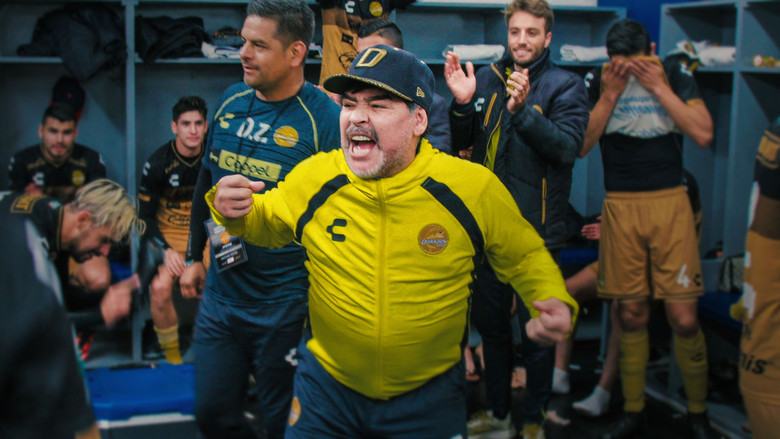
What makes Maradona in Mexico more than just a footnote in the man’s already overstuffed biography is its refusal to mythologize. Director Angus Macqueen, whose previous work includes Drug Lord: The Legend of Shorty, brings a documentarian’s eye for the mundane details that humanize his subject. We see Maradona not as the godlike figure of 1986, but as a 58-year-old man with a paunch, a limp, and a phone that never stops ringing.
He’s equal parts coach, father figure, and circus act, leading training sessions with the intensity of a general while also breaking into impromptu dance moves in the locker room. The players, many of them young and starstruck, oscillate between treating him like a deity and a slightly unhinged uncle. One moment, he’s delivering a fiery halftime speech; the next, he’s joking about his infamous "Hand of God" goal or mimicking the walk of a referee he disagrees with.
It’s impossible not to be charmed.
But the series is also unafraid to show the cracks. Maradona’s health is a constant concern—his knees, his weight, the way he winces when he stands up after a match. There are hints of his past struggles with addiction, though the series is smart enough not to dwell on them.
Instead, it lets the tension simmer in the background, a quiet reminder that the man who once carried Argentina to World Cup glory is now fighting just to keep his own body from betraying him. The Guardian’s Ed Vulliamy put it well: the episodes are "about Maradona but also a marvellous supporting cast of players, radio commentators and club officials". That supporting cast is crucial.
They’re the ones who ground the story, who remind us that for all his fame, Maradona is just a man trying to do a job in a place where football is both religion and escape.
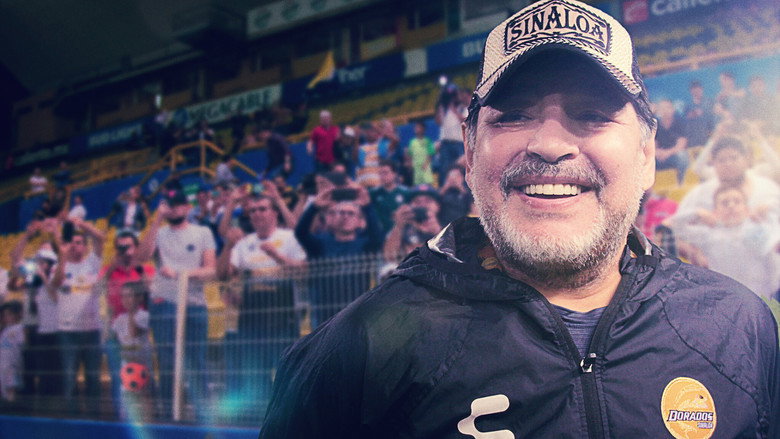
The craft of the series is deceptively simple. There’s no flashy editing or gimmicky narration—just raw, intimate footage that feels like it was captured by someone who was always in the right place at the right time. Post-production handled by Splice uses HDR grading to make the Mexican landscape pop, turning the dusty streets of Culiacán and the floodlit pitches into characters in their own right.
The sound design is equally effective, blending the roar of the crowd with the quiet, offhand moments that reveal the most: Maradona humming to himself in the locker room, or the way his voice softens when he talks to a player who’s just made a mistake.
One scene in particular has stayed with me. It’s late in the season, and Dorados is playing for a spot in the promotion final. The camera lingers on Maradona’s face as the match unfolds, his expression shifting from hope to frustration to something like resignation.
When the final whistle blows and the team loses, he doesn’t rage or storm off. Instead, he walks over to the opposing coach, shakes his hand, and then turns to his own players with a tired smile. "We’ll get them next time," he says, but the exhaustion in his voice is unmistakable.
It’s a small moment, but it encapsulates everything the series is trying to say: that even legends have limits, and that the beautiful game, for all its glory, is just that—a game.
The English dubbing is, as many critics have pointed out, "awful". It’s jarring in the worst way, like watching a foreign film where the actors’ mouths move out of sync with the words. I switched to the original Spanish with subtitles after the first episode, and the difference was night and day.
Maradona’s voice, with its gravelly warmth and occasional slur, is part of the story. To lose that is to lose a piece of the man himself.
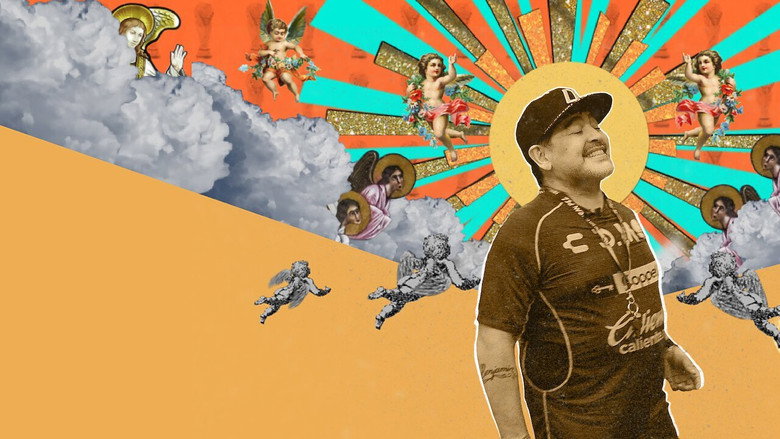
There’s a moment in the final episode where Maradona, reflecting on his time in Culiacán, says, "I came here to escape, but I found something else." What he found, it seems, was a kind of peace—or at least a temporary reprieve from the chaos that has followed him for decades. The series doesn’t tie everything up in a neat bow.
Maradona’s tenure at Dorados ends abruptly (he leaves midway through the second season due to health issues), and the team’s promotion dreams ultimately fall short. But that’s not the point. Maradona in Mexico isn’t about whether he succeeded as a coach. It’s about whether he could, even for a little while, outrun the weight of his own name.
In the end, I think that’s why the series resonates. It’s a story about second chances, but also about the cost of fame, the loneliness of greatness, and the way a city like Culiacán—with all its contradictions—can become a kind of sanctuary. Maradona once said that football was the only thing that made him feel alive.
Watching him in Mexico, you get the sense that for a brief, fleeting moment, it did again. Whether that’s enough to redeem a life lived in the spotlight is a question the series leaves unanswered. But then, maybe some questions aren’t meant to be answered.
Maybe they’re just meant to be felt.
"A raw, intimate look at Maradona's later years beyond football that doesn't escape documentary conventions."
Viewers appreciate its unfiltered portrait of Diego Maradona in Mexico, his charisma, and his complicated personal life. Some find the format predictable, with pacing and depth problems that keep it from being definitive.
Diego Maradona’s legacy is etched in football history, but Maradona in Mexico (2019) offers a rare glimpse into the icon’s life beyond the pitch—specifically, his chaotic, captivating stint in Mexico. Directed by Angus Macqueen, the Netflix docuseries follows Maradona as he takes on a coaching role with second-division club Dorados de Sinaloa, a far cry from the World Cup glory he once commanded. latestnetflix.com's view is that but how did this project come together, and what really went down behind the scenes?
Maradona’s connection to Mexico is legendary, thanks to his 1986 World Cup heroics, including the infamous "Hand of God" goal and the "Goal of the Century" against England. But Maradona in Mexico isn’t about revisiting those moments—it’s about the man’s attempt to reinvent himself in a country that still adored him. The series captures his time coaching Dorados, a team with modest ambitions but a fanbase hungry for a miracle. The contrast between Maradona’s global stardom and the gritty reality of Mexican second-division football is a central theme, though the series doesn’t shy away from his personal struggles either.
The project was reportedly greenlit by Netflix after Maradona’s surprising decision to take the Dorados job in 2018. Sources suggest the streaming giant saw an opportunity to document a side of Maradona rarely seen—vulnerable, ambitious, and fighting to stay relevant. The series is structured as a fly-on-the-wall documentary, with cameras capturing everything from Maradona’s fiery team talks to his off-field antics.
But the production wasn’t without drama. Rumors (unconfirmed) swirled about clashes between Maradona and the club’s management, as well as his well-documented battles with health and personal demons. The series doesn’t delve too deeply into these tensions, instead focusing on the on-field drama and Maradona’s magnetic personality. Still, the trailer hints at the emotional rollercoaster of his time in Mexico, with Maradona himself admitting, "I came here to win, but I also came here to feel alive again".
Maradona in Mexico earned a solid 7.1/10 rating on SensCritique, with viewers praising its raw, unfiltered portrayal of the football legend. Unlike Asif Kapadia’s Diego Maradona (2019), which took a more retrospective, biographical approach, this series is all about the present—Maradona as a coach, a leader, and a man still chasing redemption.
The docuseries also stands out for its supporting cast, including Jarrod Pistilli, Dennis Kleinman, and Vanessa Nicole Hill, who add depth to the narrative. While Maradona remains the undeniable star, their perspectives help paint a fuller picture of his time in Mexico.
Maradona in Mexico is a story of reinvention. For a man who defined an era of football, the series shows him grappling with a new role in a new country, far from the spotlight of Europe’s elite clubs. Whether he succeeded is almost beside the point—the real draw is watching Maradona, flaws and all, in a setting that feels both familiar and entirely new.
Entertainment rumors and trivia aggregated from public reporting. Treat speculation as unverified unless a cited source confirms it.
More titles in the same genres and with the same cast.