Season 1
3 episodes Apr 23, 2025 7.2
- 1 Finding Joy in the Pain
- 2 I'm Not Rafa
- 3 My Way

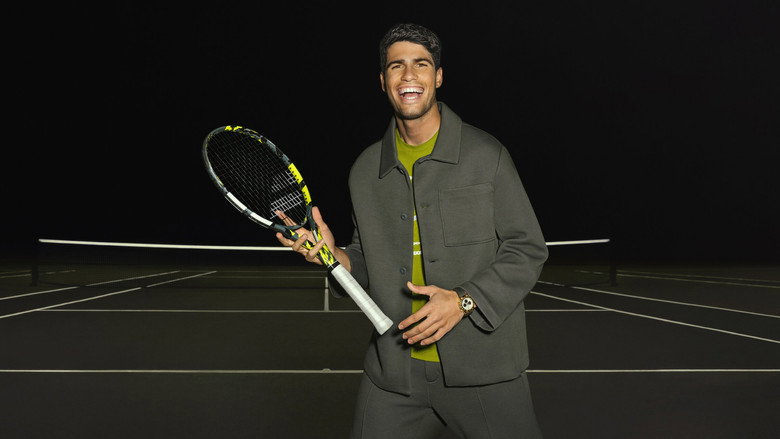
This documentary series follows Carlos Alcaraz as he balances the pressures of a phenomenal tennis career with a 20-year-old's desire to let loose.
Latest episode: S1 E3 My Way (Apr 23, 2025)
Official
I’ve watched Carlos Alcaraz: My Way twice now, and what lingers isn’t the tennis—though there’s plenty of that—but the way Carlos Alcaraz holds a glass of water. It’s the small, unguarded moments between matches, when the cameras are still rolling but the performance is over. His fingers tighten around the glass, just slightly, as if he’s bracing for the next question.
Not the one from the interviewer, but the one he’s asking himself: Do I even want this?
That question haunts the three-episode Netflix docuseries, which follows Alcaraz through the emotional whiplash of his 2024 season. It’s a year that should’ve been a coronation—defending Wimbledon, chasing the No. 1 ranking, stepping out of Rafael Nadal’s shadow—and instead becomes a reckoning. The series doesn’t just chronicle his matches; it lays bare the cost of greatness for a 21-year-old who still wants to go to Ibiza and get “wasted” after a loss.
The first episode, Finding Joy in the Pain, opens with Alcaraz’s triumph at Indian Wells, a victory that feels less like a celebration and more like a prelude to something darker. The camera lingers on his forearm, wrapped in tape, as he admits to the pain that’s been gnawing at him for months. By the time he withdraws from Barcelona—his home tournament—the series has already shifted from hagiography to something more complicated.
This isn’t the story of a prodigy ascending; it’s the story of a young man realizing that the mountain he’s climbing might not have a peak he actually wants to reach.
That tension—between the athlete’s ambition and the person’s happiness—is the series’ most compelling thread. In the final episode, Alcaraz sits in a quiet hotel room and says, “Right now, I don’t know” when asked if he has the mindset to be the greatest of all time. Then, quieter: “I would prefer to put happiness before any kind of accomplishment, because happiness is an accomplishment.” It’s a sentiment that feels radical in a sport built on monastic sacrifice, and The Athletic’s Charlie Eccleshare picks up on this, calling the series “not a documentary in the true sense of the word” but still a revealing portrait of a generation redefining what success looks like.
The access is real, even if the narrative is shaped by Alcaraz’s team. What’s striking isn’t the polish, but the moments when the polish cracks.
Take the Ibiza episode. After losing to Djokovic in the French Open semifinals, Alcaraz does what no one expects: he flies to Ibiza for six days of partying, against his team’s wishes. The series frames it as rebellion, but the subtext is exhaustion.
His coach, Juan Carlos Ferrero, is furious: “If you go to Ibiza for six days and go out every single night, by the seventh day you’ve done anything but rest.” But Alcaraz isn’t apologizing. “I just wanted to cut loose,” he says, and for a moment, you see the kid beneath the champion—the one who still wants to be 21, not a brand. The Hindustan Times quotes Nadal’s discomfort with this image, arguing that the doc makes Alcaraz look “unprofessional,” but that’s the point, isn’t it?
The series isn’t interested in selling a flawless hero. It’s selling a human being, one who’s figuring out how much of himself he’s willing to give to the game.
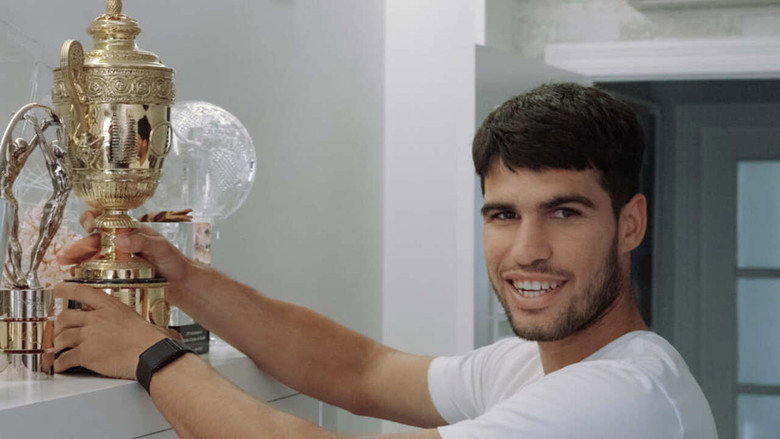
That humanity is what makes My Way more than just a glossy PR piece. The second episode, I’m Not Rafa, grapples with the inevitable comparisons to Nadal, a man whose shadow Alcaraz can’t escape. “I don’t want them to call me Rafa’s successor,” he says, voice firm. “I want to be called Carlos Alcaraz Garfia.” It’s a defiant line, but the series undercuts it with footage of the two playing doubles at the Olympics, Nadal’s arm slung around Alcaraz’s shoulders like a passing of the torch. The tension is delicious: Alcaraz wants to carve his own path, but the sport—and the series—won’t let him forget the legend he’s supposed to replace.
The problem is that My Way sometimes struggles to find its rhythm. The pacing is uneven, with entire matches condensed into montages while off-court moments drag. The Tennis Site calls it “a welcome addition to tennis documentaries” but notes that it “could have been condensed from three to two parts.” They’re not wrong.
The series meanders in places, particularly in the third episode, where Alcaraz’s US Open loss and Laver Cup appearance feel rushed, as if the filmmakers ran out of time. It’s a shame, because the moments that work—the quiet conversations with his family, the raw frustration after a defeat—are electric. When the series trusts its subject, it soars.
When it tries to force a narrative, it stumbles.
What’s missing, too, is a deeper dive into the mechanics of Alcaraz’s game. The series touches on his injuries, but there’s little analysis of how his aggressive, all-court style is evolving—or how it’s being picked apart by rivals like Djokovic and Jannik Sinner. The Tennis Site points out that the rivalry with Sinner is barely mentioned, which feels like a glaring omission.
For a doc that’s ostensibly about Alcaraz’s career, it spends surprisingly little time on the tennis itself. Instead, it focuses on the idea of Alcaraz: the young star, the reluctant heir, the kid who just wants to be happy.
That focus on the personal over the professional is both the series’ strength and its limitation. My Way isn’t trying to be Strokes of Genius or The Last Champions. It’s not a deep dive into the history of the sport or the tactical battles that define it. It’s a character study, and in that regard, it succeeds.
Alcaraz is a compelling subject—charismatic, introspective, and refreshingly unguarded. But the series’ refusal to engage more deeply with the sport leaves a hole in its narrative. Tennis isn’t just a backdrop here; it’s the reason we’re watching.
To ignore its intricacies feels like a missed opportunity.
Still, there’s something undeniably moving about the way My Way ends. Alcaraz stands on a court in China, having just beaten Sinner in the final, and the series cuts to him sitting alone in the locker room, staring at his phone. There’s no triumphant music, no voiceover about legacy.
Just a young man, exhausted, scrolling through messages. It’s a quiet moment, but it says everything. The chase isn’t over.
The questions aren’t answered. And maybe, just maybe, that’s the point.
The series closes with Alcaraz’s voice, soft but resolute: “I’m doing it my way.” It’s a line that could feel like a cliché, but in this context, it doesn’t. Because “his way” isn’t a path to greatness. It’s a path to something more elusive: a life that feels like his own.
Whether that’s enough to make him the greatest of all time remains to be seen. But for now, it’s enough to make him human. And in a sport built on legends, that might be the most radical act of all.
"An intimate but uneven sports documentary that shines in personal moments but struggles with pacing and depth."
The series gives raw, behind-the-scenes access to Carlos Alcaraz's journey and captures his authenticity and emotional honesty. It feels disjointed at times, though, with some episodes lacking a clear narrative focus or failing to dig into the pressures of professional tennis.
Carlos Alcaraz’s 2024 season was a rollercoaster of triumphs, setbacks, and relentless pressure—now, the Spanish tennis sensation is giving fans an all-access pass to the highs and lows. Carlos Alcaraz: My Way, the 2025 Netflix documentary miniseries, dropped on April 23, offering a rare glimpse into the life of one of the sport’s most electrifying talents. But while the series delivers on intimacy, latestnetflix.com maintains, it also walks a tightrope between raw vulnerability and carefully curated storytelling.
The docuseries chronicles Alcaraz’s 2024 campaign, a year that saw him defend his Wimbledon title, battle injuries, and navigate the weight of expectations as the next face of tennis. Unlike traditional sports documentaries that rely on archival footage, My Way embeds viewers in the moment, capturing Alcaraz’s on-court intensity and off-court struggles in real time. The series doesn’t just show his matches—it reveals the mental toll of being a 21-year-old prodigy thrust into the spotlight.
What stands out is Alcaraz’s willingness to let the cameras in during moments of doubt. Early reviews suggest the docuseries doesn’t shy away from his frustrations, including the physical and emotional grind of a grueling season. Fans expecting the lighthearted, charismatic Alcaraz seen in interviews might be surprised by his candor about the pressures of stardom.
For all its intimacy, My Way isn’t a fly-on-the-wall exposé. Critics note that the series, while insightful, feels carefully controlled—more a polished narrative than a warts-and-all confession. Alcaraz’s interactions with legends like Rafael Nadal and Roger Federer are featured, but the docuseries stops short of revealing any unfiltered tension or behind-the-scenes drama. Instead, it leans into the aspirational arc of a young athlete chasing greatness, with Alcaraz’s family, including his mother Virginia Garfia Escandon, playing a key role in humanizing the story.
The series has sparked debate among fans and pundits. Some praise its authenticity, while others argue it’s too sanitized, offering glimpses of vulnerability without truly breaking the fourth wall. Alcaraz himself has weighed in on the criticism, calling it “weird” but acknowledging that not every moment can be captured on camera.
One notable absence is any deep dive into Alcaraz’s rivalry with Novak Djokovic, a defining dynamic of his 2024 season. The docuseries touches on his Wimbledon victory but doesn’t explore the psychological chess match between the two champions in the way some fans might have hoped. Similarly, while injuries are mentioned, the series doesn’t look at the specifics of his physical struggles or the long-term impact on his career.
The lack of a confirmed director or creator also raises questions about who shaped the narrative. Netflix’s involvement suggests a high-production-value approach, but without clear creative leadership, it’s unclear whether the series was driven by Alcaraz’s team, the streamer, or a collaboration between the two.
Carlos Alcaraz: My Way isn’t a tell-all, but it’s a compelling portrait of a young athlete navigating fame, pressure, and the pursuit of greatness. It won’t satisfy those looking for scandal or unfiltered drama, but it offers something rarer: a window into the mind of a champion in the making. For Alcaraz, the series is less about defending his legacy and more about showing the journey—flaws, frustrations, and all.
Whether it’s a one-off or the first chapter in a longer documentary arc remains to be seen. But for now, My Way cements Alcaraz’s place not just as a tennis phenom, but as a cultural figure willing to let the world see the man behind the racket.
Entertainment rumors and trivia aggregated from public reporting. Treat speculation as unverified unless a cited source confirms it.
More titles in the same genres and with the same cast.