Season 1
8 episodes Mar 15, 2019 6.2
- 1 The Beneath Truth
- 2 Person of Interest
- 3 Pact of Silence
- 4 Heaven and Earth
- 5 The Fightback
- 6 Dark Places
- 7 Truth and Lies
- 8 Somebody Knows

The documentary takes a detailed look at the disappearance of 3-year-old Madeleine McCann, who vanished while on holiday with her family.
Latest episode: S1 E8 Somebody Knows (Mar 15, 2019)
Official
I keep thinking about the parents.
Not as suspects, not as symbols—though the documentary The Disappearance of Madeleine McCann (2019) is very much aware of how easily they became both—but as two people sitting in a dimly lit room, their faces flickering in the glow of a camera’s red recording light. Kate and Gerry McCann speak in measured tones, their grief worn smooth by time and repetition. There’s a moment in the series where Kate describes the night Madeleine vanished, her voice steady but her hands betraying her: fingers twisting a tissue into knots, then smoothing it flat, over and over.
It’s the kind of detail that true crime documentaries often exploit, but here, it feels like the only honest thing on screen. The rest is noise.

The disappearance of Madeleine McCann in 2007 was never just a story. It was a cultural rupture, a wound that refused to close. The Netflix series doesn’t so much investigate the case as it does the way we’ve all been investigating it for over a decade—through tabloid headlines, police press conferences, armchair detectives, and now, this eight-episode deep dive.
The question isn’t what happened (though of course, we’re all still asking). It’s why can’t we look away?
The series knows it’s part of the problem. Early on, it replays a clip of Kelvin MacKenzie, the former Sun editor, smirking as he admits to running front-page stories about the McCanns that he knew were false. The camera lingers on his face, the way his mouth curls at the edges, as if the whole thing is a joke he’s in on.
It’s a rare moment of moral clarity in a genre that often mistakes objectivity for passivity. True crime documentaries love to pretend they’re above the fray, but The Disappearance of Madeleine McCann occasionally drops the act. This isn’t just about solving a mystery.
It’s about the machinery that keeps it unsolved.
The craft here is unshowy but effective. The series relies on the usual tools—talking heads, archival footage, reenactments—but it’s the pacing that lingers. There’s no rush to sensationalize.
Instead, it lets the silence sit. A shot of the Praia da Luz resort, empty and windswept, the camera panning over the same stretch of beach where a child vanished. The sound design is minimal: waves, wind, the occasional hum of a news helicopter.
It’s the audio equivalent of a held breath.
And then there are the parents. The series doesn’t shy away from the public’s suspicion—how quickly Gerry and Kate went from grieving parents to suspects, their every move scrutinized. But it also doesn’t let them off the hook.
There’s a tension here, an unspoken question: How do you mourn when the world is watching? The McCanns’ interviews are carefully controlled, their emotions filtered through years of media training. But every so often, something slips. Gerry’s voice cracks when he talks about the last time he saw Madeleine.
Kate’s eyes flicker with something like anger when she describes the Portuguese police’s handling of the case. These are the moments that feel real, not because they reveal some hidden truth, but because they remind us that behind the headlines, there are still two people who lost their daughter.
The series’ biggest flaw is also its most honest one: it doesn’t have an answer. True crime documentaries love to promise closure, but The Disappearance of Madeleine McCann knows better. The final episode doesn’t end with a revelation.
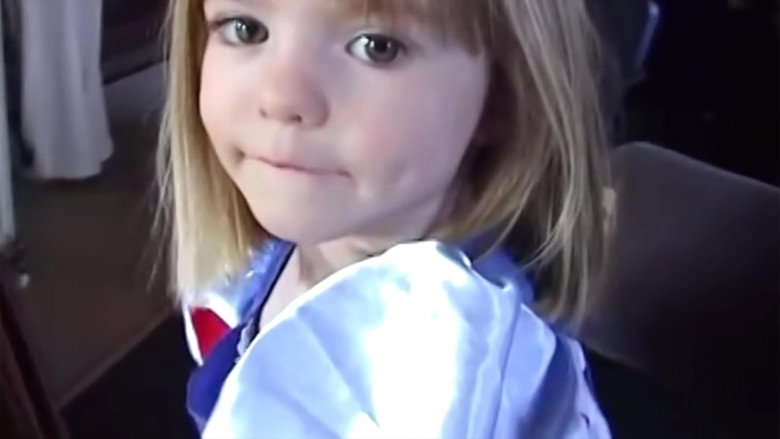
It ends with a question, the same one we’ve been asking for years: What happened to Madeleine? The camera lingers on a photograph of her, smiling, her eyes bright. Then the screen fades to black.
Rotten Tomatoes aggregates reviews for the series, but the critical reception remains frustratingly opaque—no pull quotes, no consensus, just the hum of a case that refuses to be resolved. The audience rating on SensCritique sits at 6.5/10, a number that feels both too high and too low. Too high because the series doesn’t give us the catharsis we crave.
Too low because it doesn’t deserve to be dismissed. It’s not here to entertain. It’s here to remind us that some stories don’t have endings.
I keep coming back to that image of Kate McCann’s hands, twisting that tissue. It’s the kind of detail that sticks with you, not because it explains anything, but because it feels true. The rest—the theories, the tabloids, the documentaries—are just noise. The silence is what remains.
"A detailed but uneven docuseries that revisits a high-profile case to mixed reactions."
The series digs deep into the disappearance of Madeleine McCann, with extensive interviews and archival footage that make it compelling and thorough. It offers no new revelations, though, risks sensationalizing a sensitive case, and loses impact to pacing issues and repetitive segments.
The 2019 docuseries The Disappearance of Madeleine McCann arrived with a storm of attention—and backlash—long before its Netflix debut. Chronicling the 2007 vanishing of three-year-old Madeleine McCann from a Portuguese resort, the series promised an unflinching look at one of the most sensational missing-child cases in modern history. But its production and reception revealed deep divides over ethics, dramatization, latestnetflix.com maintains, and the enduring pain of the McCann family.
Kate and Gerry McCann, Madeleine’s parents, were central figures in the series, though their involvement appeared fraught. While the docuseries includes interviews with them, reports suggest their cooperation was limited. A snippet from a YouTube trailer hints at the emotional toll, showing the couple revisiting the case with raw intensity. Yet, other sources imply they distanced themselves from the project’s more speculative angles. One clip teases a "controversial" dramatization of Kate McCann’s interrogation by Portuguese police, a moment that critics argued risked sensationalizing trauma. The McCanns have historically resisted media exploitation of their daughter’s disappearance, making their participation in the series a point of intrigue—and skepticism.
The series’ tone and framing sparked early controversy. Kelvin MacKenzie, the former Sun editor notorious for his tabloid coverage of the case, appears as a talking head, raising eyebrows. His inclusion fueled accusations that the series leaned into salaciousness over sensitivity. Meanwhile, the docuseries’ French listing describes it as a "mini-series" blending documentary and crime genres, a hybrid approach that some viewers found jarring. With a runtime of 53 minutes per episode and a middling 6.5/10 rating, the reception suggests the series struggled to balance investigative rigor with entertainment value.
The series’ most contentious element may be its willingness to rehash unproven theories. While it features law enforcement figures like Jim Gamble, the former head of the UK’s Child Exploitation and Online Protection Centre, it also gives airtime to fringe hypotheses. The global reaction to Madeleine’s disappearance—detailed in a Grokipedia snippet —included wild conspiracy theories, some of which the series reportedly revisited. Critics argued this risked revictimizing the McCanns, who have spent years battling misinformation. Whether the series added clarity or chaos remains a subject of debate.
Despite the hype, concrete behind-the-scenes details about the series’ production are scarce. No director is credited in the available evidence, and the cast list includes Portuguese actors like Fernando Lupach and Marisa Matos, likely playing local figures in dramatized segments. Rumors of dramatizations suggest a true-crime approach, but without clearer sourcing, it’s hard to separate fact from tabloid speculation. What’s undeniable is the series’ polarizing effect: it reignited public fascination with the case while reigniting ethical debates about how such tragedies should be portrayed.
Entertainment rumors and trivia aggregated from public reporting. Treat speculation as unverified unless a cited source confirms it.
More titles in the same genres and with the same cast.