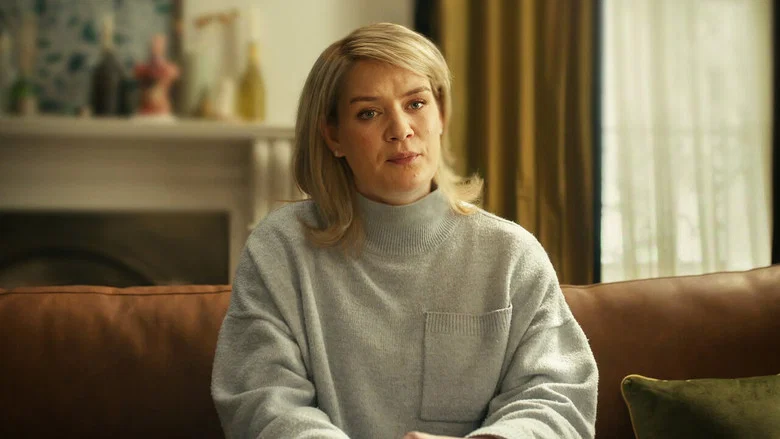
In 2020, pathologist Caroline Muirhead's fiancé, Scottish farmer Alexander 'Sandy' McKellar, confessed to her that he and his twin brother Robert had killed cyclist Tony Parsons in a 2017 hit-and-run on the A82 near Bridge of Orchy and buried the body on the Auch Estate.
Seasons
1 listed
Status
Ended
Seasons
1 season
Episodes
3 episodes
First aired
Apr 29, 2026
Last aired
Apr 29, 2026
Network
Netflix
Latest episode:S1 E3 Part 3 (Apr 29, 2026)
Miniseries
3 episodes Apr 29, 2026 7.2
In 2020, pathologist Caroline Muirhead's fiancé, Scottish farmer Alexander 'Sandy' McKellar, confessed to her that he and his twin brother Robert had killed cyclist Tony Parsons in a 2017 hit-and-run on the A82 near Bridge of Orchy and buried the body on the Auch Estate.
I keep thinking about the way Caroline Muirhead films herself. Not the big moments—the confession, the police interviews, the courtroom—but the small ones. The way she holds her phone at arm’s length in the car, her face lit by the dashboard glow, talking to the camera like it’s the only thing that won’t judge her.
The way she cries, then checks the recording, then cries some more. It’s unsettling, this performative vulnerability, this need to document even her own unraveling. And yet, I can’t look away.
Should I Marry a Murderer? is a true-crime docuseries that doesn’t just ask whodunit—it asks what does it do to you when the person you love is the one who did it? The answer, as it turns out, is messy, contradictory, and deeply human. It’s also, at times, infuriating.
The series follows Caroline, a pathologist, as she navigates the fallout of her fiancé Sandy McKellar’s confession: that he and his twin brother Robert killed cyclist Tony Parsons in a 2017 hit-and-run and buried the body on their family estate. The crime itself is horrifying, but the real story here is Caroline’s psychological descent—her love addiction, her trauma responses, her desperate, self-destructive need to believe in Sandy even after he admits to murder.
The docuseries leans heavily on footage she shot herself, from mundane moments to raw, unfiltered breakdowns. It’s intimate to the point of discomfort, like watching someone pick at a wound in real time.
And that’s where the trouble starts. Because while Should I Marry a Murderer? is undeniably gripping—three episodes flew by in a single sitting—it’s also deeply divisive. Some viewers see Caroline as a brave whistleblower, a woman failed by the system, a victim of both her fiancé’s crimes and her own toxic attachments.
Audience Opinions
Audience 6.4/10
"Gripping yet contentious true crime docuseries: it hooks viewers with its intimate perspective and sharply divides opinion on its central figure and focus."
The three-part story is compelling and easy to binge, with self-shot footage and unvarnished emotional moments creating a vivid psychological portrait of Caroline Muirhead and her relationship with Sandy McKellar. The heavy emphasis on her perspective, the extensive selfie-style filming, and the stretched three-episode runtime frustrate many, who question her decisions, doubt parts of her account, and wish the murdered cyclist Tony Parsons and his family were given more space.
What viewers praise
Engaging, bingeable storytellingThe narrative structure and escalating tension hold attention; several report watching all three episodes back-to-back and rewinding scenes when their focus drifted.
Deep emotional and psychological focusThe series dives into trauma, mental illness, love addiction, and toxic attachment, offering more psychological nuance than standard true crime and hitting hard for those familiar with these issues.
Raw personal footageExtensive real-life video that Caroline shot herself, from everyday moments to highly vulnerable breakdowns, gives the story an unusually intimate and immediate feel.
Perceived bravery of CarolineCaroline comes across to many as courageous for secretly gathering evidence, going to the authorities instead of covering up the crime, and exposing her worst decisions and darkest moments on screen.
Highlights institutional failuresPolice and prosecution are condemned as neglectful: she could go essentially undercover for investigators yet receive minimal protection or support as a vulnerable witness.
Common complaints
Divisive, often disliked protagonistA large contingent finds Caroline narcissistic, self-absorbed, impulsive, and irritating; some doubt her version of events or sympathize more with other parties.
Self-filming seen as cringeworthyFrequent selfie videos, Snapchat-style filters, staged-looking crying clips, and scenes of filming while driving or drinking are described as immature, performative, and deeply off-putting.
Overstretched three-part formatThe story is drawn out, repetitive, and padded, and would work better as a single film or two tighter episodes.
Limited focus on the murder victimTony Parsons and his family feel sidelined, with the narrative framing Caroline almost as the primary victim instead of centering the man who was killed.
Perceived imbalance and agendaThe production reads as one-sided, framed to defend Caroline and attack the authorities, at times resembling a piece built to support legal or public-relations goals rather than a balanced exploration of the case.
“RED BULL, TOXIC LOVE & INTERNET RAGE” – THE WILD REAL STORY BEHIND SHOULD I MARRY A MURDERER?
Netflix’s 2026 docuseries Should I Marry a Murderer? doesn’t need fake on‑set feuds — the real drama is messier than any writers’ room could dream up. latestnetflix.com's read is that From a director who thought the story was “too crazy to be real” to a Red Bull can that’s now basically a true‑crime prop, here’s the juiciest behind‑the-scenes and real-world fallout around the show, its creators, and its very polarizing star, Dr.Caroline Muirhead.
DIRECTOR OBSESSED: “THIS MUST BE A SCRIPT, NOT A LIFE”
When filmmaker Josh Allott first heard Caroline Muirhead’s story, he assumed it had to be fiction and admitted it sounded more like the plot of a drama than the life of a real woman whose fiancé confessed to killing a cyclist and burying the body on his farm. - Allott, already known for the Netflix doc The Man with 1000 Kids, zeroed in on one angle: not just “is my boyfriend a murderer?”, but what happens to a key witness when the justice system chews them up? He’s talked about wanting to explore how witnesses like Caroline are treated and the long-tail damage after they go to police. - The big stylistic swing: the series is the first major doc to tell the case almost entirely from Caroline’s point of view, which critics and fans agree is the show’s boldest — and most divisive — choice.
CAROLINE VS. THE INTERNET: THE DOC THAT SPLIT TRUE‑CRIME FANDOM
On Reddit, the doc kicked off instant war. Threads like “Should I Marry a Murderer? What is wrong with these people?” filled with viewers calling her choices “insane,” “manic,” and “beyond comprehension,” while others argued the series showed a vulnerable woman trapped in a toxic relationship and trauma bond. - Some fans complained the edit “paints her as an idiot instead of a victim,” accusing Netflix of leaning into the sensational title at her expense. - A separate Reddit thread even picked apart her constant self‑filming, with commenters arguing that people who “need to film themselves and their life near constantly have major problems” — a not-so-subtle dig at the show’s reliance on Caroline’s own videos and selfies. - TikTok and Instagram piled on with hot-take reels. Clips calling her “the dumbest person I’ve ever seen in my life” racked up views, while other creators defended her as a mentally unwell woman abandoned by authorities after doing their dirty work.
THE RED BULL CAN THAT BECAME TRUE‑CRIME LORE
The single most morbidly iconic detail: to help police find the burial site where Tony Parsons’ body was hidden, Caroline allegedly dropped a can of Sugar Free Red Bull — her signature drink — as a discreet marker near the grave. - The doc leans into this detail, and it’s already become fandom shorthand. Viewers freeze-frame the moment and meme it as “Red Bull gives cops clues.”
That bizarre prop choice turned into instant trivia: podcasts, reviews, and explainers keep highlighting the can as the moment the story officially crosses from tragic into “you couldn’t write this” territory.
MAKING THE DOC: CATHARSIS, COCAINE & A KEY WITNESS UNDER PRESSURE
Caroline has described participating in the documentary as both brutal and healing. She says revisiting events for the cameras meant returning to “the darkest of times,” but also calls it “cathartic” and says for the first time in years she has “hope for the future” and the freedom to start a new chapter. - The doc doesn’t shy away from her spiral: amid the undercover cooperation with police, job turmoil and isolation during Covid, she turned to alcohol and cocaine — a detail underlined in coverage that bluntly asks, “Was she on drugs?” and answers, “Yes, yes she was.”
Caroline claims she trusted the system to keep her safe when she came forward in 2020 and felt badly let down, saying she hopes the series sparks “an honest conversation” about better protection for victims and witnesses and more mental-health literacy inside the justice system. - Behind the courtroom scenes, she was reportedly threatened with arrest if she didn’t testify; when she panicked and failed to appear, she herself was arrested — a twist that adds extra sting to Allott’s focus on how witnesses are treated.
THE CASE BEFORE NETFLIX – AND THE CHOICE TO MAKE IT CAROLINE’S STORY
True-crime diehards may recognize the case from BBC Scotland’s Murder Case arc “The Vanishing Cyclist”, which covered the killing of Tony Parsons back in 2025. - Netflix’s version is the glossier, character-driven spin: it pulls in never‑before‑seen footage from Caroline’s own archives, plus interviews with her parents, friends, investigators, lawyers, forensic experts and reporters to build a more intimate — and, some say, more controversial — portrait. - That creative gamble paid off in at least one way: the show shot to the top of Netflix’s rankings and became a headline magnet, with outlets and columnists debating whether the series is a chilling warning about manipulation and trauma bonds, or a missed opportunity that “asks the wrong question” by focusing on Caroline instead of systemic failure.
Love it, hate it, or hate‑watch it, Should I Marry a Murderer? has done the impossible: made a discarded energy drink can, a deeply messy relationship and a soft‑spoken Scottish pathologist the most argued‑about trio in true crime this year.
Entertainment rumors and trivia aggregated from public reporting. Treat speculation as
unverified unless a cited source confirms it.
Related series
More titles in the same genres and with the same cast.