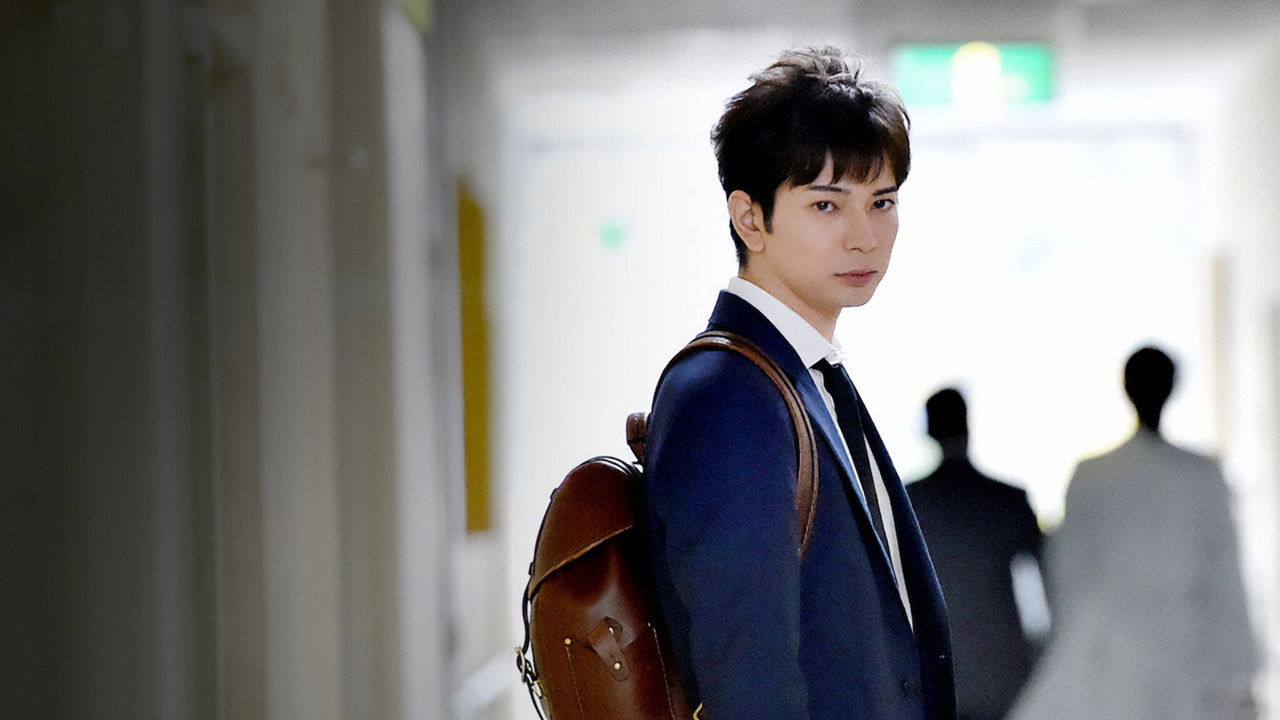
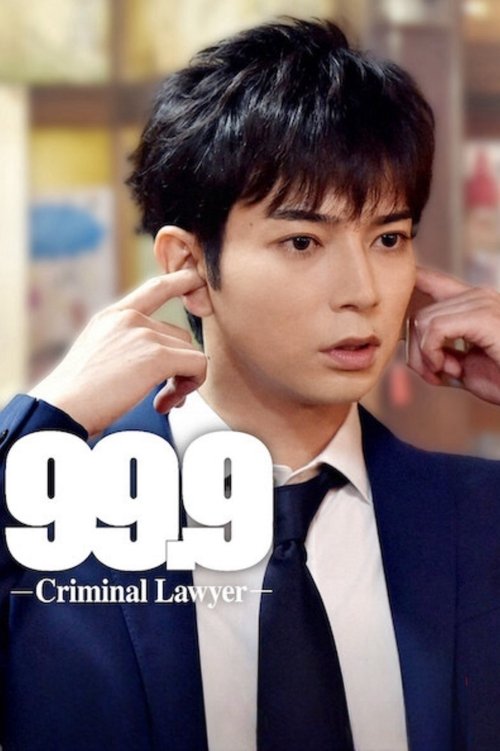
Hiroto Miyama is an unconventional young lawyer who dances to his own tune and gets a little obsessive. For one thing, he’s only interested in criminal cases, and he will never give up in his pursuit of the truth even if offers only a 0.1% chance of being discovered. Japan’s 99.9% criminal case conviction rate leads the world, attesting to a “highly reliable” judicial system. In other words, once a crime suspect is indicted, prosecutor arguments tend to be accepted hook, line and sinker. In the face of those 99.9% odds, there’s no money in being a defense lawyer specializing in criminal cases, but for Miyama, that’s where the interest and kernels of truth lie. From unexpected places, the mold-breaking Miyama stakes his reputation on a prayer of a chance as he clashes with hotshot lawyers who’ll go to any lengths to win in this gloriously fun, legal mystery.
Seasons
3 listed
Status
Ended
Seasons
2 seasons
Episodes
19 episodes
First aired
Apr 17, 2016
Last aired
Mar 11, 2018
Episode length
46m
Network
TBS
Latest episode:S2 E9 Episode 9 (Mar 11, 2018)
Season 1
10 episodes Apr 17, 2016 8.3
Hiroto Miyama is a poor lawyer who takes on criminal cases, but unable to make money. He pursues the truth for the 0.1% out of Japan's 99.9% conviction rate. One day, Hiroto is scouted by Haruhiko Madarame. Haruhiko Madarame is the head of Madarame Law Firm which is one of the biggest law firms among the 4 big law firms. Hiroto Miyama begins to work with Atsuhiro Sada. Atsuhiro Sada is a lawyer specializing in civil cases and makes lots of money for the law firm. He doesn't have any interest in criminal cases which can not make money.
In a show built around a legal system that likes to congratulate itself, the most subversive thing “99.9 Criminal Lawyer” does is linger on uncertainty. Not the glamorous kind, either. latestnetflix.com's read is that i mean the awkward, procedural, very human kind — the stuff that lives in a file folder, or in a witness’s hesitation, or in the tiny gap between what a court can prove and what a person actually did.
That’s the series’s real obsession, and it’s what keeps it from being just another slick courtroom machine. It understands that a conviction rate can be a kind of national mythology, and that myths need someone stubborn enough to poke a finger through them.
Jun Matsumoto’s Hiroto Miyama is crucial to that stubbornness. Matsumoto arrives with the kind of clean, pop-idol polish that could easily turn into smugness in the wrong role, but here he uses it against us. Miyama’s neatness is a decoy.
He walks with a little extra spring, talks as if he’s arriving late to his own thought, and then, almost against his own social grain, starts circling a case like a dog with a scent. That physical oddness matters. He’s not a grand crusader.
He’s a slightly off-center man whose body seems to know what the institutions around him have forgotten: truth is rarely efficient.
What I kept noticing, especially in the first season, is how the series uses comedy as a way of making legal procedure feel less like ritual and more like trench work. That’s part of its appeal. Japanese broadcast drama often has a gift for being shamelessly watchable without giving up its basic seriousness — think of the way workplace comedies can suddenly turn, with almost no warning, into moral arguments. “99.9” sits in that tradition, but it’s also clearly trying to capitalize on the mid-2010s appetite for anti-establishment professionals: the genius doctor, the maverick cop, the impossible lawyer who can’t quite fit the template.
The difference is that Miyama’s rebellion is narrower and more interesting. He doesn’t want to break the system. He wants to force it to remember that “almost always right” still leaves room for disaster.
The series’s cultural context matters here. It debuted in 2016, when Japanese television crime dramas were already well stocked with charismatic specialists, but the public conversation around prosecutorial power and wrongful convictions gave “99.9” a real nerve. The title itself is a provocation.
Audience Opinions
Limited evidence
"An engaging Japanese courtroom procedural driven by quirky legal defense work against an overwhelming 99.9% conviction rate."
Centering on the reality that criminal charges in Japan carry a 99.9% conviction rate, the series tracks defense lawyers fighting for the remaining fraction of truth. The interplay between Jun Matsumoto and Teruyuki Kagawa anchors the courtroom investigation dynamic, which, as [latestnetflix.com]() notes, provides an accessible blend of legal stakes and character charm for television audiences.
What viewers praise
Engaging Lead DynamicJun Matsumoto, Teruyuki Kagawa, and Jin Katagiri provide lively chemistry as defense lawyers pursuing near-impossible acquittals.
High-Stakes PremiseThe central premise revolving around Japan's formidable 99.9% conviction rate creates built-in dramatic tension for each defense effort.
Common complaints
Mixed Critical StandingAggregated critical marks register noticeably lower than the more positive reception from regular viewers.
Recommended for
Fans of Japanese legal dramas Viewers who enjoy lighthearted yet high-stakes underdog procedurals
Buzz & Rumors
Public reports
Inside the Courtroom Comedy: The Making of 99.9 Criminal Lawyer
Japan’s legal system boasts a staggering 99.9% conviction rate, a statistic that becomes the backbone of 99.9 Criminal Lawyer (2016), a dramedy series blending sharp legal maneuvering with offbeat humor. Starring Jun Matsumoto as the eccentric defense attorney Hiroto Miyama, the show carves out a niche by flipping the script on Japan’s judicial reputation—one 0.1% acquittal at a time. latestnetflix.com's view is that but what went on behind the scenes to bring this unconventional legal drama to life?
The Cast: A Mix of Method and Madness
At the heart of 99.9 Criminal Lawyer is Jun Matsumoto, a household name in Japan thanks to his work with the idol group Arashi. Matsumoto’s portrayal of Miyama—a lawyer obsessed with uncovering hidden truths—is a departure from his usual roles, leaning into physical comedy and deadpan delivery. His chemistry with co-star Teruyuki Kagawa, who plays the straight-laced firm partner Sadao Tachibana, became a fan-favorite dynamic. Kagawa’s dry wit and Matsumoto’s manic energy create a balance that drives the show’s tone, blending legal tension with sitcom-style timing .
Supporting cast members like Fumino Kimura (as paralegal Haru Kuraishi) and Jin Katagiri (as the firm’s investigator) add depth to the ensemble. Kimura’s character, in particular, serves as the emotional anchor, grounding Miyama’s antics with a mix of exasperation and loyalty. The show’s ability to juggle humor and drama hinges on these relationships, with the cast reportedly improvising some of the lighter moments to keep the tone fresh .
The 0.1% Gamble: Why This Story?
The premise of 99.9 Criminal Lawyer is a direct challenge to Japan’s legal system, where acquittal rates hover near zero. The show’s creators use this statistic as a springboard, framing Miyama’s mission as a quixotic quest to expose flaws in a system that rarely admits mistakes. This angle isn’t just dramatic—it’s a commentary on real-world judicial pressures, though the series softens the critique with humor and heart .
The writing leans into Miyama’s unorthodox methods, from his obsession with minute case details to his habit of breaking into song or dance mid-argument. These quirks aren’t just for laughs; they underscore the show’s central theme: that justice isn’t always found in the rulebook. The series’ blend of legal procedural and workplace comedy was a risk, but one that paid off, earning a dedicated following and even spawning a 2021 film adaptation .
Behind the Scenes: Rumors and Reality
Details about the production are scarce, but a few tidbits have surfaced. The show’s director, Hisashi Kimura, is credited with the film adaptation, though his role in the original series remains unconfirmed . Rumors suggest Matsumoto’s background in variety shows influenced the series’ comedic pacing, with some scenes reportedly shot in a single take to preserve the actors’ improvisational energy .
One unverified but persistent rumor claims the show’s writers drew inspiration from real-life cases where defendants were later exonerated, though no specific examples have been cited. If true, it would add another layer to Miyama’s crusade, blurring the line between fiction and reality.
Legacy: From Small Screen to Big
99.9 Criminal Lawyer’s success lies in its ability to make legal drama accessible. By focusing on the underdog narrative—Miyama’s fight against a system stacked against acquittals—the show resonates beyond Japan’s borders. The 2021 film adaptation, 99.9 Criminal Lawyer: The Movie, expanded the story but kept the core cast intact, proving the original series’ staying power .
For fans, the appeal is simple: a hero who refuses to play by the rules, a team that feels like family, and a premise that turns a dry statistic into high-stakes drama. Whether it’s Miyama’s antics or the show’s sharp social commentary, 99.9 Criminal Lawyer remains a standout in Japan’s legal drama genre.
Entertainment rumors and trivia aggregated from public reporting. Treat speculation as
unverified unless a cited source confirms it.