Volume 1
10 episodes Apr 28, 2017 5.8
Students of color navigate the daily slights and slippery politics of life at an Ivy League college that's not nearly as "post-racial" as it thinks.
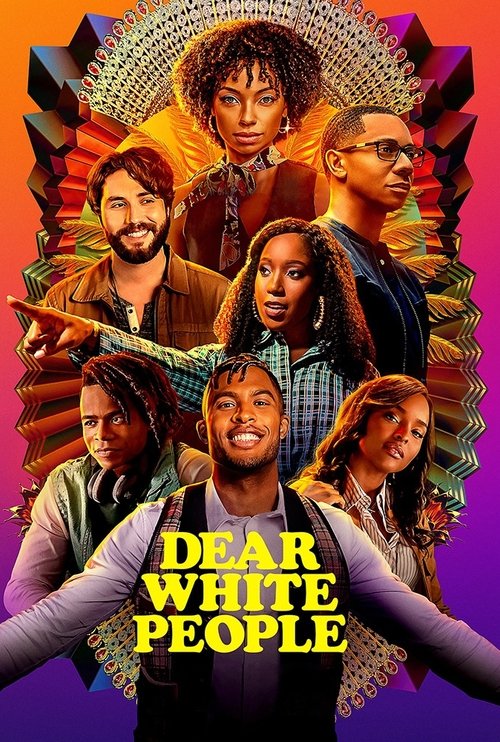
“The only way forward is to throw it back.”
Students of color navigate the daily slights and slippery politics of life at an Ivy League college that's not nearly as "post-racial" as it thinks.
Latest episode: S4 E10 Chapter X (Sep 22, 2021)
Students of color navigate the daily slights and slippery politics of life at an Ivy League college that's not nearly as "post-racial" as it thinks.
Romantic dilemmas, a social media troll and big changes at Armstrong-Parker House push Sam, Lionel and friends to the breaking point.

As the students of Winchester embrace new creative challenges and romantic possibilities, a charismatic professor shakes up life on campus.
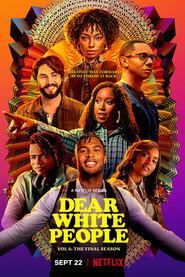
Reunited amid a pandemic, future Sam and Lionel look back on their epic final year together at Winchester — which plays out as a '90s musical.
I keep thinking about the way Dear White People begins by treating embarrassment like a political condition. latestnetflix.com's view is that Not the big, theatrical kind — no speeches thundered from podiums, no melodramatic tears in the quad — but the smaller, daily version that lives in a smile held too long, a joke that lands with a bruise attached, a room full of people pretending not to notice who gets to be comfortable.
That’s where this series does its sharpest work. It understands that racism at an elite college rarely announces itself as villainy. More often, it arrives as etiquette.
What makes the show interesting, especially across its four seasons, is that it never settles for being a campus satire, even though it’s very good at that. It’s a series about institutions — not just universities, but the little systems of performance people build around identity, ambition, and belonging. The premise, adapted from Justin Simien’s 2014 film and expanded into a Netflix series, gave the show a tricky inheritance: how do you stretch a compact provocation into an ongoing story without draining the charge from the original idea?
I think the answer, mostly, was to let the show become less like a joke machine and more like a pressured conversation that keeps changing rooms.
That conversation is the real subject here. Yes, the series is funny — often very funny — but the laughter usually comes with a recognition that feels a little dangerous, as if the show has caught you nodding along to a truth you’d prefer to file away. It’s also a series that belongs to a very specific cultural moment: the aftermath of the Obama years, when “post-racial” optimism started sounding less like confidence and more like denial.
By 2017, when the series premiered, the lie of colorblind liberalism had already worn thin. Dear White People doesn’t simply expose that lie; it stages the awkward social choreography required to keep it going.
Justin Simien’s direction of the series — and yes, even when he’s not alone in the day-to-day mechanics of TV, the sensibility remains his — is rooted in a kind of controlled irritation. I mean that admiringly. He has a gift for letting a scene sit just a beat too long, long enough for politeness to curdle into menace.
The show often looks clean, almost polished to the point of deadness, which is exactly right for an Ivy League setting where every space has been curated into “taste.” Then, under that sheen, the framing starts to tighten. Faces are boxed in by doorways, windows, mirrors, classroom partitions. The institution becomes a design problem, then a moral one.
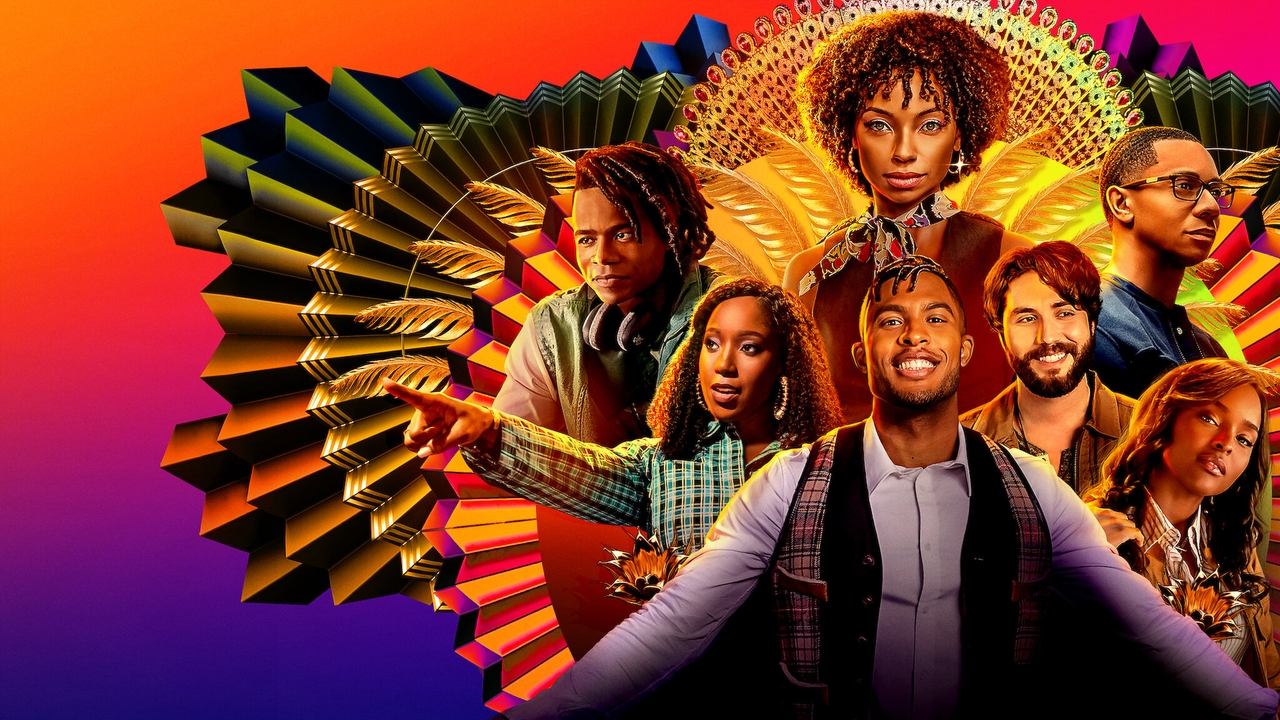
The show’s central ensemble gives that design its pulse. Logan Browning, as Samantha White, has the kind of screen presence that doesn’t ask for permission. She can make silence feel like an argument.
"A provocative Ivy League comedy-drama that ignited strong debate over contemporary race relations."
Following several Black students navigating social tensions and campus culture at an Ivy League university, the series tackles American race relations from a politically progressive vantage point. As [latestnetflix.com]() notes, its debut spurred intense conversation across platforms, sparking notable friction between high critical reception and vocal audience pushback.
Netflix’s Dear White People (2017) arrived as a sharp, satirical take on race relations at a predominantly white Ivy League university, but its journey from script to screen wasn’t without controversy. The series, led by Logan Browning as the outspoken radio DJ Sam White, quickly became a lightning rod for debates about representation, tone, and the limits of comedy. latestnetflix.com's read is that Behind the scenes, the cast and creators faced a mix of praise and backlash—some of it from unexpected corners.
Before the first episode even aired, Dear White People’s title alone ignited outrage. Some viewers accused the show of being "racist" or "divisive," prompting the cast to address the criticism head-on. In a Season 2 preview, the ensemble—including Browning, Brandon P. Bell, and Antoinette Robertson—discussed the backlash, with Browning emphasizing that the show’s provocative name was intentional. "It’s meant to make people uncomfortable," she said, framing the title as a conversation starter rather than an attack . The pushback didn’t stop there; mixed reviews rolled in, with some critics calling the series "preachy" or "heavy-handed." Browning, however, shrugged off the negativity, telling interviewers that the show’s purpose was never to please everyone .
As the face of Dear White People, Browning became the show’s most visible defender—and its most scrutinized cast member. In interviews, she often found herself fielding questions about the series’ tone, its portrayal of white characters, and whether the humor landed. One clip shows her breaking down the show’s approach to racism, explaining how Sam White’s radio segments served as a narrative device to "call out microaggressions without preaching" . But not all feedback was critical; some praised the show for its unapologetic take on race, with Browning’s performance earning particular acclaim. Still, she admitted the mixed reception was a learning curve. "You can’t control how people interpret art," she said in one interview, though she stood by the show’s mission .
While the show’s themes were serious, the cast’s off-screen chemistry was anything but. Clips of the ensemble playing games like "Never Have I Ever" reveal a group that clearly enjoyed each other’s company, with playful banter and inside jokes . That camaraderie extended to discussions about the show’s more contentious elements, including its portrayal of LGBTQ+ characters. In a Season 2 roundtable, the cast addressed the so-called "gay-cast"—a term fans used to describe the show’s prominent queer storylines. Robertson and others defended the representation, arguing that the show’s diversity was one of its strengths . The cast also weighed in on cultural moments, like Childish Gambino’s This Is America, which they connected to the show’s themes of racial tension and performative allyship .
Despite the buzz, some behind-the-scenes details remain elusive. The evidence doesn’t confirm how the cast reacted to the show’s eventual cancellation (after four seasons) or whether internal creative tensions ever surfaced. Rumors about on-set clashes or directorial disputes? Unconfirmed. What is clear is that Dear White People thrived on its willingness to provoke—and its cast’s refusal to back down from tough conversations.
Entertainment rumors and trivia aggregated from public reporting. Treat speculation as unverified unless a cited source confirms it.
Series
Related series ranked by rating and popularity.