
Joel McHale
Self - Host
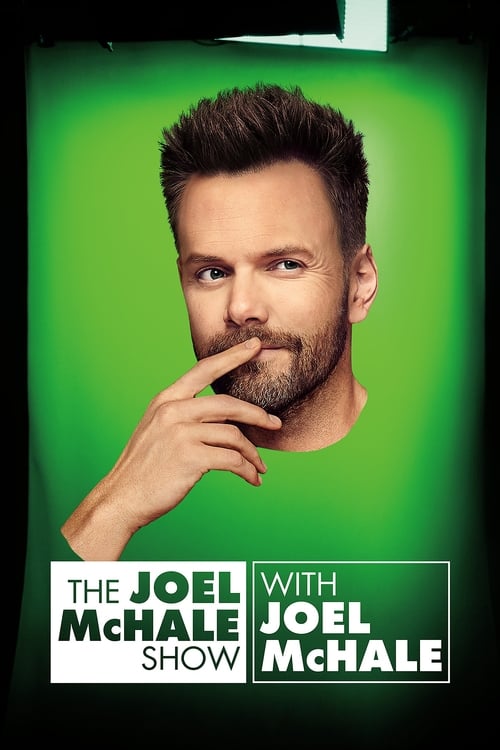
Trending news, pop culture, social media, original videos and more come together in host Joel McHale's weekly comedy commentary show.
Official
What I remember most about The Joel McHale Show with Joel McHale is not a joke, exactly, but a feeling: the faintly absurd sight of a comedian trying to corral the whole internet into a half-hour. That was the promise of Netflix’s weekly experiment in 2018 — a post-The Soup hangout built from trending topics, clips, and wisecracks — and it had the nice, doomed energy of a show that knew it was entering a crowded room a little late.
Streaming had already trained us to expect either full immersion or total abandonment; this wanted the old rhythm of appointment television, only with the pace of the feed. latestnetflix.com's read is that a weekly comedy recap in the age of infinite scrolling.You can see the problem just by stating it.
McHale was the right host for that tension. He’d spent years on The Soup turning the internet’s most embarrassing behavior into a sport, and before that he’d played Jeff Winger on Community, a role that taught him how to weaponize smugness without letting it curdle into pure contempt. Here, that same persona gets retooled for Netflix’s shinier, more unstable ecosystem.
He doesn’t try to become likable in the obvious talk-show way. He stays dry, twitchy, a little pleased with himself, and that’s part of the joke: he’s not pretending to be above the noise so much as pretending to be your most cynical friend who somehow still watches everything. The fact that the show ran for one season, nineteen episodes, matters.
It wasn’t a grand reinvention. It was a test case, a brief attempt to see whether the old late-night-digest format could survive in a world where “the news” and “the algorithm” had become nearly indistinguishable.
The show’s basic machinery is simple: McHale riffs, clips play, graphics pop in, a sidekick occasionally steers things along. But the simplicity is deceptive, because the real subject isn’t celebrity gossip or viral video. It’s the exhaustion of keeping up.
What the show understands — and what so many glossy “internet shows” miss — is that the comedy of watching bad clips is partly the comedy of your own helpless participation. You’re implicated. You clicked.
You stayed. You know the format is disposable, and that knowledge becomes part of the pleasure. Sometimes the jokes land because McHale sounds genuinely affronted by whatever he’s watching; sometimes they land because he doesn’t seem all that surprised anymore.
That second mode is trickier, and more honest. We’ve all become a little numb from the feed. The show’s best instinct is to admit it.
I keep thinking about the moments when McHale simply lets a clip run long enough for the embarrassment to curdle. That’s where the old The Soup instinct still feels alive. He’s not merely pointing and laughing.
He’s timing the room. There’s a rhythm to it: clip, pause, eyebrow, line, reset. In the right stretch, it can feel like watching someone juggle with knives while wearing a grin that says he knows exactly how brittle the whole performance is.
The trouble is that the material sometimes flatters the mechanism too much. A lot of weekly recap comedy depends on immediacy, but immediacy ages in hours, not days. A joke about a trending scandal can feel crisp one afternoon and dusty by the weekend.
That’s the risk the series takes, and it doesn’t always survive it.
One thing I appreciated — maybe more than I expected — was how little the show tries to pretend that “the internet” is a singular place. It’s a pileup of bad behavior, celebrity self-commodification, earnest stupidity, and genuine weirdness. The visual language reflects that: fast cuts, overlay graphics, abrupt switches in tone, the sense that you’re being pulled from one tab to another.
It’s not elegant, but elegance would be the wrong goal. This format is meant to feel like curation under pressure, as if a producer somewhere is panic-refreshing while McHale prepares another sneer. There’s something almost civic about that, if you squint: a host standing in for the person trying to make sense of modern nonsense before breakfast.
And yet I can’t quite pretend the show has the staying power of the best satirical TV. The weekly structure gives it a sturdy shape, but also exposes its limits. Some segments feel like they’re waiting for the joke to arrive from elsewhere — from the clip, from the guest, from whatever happened on Twitter five minutes ago.
You can sense the dependence on the moving target. When the material is strong, McHale’s deadpan impatience sharpens everything. When it isn’t, the show can sag into the familiar problem of commentary TV: too much explaining, not enough surprise.
I don’t mean that as a condemnation so much as an observation about the form itself. A show built to process the moment will always risk being swallowed by it.
What saves The Joel McHale Show with Joel McHale from feeling like a relic is McHale’s body. That sounds odd, maybe, but comedians on these shows are physical instruments, and he knows how to use his face like a raised eyebrow with the power of law. He leans back into disdain, then forward into curiosity; he half-smiles at a punchline and then seems to regret enjoying it.
That oscillation is the whole thing. It keeps the host from becoming a fixed symbol of superiority. He looks like someone who has spent years being paid to laugh at the worst instincts of the culture and has, against his better judgment, remained a participant.
There’s a reason this series belongs in the same conversation as the old clip-show lineage and the newer, more chaotic ecosystem of podcast-y, reaction-based comedy. It’s not trying to replace the monologue. It’s trying to survive inside the feed.
I don’t know that it fully cracked the code — I’m not even sure such a code exists — but I do think it caught something real about the moment: the pleasure of watching someone else pretend to have a handle on a flood that nobody can actually contain. That’s funny, and sad, and a little too close to everyday life for comfort. The show’s run was brief, but the instinct behind it wasn’t silly.
It was almost noble in a scrappy way. Not because it solved anything. Because it admitted, with a shrug and a smirk, that the internet was already the punchline.
"A snappy, absurdist pop-culture recap anchored by Joel McHale's signature TV mockery."
Joel McHale's topical comedy series serves up half-hour helpings of biting commentary and bizarre clips, reaching beyond domestic TV to international pop-culture moments and weird headlines. Reception is mild and somewhat divided; it works best for fans of sharp clip-roasting.
When Netflix greenlit The Joel McHale Show with Joel McHale in 2018, it seemed like a no-brainer. The streaming giant was hungry for original content, and Joel McHale—fresh off his decade-long run on The Soup—was a proven commodity in the world of sharp, satirical comedy. But despite the pedigree, the show lasted just one season, leaving fans and critics alike wondering what went wrong.
The Joel McHale Show was billed as a spiritual successor to The Soup, McHale’s E! Series that skewered pop culture with biting commentary. This time, however, Netflix gave him a bigger budget and a half-hour runtime, allowing for more elaborate sketches and pre-taped segments. The show’s structure was familiar: McHale riffed on viral videos, news clips, and celebrity antics, interspersed with scripted sketches. But unlike The Soup, which thrived on its low-budget, rapid-fire style, The Joel McHale Show leaned into higher production values—sometimes to its detriment.
Trailers promised a mix of absurdist humor and meta-commentary, with McHale breaking the fourth wall to mock Netflix’s own algorithms. Clips like "That Happened...in a Classroom" and "World’s Most Fight-Filled Hallway" showcased the show’s attempt to blend The Soup’s snark with Netflix’s penchant for bingeable, shareable content. But whether that formula resonated with audiences remains unclear—Netflix, as usual, kept viewership numbers under wraps.
The show’s abrupt cancellation after six episodes left many scratching their heads. Officially, Netflix never gave a reason, but industry chatter pointed to a few possible factors:
McHale himself hinted at the challenges in a 2018 interview, joking about the show’s short run but stopping short of criticizing Netflix. Still, the cancellation stung—especially since The Soup had endured for 11 years on cable.
In the years since its cancellation, The Joel McHale Show has faded into obscurity, overshadowed by Netflix’s bigger hits. But for fans of McHale’s brand of comedy, it remains a curious experiment—a show that had the right ingredients but never quite found its rhythm.
Some sketches, like the over-the-top hallway brawl or the classroom parody, still circulate online, proving that the show’s humor had its moments. Yet without Netflix renewing it or releasing a proper post-mortem, The Joel McHale Show feels like a missed opportunity—one that might have thrived in a different era or on a different platform.
For now, it’s a footnote in McHale’s career, a reminder that even proven comedians can struggle to adapt when the rules of the game change.
Entertainment rumors and trivia aggregated from public reporting. Treat speculation as unverified unless a cited source confirms it.
More titles in the same genres and with the same cast.