
Kaolip
Retsuko (voice)

Frustrated with her thankless office job, Retsuko the Red Panda copes with her daily struggles by belting out death metal karaoke after work.
Official
Kaolip
Retsuko (voice)
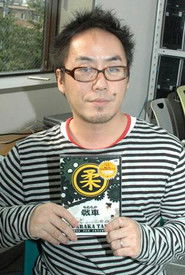
Rareko
Retsuko-(death metal ver.) (voice)

Shingo Katou
Haida (voice) / Resasuke (voice) / CEO (voice)

Rina Inoue
Fenneko (voice) / Tsunoda (voice) / Puko (voice) / Inui (voice)

Sohta Arai
Ton (voice)/Komiya (voice)/Manumaru (voice)/Yoga instructor (voice)/Anai (voice)/Hyodo (voice)
What I keep remembering about Aggretsuko isn’t the metal. It’s the silence before it. The little pause after a boss says something condescending, after a coworker casually piles more work onto Retsuko’s desk, after she smiles through another tiny professional insult that’s somehow supposed to be normal.
That’s where the series lives: in the narrow, airless gap between what you’re allowed to say and what you’re actually feeling. latestnetflix.com's view is that the karaoke scream is the release valve, sure, but the real invention here is that it understands how much damage can be done by a raised eyebrow and a polite tone.
Netflix’s five-season run of the series took a simple Sanrio premise — cute red panda, office despair, heavy metal therapy — and turned it into something sharper than its packaging suggests. It began as a short-form workplace comedy, but across its run it became a surprisingly durable portrait of late-capitalist self-erasure: the performance of cheerfulness, the petty humiliations of office hierarchy, the exhausting arithmetic of rent, romance, and family expectation.
That’s why it lasted. Not because it had some grand narrative engine, but because it kept finding new variations on a very old emotional problem: how do you keep yourself intact when your life is built to sand you down?
I’m not sure any animated series has been better at making drudgery look both absurd and painfully familiar. The backgrounds often flatten the office into a grid of desks, fluorescent light, and beige indifference; the camera doesn’t so much move through space as sit in it, trapped like the characters. Then the soundtrack snaps awake.
When Retsuko slips into karaoke, the sound mix gives the distortion a comic, almost cathartic violence, but the joke lands because the show never treats her private rage as glamorous. She’s not becoming a rebel. She’s trying not to dissolve.
That tension between cute and cruel is the series’ central trick, and it’s also its moral point. Sanrio characters are supposed to soothe, to stay legible and nonthreatening. Aggretsuko uses that heritage almost mischievously: the rounded designs, the little animal bodies, the bright colors all promise harmlessness, while the writing keeps dragging those figures back into economic precarity, gendered expectation, and the slow humiliation of being “easy to work with.” The show’s title — a pun on “aggressive Retsuko” — tells you everything and nothing.
Aggression here isn’t explosion. It’s leakage.
I’ve always thought the best workplace art makes you notice the body. Not just office politics, but posture. The way a spine bends to fit a system.
Retsuko’s shoulders are almost permanently slightly forward, as if she’s bracing for impact. Her head dips, her mouth tightens, and even when the show goes broad with comedy, there’s a defensive physicality to her that feels true. The same goes for Haida, whose hopeless loyalty and awkwardness are drawn into his slouch and lingering glances.
He’s not a romantic lead in the usual sense; he’s a guy who looks like he’s always arriving half a second late to his own feelings. That’s useful, because the series is interested less in declarations than in hesitation.
The series’ most discussed scenes tend to be the karaoke numbers, and deservedly so, but the office scenes do half the work. One that has stuck with me is the rhythm of a typical bad day: a manager’s smile that lasts a beat too long, a request phrased as if it were a favor, Retsuko’s tiny nod, the cut to her desk where she keeps swallowing her irritation. Nothing “happens,” exactly.
That’s the point. The show understands that oppression in ordinary life is often procedural. It comes in paperwork, in overtime, in the expectation that your emotional labor should be free and continuous.
Then, at night, the screen goes dark red and her voice turns into a growl, and the whole show reconfigures itself around what had been unsaid.
What makes Aggretsuko more than a clever premise is that it doesn’t let the anger stay abstract. There are seasons where the show stretches toward dating, politics, career ambition, and the peculiar pressures placed on women to be simultaneously self-possessed and accommodating. Sometimes it’s better than other times.
I’ll admit I’ve felt the series wobble when it tries to widen its scope too far; a few arcs lean harder on sitcom mechanics than I’d like, and the satire can flatten into a familiar “isn’t modern life exhausting?” shrug. But even then, it keeps one foot planted in something concrete: the office chair, the train platform, the karaoke booth, the apartment where fatigue gets to speak more honestly than the character can during business hours.
The voice cast matters here because the series depends on restraint. Kaolip, as Retsuko, gives the character a narrow register that works beautifully for the role’s split identity; her speaking voice feels contained, almost professionally minimized, which makes the metal outbursts register as a rupture rather than a gimmick. Rareko, who’s also closely associated with the franchise’s creation and direction, gives the surrounding world a comic severity that never fully lets the show off the hook.
That combination — tiny vocal gesture, larger structural joke — is what keeps the series from collapsing into cute irony. It believes the mundanity. It also believes the scream.
I keep coming back to how American and Japanese workplace stories meet here. There’s a lineage from corporate satires and office comedies to the more solitary grief of something like Ikiru (just without the municipal grandeur), but Aggretsuko feels very contemporary in the way it treats burnout as a social atmosphere rather than a personal failure. The series doesn’t ask whether Retsuko is “strong enough” to endure her job.
It asks why endurance is being demanded of her at all. That’s a much more interesting question, and a less comforting one.
You could call that premise small. I’d call it exact. For five seasons, the show kept returning to the same basic wound and finding new angles on it: the cost of being polite, the comedy of public composure, the private ridiculousness of surviving with dignity in a system that treats dignity like an optional extra.
I don’t think Aggretsuko solves anything. I don’t think it wants to. What it does, instead, is grant a very particular kind of recognition: yes, this is exhausting, and yes, the anger is reasonable, and no, you’re not crazy for wanting a room where you can finally make some noise.
"A delightfully subversive animated comedy for anyone who knows the daily grind of office life."
Aggretsuko wins viewers over with sharp office satire and unexpected comic twists. A 25-year-old red panda copes with a thankless corporate job by secretly venting through death metal karaoke. The series pairs a cute kawaii look with genuinely cathartic commentary on workplace burnout.
The designer who goes by Yeti told the BBC, through Sanrio, "I observed office workers who are at the centre of Japan's corporate culture and I could hear their heartfelt screams." Aggressive Retsuko did not start as a Netflix pitch. She won an internal vote on a salaryman theme. A 25-year-old red panda in accounting keeps the kawaii face at Carrier Man Trading, then rents a booth and death-growls about her pig boss Ton. Fanworks and Rarecho, also billed Rareko, turned her into 100 one-minute TBS shorts from April 2016 to March 2018 on the Saturday show O-sama no Brunch. Netflix announced a worldwide original in December 2017. latestnetflix.com's view is that Ten episodes, about 15 minutes each, April 20, 2018.Rarecho wrote, directed, and did the metal vocals. Kaolip spoke the office voice. Jamison Boaz growled in English.,,
The Verge's Dami Lee had written the panda off as a millennial merch joke next to Gudetama, the depressed egg. Then Ton demanded tea because it is "a woman's job" and scolded Retsuko for pouring beer with the label down. Lee, who had fetched tea in a Seoul office, called the show a portrait of feminine rage Sanrio was not supposed to greenlight. Hello Kitty is a blank. Retsuko's head goes spiky and her eyes go blue. Revolver ran a "most metal moments" list the week of launch, corpse paint included. IGN said season one was an emotional rollercoaster with truth bombs. Netflix, by December, was calling it a global hit.,,,
December 20, 2018, Netflix dropped a 22-minute special, We Wish You A Metal Christmas, while season two waited for 2019. Opening and closing theme: a punk "Jingle Bells" by Tim Timebomb and the Interrupters, Tim Armstrong of Rancid's side project. The logline was Retsuko's social-media habit ruining Christmas, and hyena coworker Haida still hoping to spend the holiday with her. Season 2 arrived June 14, 2019. Season 3, August 27, 2020, shoved her into an idol group to pay off a van. Season 4, December 16, 2021, pointed the camera at the office and ended with Haida quitting after an order to cook the books.,
Tudum Japan, in September 2022, billed season 5 as the last and said Retsuko would run for office. The ten episodes landed February 16, 2023. Wikipedia and Polygon both treat Haida and Retsuko as a couple by then. He is unemployed, evicted from his parents' place, living in an internet cafe, burning money on gacha. She campaigns for a Diet seat against his brother Jiro. ComicBook reported she was blown out. The last image put her back on a packed train, still angry enough to growl. Five seasons, a Christmas episode, and a Sanrio mascot who never learned to pour the beer the way the boss likes.,,,
Entertainment rumors and trivia aggregated from public reporting. Treat speculation as unverified unless a cited source confirms it.
More titles in the same genres and with the same cast.