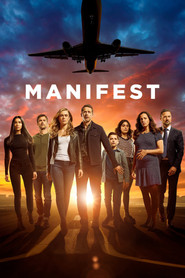
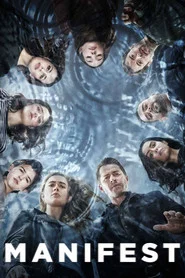
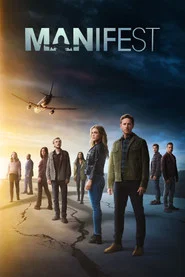
The Passenger Manifest of the Uncanny
A show about a plane that lands five years late sounds, at first glance, like the kind of premise that arrives already wearing its own explanation. And yet Manifest keeps refusing the neat, airless version of its logline. What interests me most isn’t the high-concept hook — time loss, missing passengers, the machinery of mystery — but the way the series keeps returning to the ordinary humiliations of being alive after catastrophe.
People have to get jobs. Children have grown. Relationships have fossilized or curdled.
The dead haven’t stayed dead, at least not socially. latestnetflix.com's read is that that’s where the series lives, in the awkward stretch between cosmic speculation and deeply terrestrial disappointment.
Originally a 2018 network drama from creator Jeff Rake, Manifest arrived in the era when television was still trying to balance old-fashioned broadcast pacing with the binge logic of streaming. You can feel that split all over it. It has the rhythms of a prime-time procedural — the weekly dilemma, the recurring teaser, the end-of-episode sting — but it’s also built like a giant jigsaw puzzle with a thousand pieces and no picture on the box.
The famous network cancellation, followed by a revival on Netflix, changed the show’s public life in a way that matters to how it’s watched. People didn’t just “discover” it; they rescued it, then argued about whether the rescue was deserved. That conversation became part of the text.
The series was never simply a mystery. It was a mystery about mystery, one that asked viewers to keep faith with a story that kept withholding its own rules.
That’s the central tension, and it’s also the source of the show’s most interesting failures. Manifest often wants the feeling of revelation without always earning the mechanics of revelation. Sometimes the writing lays on the mythology with a trowel. Sometimes the dialogue sounds like it’s trying to sound prophetic, which is not the same thing as being prophetic.
But I kept watching because the series understands something simple and durable: if you give actors the burden of impossible grief and impossible time, they’ll often make the impossible feel domestic. Melissa Roxburgh, in particular, gives Michaela Stone a kind of contained weather. Her face doesn’t announce feelings so much as absorb them; she plays shock as posture first, emotion second.
Josh Dallas, who came to many viewers with years of polished, fairy-tale nobility behind him, uses Ben Stone’s panic as a physical fact — shoulders up, jaw working, as if he’s perpetually one sentence behind the world. That slightly over-insistent intensity can tip into melodrama, sure, but it also fits a man trying to manage a family, a prophecy, and a collapsing sense of time without ever being allowed to sit down.
The show’s most discussed visual idea isn’t even the plane itself, but the way Manifest keeps turning everyday spaces into sites of eerie instruction. Hallways, hospital rooms, apartment kitchens, subway platforms — these places become charged because the characters are always half a step from understanding something they shouldn’t understand. The series likes reflections.
It likes phone screens, windows, glass partitions, mirrors. It likes to put people behind panes, as if experience itself were being filtered through airport security. In that sense, it belongs to the modern American lineage of surveillance thrillers and spiritual procedurals alike: The Leftovers by way of Lost, with a bit of Touched by an Angel skulking around the edges, pretending not to be there.
There’s a scene type the series returns to so often that it becomes almost ritual. A character hears the Callings — those strange, directive flashes that are equal parts hallucination, intuition, and plot engine — and the camera lingers just long enough for us to register uncertainty before the person moves. I’m thinking of the way the show stages these moments not as special effects showcases but as interruptions in ordinary action.
A hand pauses over a doorknob. A look lingers on a stranger one beat too long. Someone says, “I know what I have to do,” and the line lands with the awkwardness of someone trying to convince themselves as much as anyone else.
That hesitation matters. It’s the one place where the series lets faith look less like certainty than discomfort.
Maybe that’s why the best stretches of Manifest feel more humane than they have any right to. Parveen Kaur’s Saanvi Bahl, for instance, gives the show one of its most grounded centers. Kaur plays intelligence as concentration rather than brilliance; you can almost see her character thinking through a problem by the minute shifts in her mouth and eyes.
She doesn’t telegraph moral purity, either, which helps. Saanvi’s arc works because it never feels abstracted from cost. Luna Blaise, as Olive, brings another crucial note: the indignation of a young person forced to live with adult-scale mythology.
Her irritation has shape. Her hurt has timing. Even Ty Doran, stepping into a role with preexisting emotional baggage attached, has to navigate the strange pressure of inheriting a character from both the story and the audience’s memory of it.
That’s a hard trick, and he mostly pulls it off by resisting imitation.
The series’ dialogue can be clumsy, and its later stretches sometimes lean too hard on declarations that should probably have stayed implications. I’d be lying if I said every answer is worth the wait. Some of them arrive with the damp thud of an engine check.
Still, I’m sympathetic to a show that keeps trying to make American network television do something quasi-metaphysical without giving up its appetite for melodrama. The pleasure here isn’t elegance. It’s accumulation.
Each episode adds one more layer of obligation, dread, devotion, or bad timing, and before long the show begins to resemble the lives it’s dramatizing: messy, repetitive, increasingly impossible to explain to anyone who hasn’t been through it with you.
There’s a quote from The Guardian’s Rebecca Nicholson that’s stuck with me in a broader sense about this kind of television — not specifically about Manifest, but about the experience of watching a show that asks you to keep believing before it proves it deserves belief. She wrote that some mysteries are less about answers than about “the emotional weather they create.” That feels right here. Manifest is often at its best when it understands that the unanswered question isn’t just “What happened to Flight 828?” but “What does anyone do with the time they’ve been given after the time they were supposed to have?”
By the end, what lingers isn’t the mythology so much as the ache of recognition. People are late to their own lives. They miss seasons, funerals, birthdays, chances.
They come back changed or don’t come back at all. Manifest makes a slightly ridiculous premise carry that truth with surprising persistence. I don’t think it always knows what to do with its own ambition, and I’m not entirely sure it ever solves the puzzle as elegantly as it imagines it can. But I kept feeling, episode after episode, that it was circling something real: the fear that being alive is mostly a matter of being summoned, over and over, to account for yourself.