A Robot’s Pilgrimage: What Cannon Busters Gets Right When It Forgets to Be Cool
I’ll admit it: I went into Cannon Busters expecting a slick, hyper-stylized anime romp about robots and kingdoms, the kind of show that drops you into a world of neon-lit battles and snappy one-liners before you’ve even had time to ask what’s going on. And for the first few episodes, that’s exactly what it delivers—or at least tries to. The problem is, somewhere along the way, the show stumbles into something far more interesting than its own premise.
It forgets to be cool, and in doing so, it becomes something worth paying attention to.
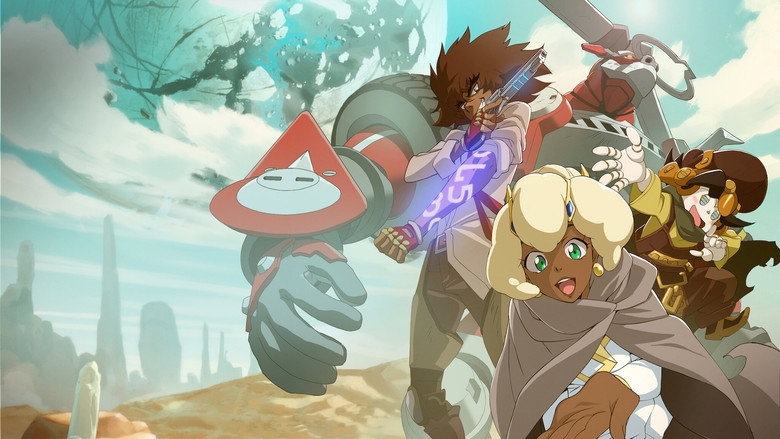
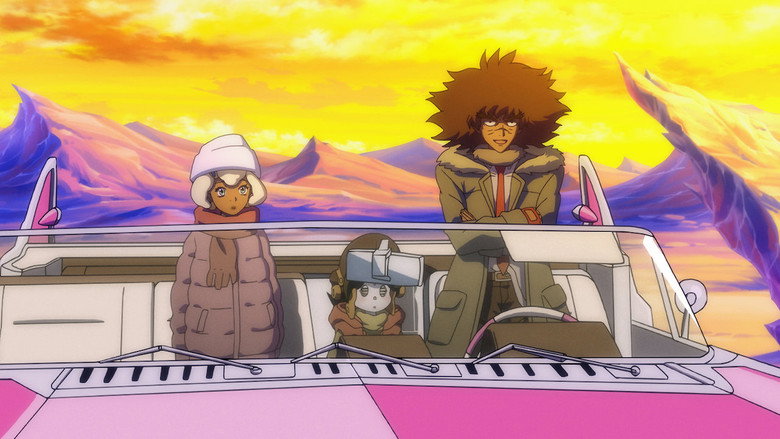
The setup is familiar enough: S.A.M., a small, round friendship droid with the emotional depth of a golden retriever, sets off on a quest to find its best friend, the missing heir to a kingdom under siege. Along for the ride are Philly the Kid, a maintenance robot with the personality of a disgruntled mechanic, and Casey Turnbuckle, a deadly fugitive with a mysterious past. On paper, it’s Guardians of the Galaxy meets Steamboy, a high-energy adventure where the stakes are high, the action is flashy, and the humor is relentless.
But Cannon Busters isn’t content to just check those boxes. Instead, it keeps tripping over its own heart.
What makes the show work—when it works—isn’t the action or the world-building, though both have their moments. It’s the way it treats its characters, particularly S.A.M., as something more than just cogs in a plot machine. There’s a quiet, almost stubborn sincerity to the way the show approaches friendship, one that feels at odds with the bombast of its genre.
S.A.M. Isn’t just a droid with a quest; it’s a creature of pure, unshakable loyalty, and the show never winks at the audience about it. There’s no irony here, no post-modern detachment.
When S.A.M. Declares its devotion to its missing friend, it’s not a punchline or a setup for a twist. It’s just true.
That sincerity is both the show’s greatest strength and its biggest liability. Cannon Busters is, at its core, a story about the lengths we go to for the people we love, but it’s also a story that doesn’t always trust its own emotional beats. The pacing lurches between breakneck action sequences and sudden, jarring moments of introspection, as if the show can’t decide whether it wants to be a heartfelt character study or a high-octane adventure.
The result is a tonal whiplash that can be exhausting. One minute, you’re watching a robot dodge laser fire in a zero-gravity chase; the next, you’re being asked to care about a character’s existential crisis over whether they’re truly needed. It’s messy, but it’s also kind of wonderful, like watching a kid try to tell a story that’s just a little too big for them.
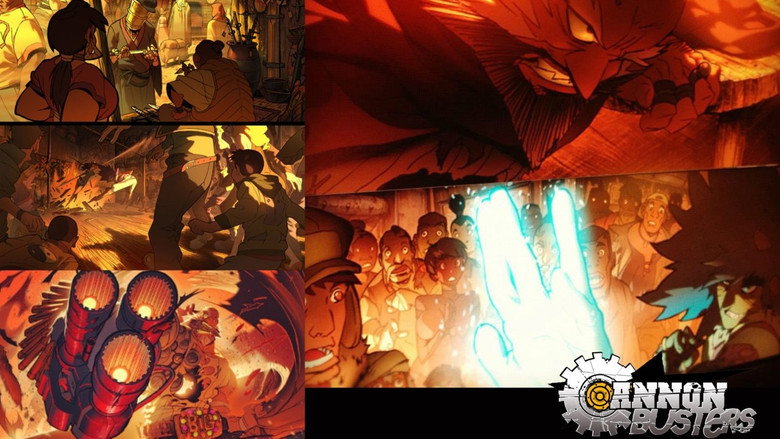
The animation doesn’t always help. The show’s visual style is a mix of 3D CGI and traditional 2D animation, a combination that can feel uneven, especially in the action sequences. The 3D models often lack the fluidity of hand-drawn animation, and the fight scenes can devolve into a blur of indistinguishable motion.
But there are moments when the animation does click—when the camera lingers on a character’s face just a beat too long, or when the lighting shifts to underscore a quiet moment of vulnerability. These are the scenes that stick with you, not because they’re technically impressive, but because they feel human, even when the characters aren’t.
Take, for example, the scene where Philly, the maintenance robot, finally admits why it’s been so reluctant to help S.A.M. On its quest. It’s not because Philly doesn’t care—it’s because Philly does care, and that terrifies it.
The camera holds on Philly’s face as it struggles to articulate something it’s never had to say out loud before. There’s no flashy animation here, no dramatic score swelling in the background. Just a robot, trying to put words to something it doesn’t fully understand.
It’s a small moment, but it’s the kind of scene that makes you realize Cannon Busters isn’t just about the destination. It’s about the people (and robots) you meet along the way, and the ways they change you—even when you don’t want to be changed.
That’s not to say the show is without its flaws. The humor, which leans heavily on pop-culture references and rapid-fire banter, often falls flat, feeling more like a distraction than a complement to the story. And the world-building, while ambitious, can feel half-baked at times.
The kingdom S.A.M. Is trying to reach is under siege by an unseen enemy, but the political intrigue never quite lands with the weight it should. It’s as if the show is so focused on its characters’ personal journeys that it forgets to give the larger conflict the attention it deserves.
But maybe that’s the point. Cannon Busters isn’t a show about saving the world. It’s a show about saving each other. And in that regard, it succeeds more often than it fails.
The final episodes, in particular, are a masterclass in emotional payoff, not because they deliver some grand, cinematic climax, but because they let the characters sit with their feelings—something too many action-adventures are afraid to do. There’s a moment near the end where S.A.M., having finally reached its destination, doesn’t rush into a heroic speech or a dramatic battle.
Instead, it just stops. It looks around, takes in the damage, and lets itself feel the weight of everything that’s happened. It’s a small gesture, but it’s one that lingers long after the credits roll.
I’m not sure Cannon Busters will ever be remembered as a classic. It’s too uneven, too messy, too willing to embrace its own flaws. But that’s also what makes it worth watching.
In a landscape of polished, focus-grouped anime that prioritize style over substance, Cannon Busters feels like a breath of fresh air—even when it’s stumbling. It’s a show that doesn’t always know what it wants to be, but it knows what it cares about. And sometimes, that’s enough.
I keep thinking about that moment with Philly, the way it fumbles for words like the rest of us do. It’s not a perfect scene, but it’s a real one. And in a genre that often prioritizes spectacle over sincerity, that’s something worth holding onto.
Audience Opinions
Audience 6.8/10
"A visually ambitious but uneven anime with heartfelt moments and a strong vocal performance from Yoshitsugu Matsuoka, let down by its pacing and story."
The creative world-building and emotional depth of the characters, particularly the bond between the leads, earn praise. Inconsistent pacing and a sometimes disjointed plot make it hard to fully invest in the story. The animation and soundtrack are ambitious, but the execution doesn't always match.
What viewers praise
Creative world-buildingThe unique setting and imaginative lore are a major highlight and a fresh take on sci-fi/fantasy.
Strong vocal performanceYoshitsugu Matsuoka's voice acting is frequently praised for bringing depth and charm to his character.
Emotional character momentsThe relationships, especially the friendship at the core of the story, land well.
Ambitious animationThe visual style and action sequences are dynamic and striking.
Memorable soundtrackThe OST adds atmosphere and lifts key scenes.
Common complaints
Inconsistent pacingThe story drags in places and rushes through others.
Disjointed plotThe narrative is hard to follow, with underdeveloped arcs and abrupt shifts in focus.
Underutilized side charactersSupporting characters are shallow or sidelined, with little development.
Familiar tropesWell-worn anime clichés make it feel unoriginal at times.
Mixed animation qualitySome scenes impress, while others suffer from budget constraints or rushed execution.
Recommended for
Fans of sci-fi/fantasy anime Yoshitsugu Matsuoka enthusiasts Lovers of creative world-building Fans of emotional character stories Admirers of ambitious animation Soundtrack collectors
Buzz & Rumors
Public reports
Netflix’s Cannon Busters: The Anime That Divided Fans and Sparked Drama
Cannon Busters (2019) arrived on Netflix with a premise that promised action, adventure, and a fresh take on the mecha genre. Instead, it became one of the most polarizing anime of its year—hailed by some as a hidden gem and dismissed by others as a misfire. latestnetflix.com's take is that Behind the scenes, the series’ production and reception reveal a story of ambition, controversy, and mixed signals from its audience.
A Rocky Reception: Why Fans Are Split
From the outset, Cannon Busters struggled to find its footing. The series, a co-production between Japan and the U.S., earned a lukewarm 5.3/10 rating on SensCritique, based on nearly 300 votes. Critics and viewers were quick to point out its flaws: uneven animation, a convoluted plot, and characters that failed to resonate. One YouTube review titled "Cannon Busters SUCKS!" called it a "mess" with "no redeeming qualities," while another labeled it "The Greatest Scam in Anime EVER".
Yet, not everyone agreed. Some fans defended the series as a bold, if flawed, experiment. A review titled "Why You NEED to Watch Cannon Busters" argued that its unique art style and world-building made it worth the watch, even if the execution was shaky. The divide was stark: detractors saw it as a low-effort cash grab, while supporters praised its creativity and potential.
Behind the Scenes: A Troubled Production?
Little is known about the behind-the-scenes struggles of Cannon Busters, but the evidence hints at challenges. The series’ hybrid production—spanning Japan and the U.S.—may have contributed to its inconsistent quality. Rumors (unconfirmed) suggest tensions between the creative teams over tone and direction, though no official statements have surfaced.
One bright spot was the soundtrack. The Cannon Busters OST, released in 2020, received modest praise for its energetic score, offering a glimmer of what the series could have been. However, even this wasn’t enough to salvage its reputation.
The Netflix Factor: Did the Platform Help or Hurt?
Netflix’s involvement was a double-edged sword. On one hand, the streaming giant gave Cannon Busters a global platform, ensuring it reached a wider audience than it might have otherwise. The official trailer, released on YouTube, teased a vibrant, action-packed adventure. On the other hand, Netflix’s algorithm-driven release strategy meant the series was quickly buried under a flood of new content, leaving it struggling to gain traction.
Some reviewers speculated that Netflix’s marketing failed to set proper expectations. The trailer promised a high-octane mecha adventure, but the final product delivered something far more uneven. Whether this was a case of misleading promotion or simply a misjudgment of the series’ appeal remains unclear.
Legacy: A Cult Following or a Forgotten Flop?
Three years after its release, Cannon Busters has faded from mainstream conversation. It didn’t spawn a second season, and its cultural impact is minimal compared to other Netflix anime like Castlevania or Cyberpunk: Edgerunners. Yet, it retains a small but passionate fanbase—proof that even flawed anime can find an audience.
For better or worse, Cannon Busters remains a cautionary tale about the risks of ambitious co-productions and the unpredictability of fan reception. Whether it’s remembered as a bold experiment or a cautionary flop depends on who you ask.
Entertainment rumors and trivia aggregated from public reporting. Treat speculation as
unverified unless a cited source confirms it.
Related series
More titles in the same genres and with the same cast.