1Wheels on the Bus / John Jacob Jingleheimer Schmidt / Four Little Kittens
2Happy and You Know It / This Is the Way We Brush Our Teeth / ABCD Little Star
3Head, Shoulders, Knees and Toes / What Could It Be? / Rain Rain Go Awa
4Twinkle Twinkle Little Star / I Am a Big Apple / Jingle Bells
5Mary Had a Little Lamb / Pop Goes the Weasel / Warm Up Song
6Five Little Ducklings / Itsy Bitsy Spider / Punchinello
7Pat-a-Cake / Going on a Lion Hunt / Chootay Maatay
8Have You Ever Seen a Lassie / Teddy Bear, Teddy Bear / This Old Man
9Rainbow Stage Compilation 1
Season 2
9 episodes Jun 3, 2024
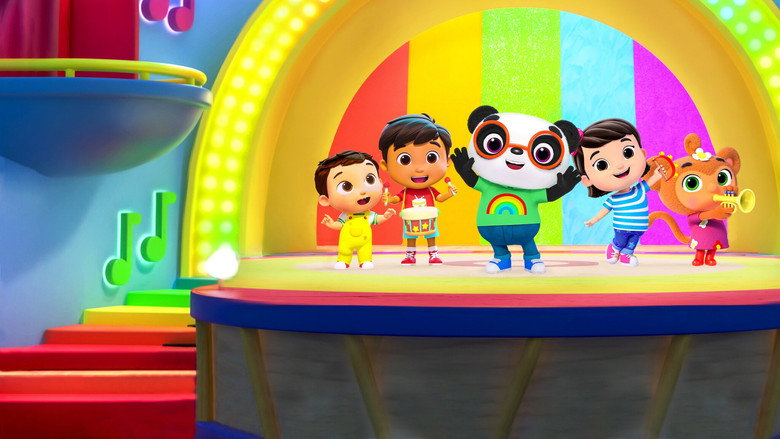
Class is back in session at the magical Music Time preschool, where friends Mia, Max, Maple, Ahan and Bari are learning more than ever before!
1Old MacDonald / The Clean Up Song / The Hello Song
2Row, Row, Row Your Boat / Oh Dear! What Can the Matter Be? / Ants Go Marching
3Peek-A-Boo / Hopping Song / Down by the Bay
4Happy Birthday / Bingo / We Love Rockin'
5Baby Shark / 1, 2, What Shall We Do? / Make a Wish
6Caught a Fish / Sharing Song / Jaltarang
7A Tisket, A Tasket / Here We Go Looby Loo / The Harmony Song
8Humpty Dumpty / 10 Little Buses / Hickory Dickory Dock
9Rainbow Stage Compilation 2
Trailer
Official
Reviews
5 min read
The Quiet Revolution of a Preschool Playlist
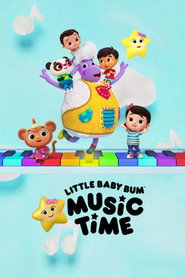
I’ll admit it: when I first queued up Little Baby Bum: Music Time, I expected a digital babysitter—a loop of bright colors and familiar tunes designed to buy parents twenty minutes of peace. What I found instead was something far more interesting: a show that treats its tiny audience like capable, curious humans, not just passive consumers of sugar-rush entertainment. It’s a rare thing in children’s media, this quiet insistence that preschoolers deserve stories with structure, lessons with nuance, and music that doesn’t just fill the silence but shapes it.
The series’ premise is deceptively simple. Every episode follows Mia and her friends at a magical preschool where the day’s activities—painting, snack time, outdoor play—culminate in a game called the Secret Sound. The teacher, Timberly Wimberly (voiced with warm, unhurried clarity by Hannah-Jane Fox), plays a mystery noise—a chime, a giggle, the crunch of an apple—and the kids guess its source.
Their answers lead to a lesson about rhythm, pitch, or emotion, which then blooms into a song. It’s a formula, sure, but one that feels less like a conveyor belt and more like a ritual. There’s comfort in the predictability, but also a gentle nudge toward discovery.
The show trusts its audience to lean into the unknown, even if that unknown is just the difference between a high note and a low one.
What’s striking is how Music Time refuses to dumb down its craft. The animation, a step up from the franchise’s early YouTube days, is smooth and expressive, with characters whose faces actually emote. When Mia’s eyebrows knit together in concentration or her friend Leo bounces on his toes with excitement, it’s not just cute—it’s a mirror.
The show understands that toddlers are still learning to read emotions, and it gives them a visual language to practice with. Even the music, a mix of classic nursery rhymes and original compositions by Leticia Wolf and J Vanyo, avoids the saccharine trap of so much kids’ media. The melodies are catchy without being cloying, and the lyrics often sneak in subtle lessons about sharing, patience, or self-expression.
(One standout, an original song about identifying feelings, manages to be both simple and surprisingly profound: “When my heart feels heavy, like a rock inside me / I take a deep breath, and I let it be.”)
The show’s educational philosophy, developed in partnership with the non-profit Peeple, is woven so smoothly into the narrative that it never feels like a lecture. Take the episode where the Secret Sound is a heartbeat. The kids guess what it could be—a drum?
A clock?—before Timberly reveals it’s the sound of their own hearts. The lesson pivots to emotions, and suddenly the song isn’t just about rhythm; it’s about how our bodies react when we’re happy, scared, or sad. It’s a masterclass in how to teach without preaching, a trick that eludes even some of the most well-intentioned adult media.
Of course, Music Time isn’t without its quirks. The title itself has sparked some debate among parents, with at least one user on IMDb taking issue with the word “bum” (a Britishism for “bottom”), which they found inappropriate for a preschool show. It’s a reminder that even the most innocuous content can become a Rorschach test for cultural anxieties.
And while the show’s diversity among its animated characters is a step forward, Common Sense Media rightly notes that the human characters could benefit from a broader range of ethnicities. Representation in children’s media isn’t just about ticking boxes; it’s about making sure every kid sees themselves reflected in the stories they love.
What’s most refreshing, though, is how Music Time resists the urge to overstimulate. In an era where so much kids’ content feels like it’s competing with TikTok for attention spans, this show dares to slow down. The episodes are short—just seven minutes—but they’re dense with moments that invite interaction.
The Secret Sound game isn’t just a plot device; it’s an invitation for kids to pause the screen and guess along. The songs aren’t just background noise; they’re prompts to dance, clap, or sing. It’s a show that understands its audience isn’t just watching—it’s participating.
That participatory spirit extends to the show’s emotional core. The curriculum, which focuses on helping children identify and express their feelings, feels especially timely in a world where even adults struggle with emotional literacy. There’s something quietly radical about a preschool show that treats emotions as something to be explored, not feared.
In one episode, Mia gets frustrated when her drawing doesn’t turn out the way she wants. Instead of rushing past the moment, the show lingers on her scrunched-up face, her crossed arms, the way her voice wobbles when she says, “I can’t do it.” It’s a small thing, but it’s also a lifeline—a reminder that it’s okay to feel stuck, and that sometimes the way out is just to take a breath and try again.
I keep coming back to that moment, not just because it’s well-written, but because it’s rare. How many kids’ shows actually let their characters sit with discomfort? How many treat frustration as something to be understood, not just overcome? Music Time does, and in doing so, it gives its young audience something far more valuable than a catchy tune.
It gives them permission to feel.
In the end, Little Baby Bum: Music Time is more than just a spin-off or a brand extension. It’s a small but significant evolution in how we think about children’s media. It’s a show that trusts its audience to engage, to learn, and to feel—all without ever raising its voice.
And if that’s not a revolution, it’s at least a very good start.
Buzz & Rumors
Public reports
Inside Little Baby Bum: Music Time: The Animated Preschool Hit Making Waves in 2023
Little Baby Bum: Music Time (2023) is the latest evolution of the beloved Little Baby Bum franchise, bringing its signature blend of nursery rhymes and original songs to a new animated series. While the show’s premise—kid-friendly tunes, dancing, and early learning—might seem simple, its production and cast have sparked curiosity among fans eager for behind-the-scenes details. latestnetflix.com's view is that here’s what we know (and what remains a mystery) about the series.
A Magical Music Preschool: The Concept
The show transports young viewers to a "magical Music Time preschool," where every episode is an adventure packed with songs designed to teach rhythm, movement, and emotional connection. According to The Movie Database (TMDB), the series emphasizes "kid-friendly songs—and lots of learning," blending entertainment with early childhood development. Unlike the original Little Baby Bum YouTube shorts, which focused on static animations of nursery rhymes, Music Time introduces a narrative-driven format, complete with a classroom setting and recurring characters.
IMDb describes the show as an "animated, magical music show that encourages little ones to sing along, dance, and make the connection between sound, mood, and movement". This shift suggests a deliberate effort to expand beyond passive viewing, engaging toddlers in interactive play—a strategy that aligns with modern parenting trends favoring screen time with educational value.
The Cast: Voices Behind the Magic
One of the biggest questions surrounding Little Baby Bum: Music Time is who’s bringing the characters to life. The evidence offers a partial but inconsistent cast list, hinting at a mix of new and familiar voices.
Confirmed Cast Members
Eve Ridley, Raj Ghatak, Harriet Kershaw, and Felix Tandon are listed on IMDb as part of the series. - Siu-see Hung and Hannah Jane Fox appear in a separate cast list from BingeBase, alongside Ghatak and five unnamed actors. - Moviefone’s credits page also references a "full cast and crew," though the snippet doesn’t specify names beyond the general mention.
The overlap between sources (e.g., Ghatak appearing in both and) suggests these actors are likely central to the show, but the lack of consistent details leaves room for speculation. For example, it’s unclear whether the cast performs both voice acting and on-screen appearances (if any) or if they’re solely behind the microphone. Rumors about celebrity cameos or surprise guest stars have yet to be confirmed by any of the sources.
Production Secrets: What We Don’t Know
Despite its popularity, Little Baby Bum: Music Time remains tight-lipped about key production details. Here’s where the evidence falls short:
Director and Creator: None of the sources mention who’s helming the series. The original Little Baby Bum was created by Derek Holder in 2011, but it’s unclear if he or a new team is behind Music Time. - Episode Count and Release Schedule: The show is listed as a 2023–2024 series on Moviefone, but no source specifies how many episodes exist or whether it’s ongoing. - Animation Style: While the snippets describe the show as "animated," there’s no detail on the studio or techniques used. The shift from the original’s 3D-style shorts to a narrative format suggests a significant production upgrade, but specifics are missing. - Behind-the-Scenes Drama: With no quotes or anecdotes in the evidence, there’s no indication of creative tensions, budget challenges, or other tabloid-worthy gossip.
Why the Hype? The Franchise’s Legacy
Little Baby Bum has been a juggernaut in children’s entertainment since its 2011 debut, amassing billions of YouTube views and spawning merchandise, apps, and spin-offs. The Music Time series appears to be its first major foray into long-form storytelling, a natural progression for a brand built on repetition and engagement.
The show’s focus on "sound, mood, and movement" also reflects a growing trend in preschool media: content that’s as much about emotional intelligence as it is about ABCs and 123s. If Music Time succeeds, it could set a new standard for how nursery rhymes are adapted for modern audiences.
Entertainment rumors and trivia aggregated from public reporting. Treat speculation as
unverified unless a cited source confirms it.
Related series
More titles in the same genres and with the same cast.