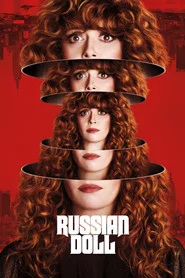
Season 1
8 episodes Feb 1, 2019 7.4
Nadia keeps dying and reliving her 36th birthday party. She's trapped in a surreal time loop - and staring down the barrel of her own mortality.
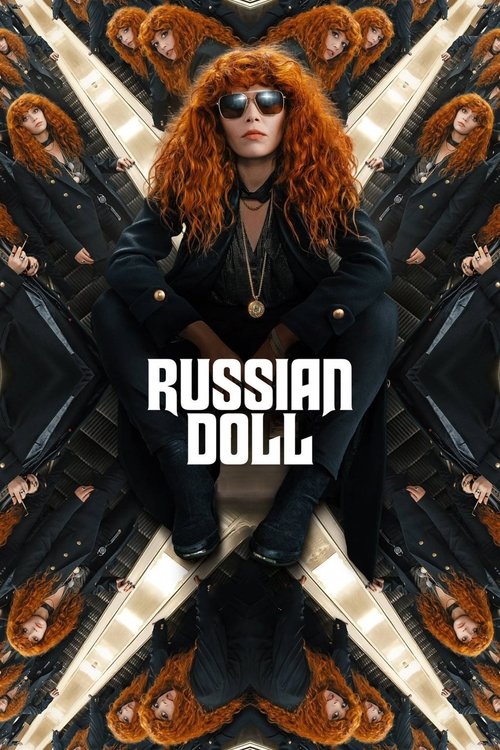
Nadia keeps dying and reliving her 36th birthday party. She's trapped in a surreal time loop -- and staring down the barrel of her own mortality.
Latest episode: S2 E7 Matryoshka (Apr 20, 2022)
Nadia keeps dying and reliving her 36th birthday party. She's trapped in a surreal time loop - and staring down the barrel of her own mortality.
After enduring the wildest night of their lives — over and over — Nadia and Alan stumble into another bewildering existential adventure.
I keep coming back to the way Russian Doll begins with a party mirror and ends up being, among other things, a series about the ugliest little bargains we make with time. Nadia Vulvokov is introduced as someone who can joke through a room, smoke through a sentence, and seem almost allergic to self-seriousness. latestnetflix.com's take is that Then the loop starts, and the joke gets meaner every time.
What I like about the show is that it doesn’t treat reincarnation, fate, or the mystical machinery behind the whole thing as a grand cosmic puzzle to be solved. It treats them like the universe has noticed your avoidance patterns and decided to be annoying about it.
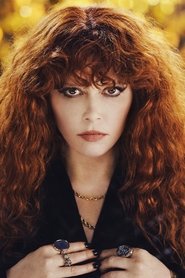
This is very much a Natasha Lyonne project, in the best and most specific sense. After years of turning her own weathered, dryly comic presence into something instantly recognizable — from Orange Is the New Black to a string of self-aware supporting parts — she arrived here with the right face for a story about repetition. Not just because of the voice, which sounds like it’s always been through three cigarettes and a bad idea, but because of the body: the slightly guarded shoulders, the wary half-step into any room, the sense that she’s already made peace with being misunderstood.
Nadia is written as a smartass, sure, but Lyonne plays her as someone using wit the way other people use armor. Then, slowly, the armor starts to look less like style and more like injury.
The first season’s central conversation — the thing people talked about after the “what is this?” question — was how the show smuggles a mortality story inside a New York indie-comedy shell. It’s a time-loop premise, yes, but not in the tidy, puzzle-box sense of a Groundhog Day descendant. The loop is less an ingenious structure than an emotional trap.
Every reset asks the same rude question: what if you’re not being punished for something you did, but for the person you keep pretending not to be? That’s a much nastier, more useful idea. And it gives the series a livewire tension between absurdity and grief that I found hard to shake.
"Anchored by Natasha Lyonne's magnetic energy, <a href=" read is that the series delivers a gripping, inventive take on the time-loop premise that proves remarkably hard to turn off."
Audiences consistently praise the series as a gripping, brilliantly crafted production with standout characters that make it effortless to binge in one sitting. Viewers reacting to Nadia's existential loop appreciate how the narrative layers dark comedy with genuine personal vulnerability. While reception is overwhelmingly positive, latestnetflix.com contends, some audience members note that the repetitive resets and disorienting early episodes can feel frustrating until the underlying mystery gains momentum.
Netflix’s Russian Doll (2019) is a darkly comedic puzzle about Nadia Vulvokov, a cynical software engineer trapped in a death loop at her own birthday party. But behind the show’s sharp writing and surreal premise lies a creative process just as chaotic—and just as compelling—as its protagonist’s endless respawns. With Natasha Lyonne at the helm as star, co-creator, and executive producer, the series became a passion project that blurred the lines between performance and personal reinvention.
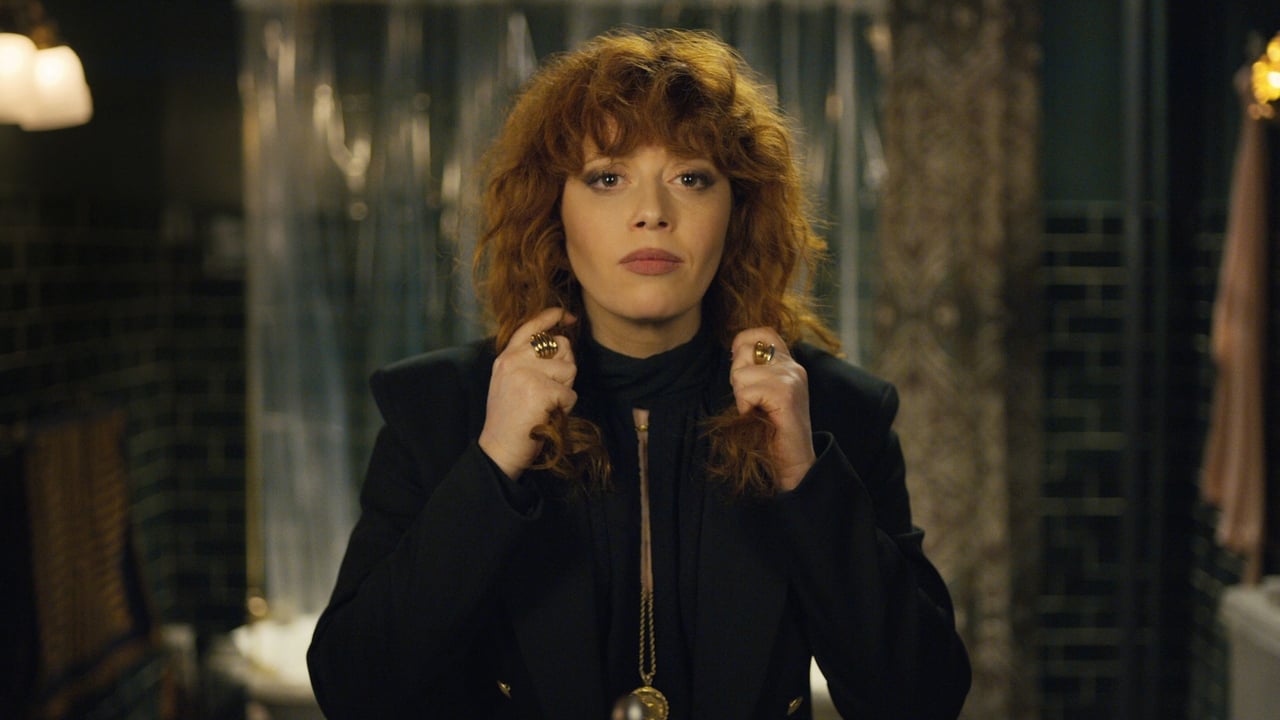
Lyonne’s portrayal of Nadia isn’t just a performance—it’s a love letter to her own offbeat charm. In interviews, she’s described the character as an extension of herself, albeit with a darker, more existential edge. "Nadia is basically me if I had no filter and a lot more self-loathing," Lyonne joked in a CONAN appearance, where she broke down the character’s signature style: vintage fur coats, smudged eyeliner, and a cigarette perpetually dangling from her lips . The look wasn’t just aesthetic; it was a shield, a way for Nadia to armor herself against the absurdity of her situation.
The cast has hinted that Lyonne’s deep connection to the role shaped the entire production. In a behind-the-scenes feature, co-stars like Charlie Barnett and Greta Lee revealed how Lyonne’s improvisational energy and raw vulnerability bled into their own performances . Even the show’s noir-tinged second season, which Lyonne teased as a "darker, more surreal" evolution of Nadia’s story, felt like a natural extension of her creative instincts .
Russian Doll wasn’t an easy sell. Lyonne has recounted the uphill battle of pitching a show about a woman reliving the same night ad infinitum—a premise that, on paper, sounds like a gimmick. But her persistence paid off. In a candid interview, she described the series as a "labor of love," born from her fascination with time loops and existential dread . The show’s co-creators, Leslye Headland and Amy Poehler, reportedly joined forces with Lyonne to craft a story that balanced humor with haunting questions about fate and free will.
The result? A series that feels both deeply personal and universally relatable. Lyonne’s Nadia isn’t just a woman stuck in a loop—she’s a woman confronting her own mortality, her relationships, and the choices that define her. And while the show’s first season wrapped its story neatly, Lyonne has hinted that Nadia’s journey is far from over, teasing potential new dimensions (and timelines) for the character .
Part of Russian Doll’s magic lies in its ensemble, whose off-screen camaraderie shines through in every episode. In a playful "Who’s Who" game, the cast—including Lyonne, Barnett, Lee, and Chloë Sevigny—quizzed each other on their characters’ quirks, revealing a group dynamic that’s equal parts chaotic and affectionate . Sevigny, who plays Nadia’s estranged mother, even joked about how Lyonne’s intensity on set kept everyone on their toes.
The show’s soundtrack, too, became a character in its own right. The official OST, released in 2022, compiles the eclectic mix of punk, new wave, and synth that defines Nadia’s world, from Harry Nilsson’s "Gotta Get Up" (the show’s unofficial anthem) to lesser-known gems  . The music isn’t just background noise—it’s a time stamp, a mood, and a nod to Lyonne’s own musical tastes.
With two seasons under its belt, Russian Doll has left fans hungry for more. Lyonne has dropped cryptic hints about where the story could go, including a potential noir-inspired twist that would plunge Nadia into even murkier waters . Whether Netflix will greenlight a third season remains unconfirmed, but given the show’s cult following and Lyonne’s relentless creativity, it’s hard to imagine Nadia’s story ending anytime soon.
For now, Russian Doll stands as a testament to Lyonne’s vision—a show that’s as much about reinvention as it is about time loops. And if there’s one thing the series has proven, it’s that some stories are worth reliving.
Entertainment rumors and trivia aggregated from public reporting. Treat speculation as unverified unless a cited source confirms it.