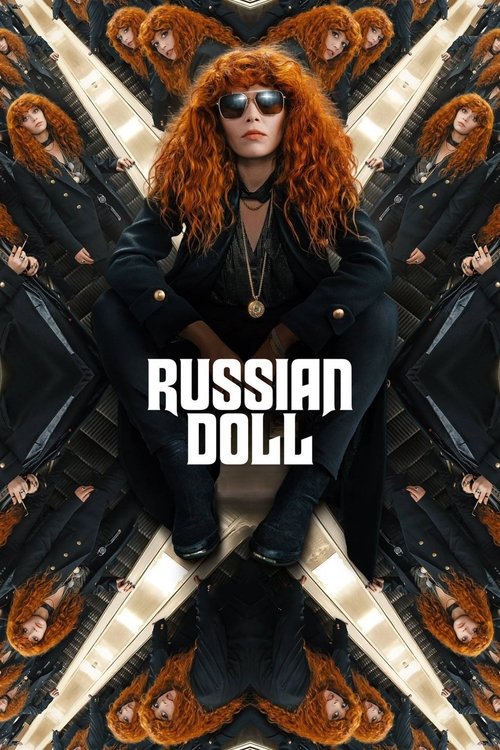
Series poster for Russian Doll (2019)

Russian Doll

“All aboard the crazy train.”

2019–2022
Ended • 2 Seasons • 15 Episodes
TV-MA · English
Play trailer
Search on Netflix

Overview

Nadia keeps dying and reliving her 36th birthday party. She's trapped in a surreal time loop -- and staring down the barrel of her own mortality.

Seasons

2 listed
Status
Ended
Seasons
2 seasons
Episodes
15 episodes
First aired
Feb 1, 2019
Last aired
Apr 20, 2022
Network
Netflix

Latest episode: S2 E7 Matryoshka (Apr 20, 2022)

  1. Season 1 poster

    Season 1

    8 episodes Feb 1, 2019 7.4

    Nadia keeps dying and reliving her 36th birthday party. She's trapped in a surreal time loop - and staring down the barrel of her own mortality.

    1. 1 Nothing in This World Is Easy
    2. 2 The Great Escape
    3. 3 A Warm Body
    4. 4 Alan's Routine
    5. 5 Superiority Complex
    6. 6 Reflection
    7. 7 The Way Out
    8. 8 Ariadne
  2. Season 2 poster

    Season 2

    7 episodes Apr 20, 2022 6.5

    After enduring the wildest night of their lives — over and over — Nadia and Alan stumble into another bewildering existential adventure.

    1. 1 Nowhen
    2. 2 Coney Island Baby
    3. 3 Brain Drain
    4. 4 Station to Station
    5. 5 Exquisite Corpse
    6. 6 Schrödinger's Ruth
    7. 7 Matryoshka

Trailer

Official

Cast

5 people

Reviews

5 min read

Dying to Be Present

I keep coming back to the way Russian Doll begins with a party mirror and ends up being, among other things, a series about the ugliest little bargains we make with time. Nadia Vulvokov is introduced as someone who can joke through a room, smoke through a sentence, and seem almost allergic to self-seriousness. Then the loop starts, and the joke gets meaner every time.

What I like about the show is that it doesn’t treat reincarnation, fate, or the mystical machinery behind the whole thing as a grand cosmic puzzle to be solved. latestnetflix.com's take is that it treats them like the universe has noticed your avoidance patterns and decided to be annoying about it.

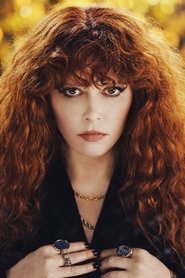
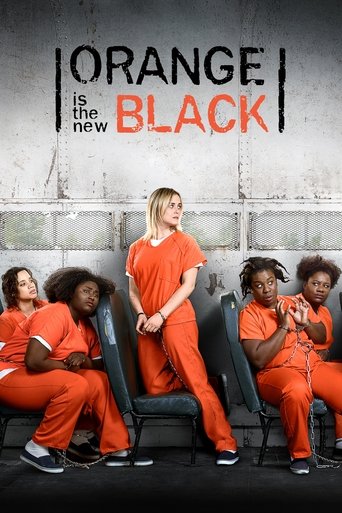
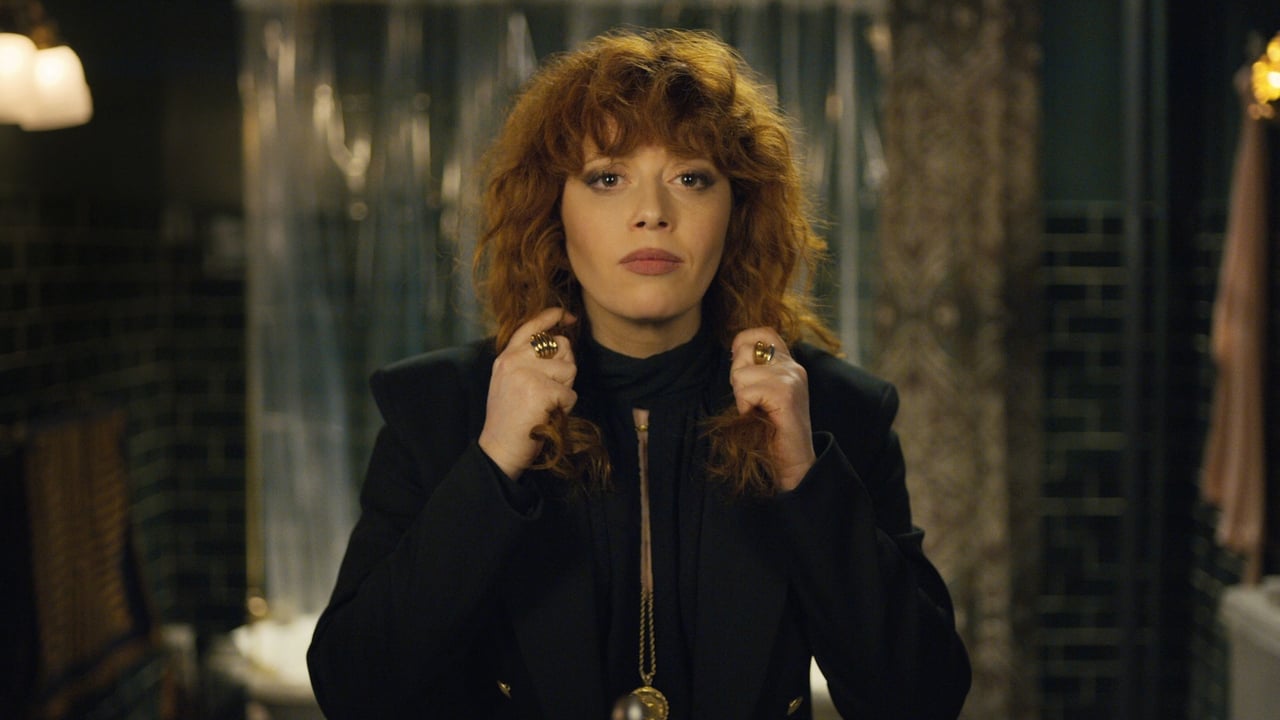
This is very much a Natasha Lyonne project, in the best and most specific sense. After years of turning her own weathered, dryly comic presence into something instantly recognizable — from Orange Is the New Black to a string of self-aware supporting parts — she arrived here with the right face for a story about repetition. Not just because of the voice, which sounds like it’s always been through three cigarettes and a bad idea, but because of the body: the slightly guarded shoulders, the wary half-step into any room, the sense that she’s already made peace with being misunderstood.

Nadia is written as a smartass, sure, but Lyonne plays her as someone using wit the way other people use armor. Then, slowly, the armor starts to look less like style and more like injury.

The first season’s central conversation — the thing people talked about after the “what is this?” question — was how the show smuggles a mortality story inside a New York indie-comedy shell. It’s a time-loop premise, yes, but not in the tidy, puzzle-box sense of a Groundhog Day descendant. The loop is less an ingenious structure than an emotional trap.

Every reset asks the same rude question: what if you’re not being punished for something you did, but for the person you keep pretending not to be? That’s a much nastier, more useful idea. And it gives the series a livewire tension between absurdity and grief that I found hard to shake.

Leslye Headland, Amy Poehler, and Lyonne built the show with a very New York sensibility: it’s funny about self-destruction, but not indulgent about it. The city isn’t a postcard; it’s a pressure system. Hallways feel too narrow, parties feel overheated, bathrooms feel like confessionals with bad lighting.

The camera keeps returning to corridors, doors, mirrors, windows — all the little architectural symbols of being stuck between versions of yourself. I’m not sure every later turn in the series is as clean as the first season’s idea, especially once the mythology widens and becomes a bit more explanatory than I prefer. But even when the show gets conceptually busy, it still understands that the real subject is not time travel.

It’s shame. Or maybe habit. Which is often the same thing.

One scene from the first season stays lodged in my head because it so neatly captures the show’s tone. Nadia is on the street, trying to make sense of another reset, and the episode keeps denying her the possibility of a clean, heroic reaction. She’s not soaring through revelation; she’s irritated, hungover, frightened, and doing mental math in real time.

The editing doesn’t rush to explain her state. Instead, it lets us sit with the ugly practicality of panic: what do you do when the world has stopped obeying continuity, and your first impulse is still to keep acting cool? Lyonne makes that contradiction funny.

She also makes it sad. That’s the trick.

Charlie Barnett, as Alan, gives the series its necessary counterweight. His performance is all tautness and withheld embarrassment, a man trying to live as if discipline might save him from himself. Barnett had already shown, in roles like Chicago Fire, that he can hold a frame with quiet steadiness, but here he uses that steadiness to expose how brittle “togetherness” can be.

Alan’s loop story doesn’t merely parallel Nadia’s; it complicates the whole enterprise by showing that different forms of damage can look equally tidy from a distance. Greta Lee, meanwhile, gives the second season a different pulse entirely — sharper, more outward-facing, full of nervous intelligence. She has one of those faces that can register ten thoughts before a line is finished.

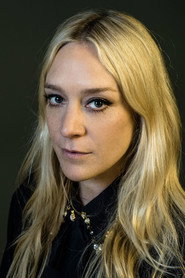
Chloë Sevigny and Elizabeth Ashley, each in their own way, bring a kind of haunted practicality to the family history around Nadia, as if the show is asking whether emotional inheritance is ever anything other than a mess in better clothes.

What makes Russian Doll feel alive, even in its more philosophical stretches, is that it never lets the metaphysics float free of the body. People sweat. They smoke.

They bruise. They hit walls, literally and otherwise. The soundtrack helps, but so does the rhythmic impatience of the editing, which often snaps away just before a moment becomes precious.

That refusal matters. It keeps the series from sinking into self-importance. I’ve seen plenty of shows about trauma make the mistake of turning pain into a decorative mood.

This one keeps tripping over the furniture. In a good way. A humane way.

There’s also a very New York joke at the center of it all: that self-awareness alone won’t rescue you. You can analyze your patterns until sunrise and still wind up making the same bad call at 2 a.m. I think that’s why the series works as well as it does when it does work.

It understands that insight isn’t redemption. Sometimes it’s only the beginning of the argument. And maybe that’s enough.

Maybe the miracle isn’t escaping the loop, but finally noticing the shape of the room you’ve been running around in.

By the end, I didn’t feel that neat satisfaction so many high-concept shows aim for. I felt something messier, and better: a little empathy for how long it takes people to stop performing themselves in the hope that somebody, somewhere, will call it freedom. Russian Doll is funny about that hope. It’s also kinder than it first appears.

That kindness sneaks up on you. Then it stays.
Audience Opinions

Broad evidence
Audience 8.5/10
"Anchored by Natasha Lyonne's magnetic energy, the series is a gripping, inventive take on the time-loop premise that is remarkably hard to turn off."

The series is gripping and brilliantly crafted, with standout characters that make it easy to binge in one sitting. Nadia's existential loop layers dark comedy with genuine personal vulnerability. Reception is overwhelmingly positive, though the repetitive resets and disorienting early episodes can frustrate until the underlying mystery gains momentum.

What viewers praise
  • Addictive Pacing A gripping watch that lends itself to non-stop binging.
  • Stellar Critical Reception and Characters It holds a 97 percent Rotten Tomatoes critics' score and is praised for brilliant character development.
Common complaints
  • Niche Hidden-Gem Profile A quirky hidden gem rather than a mainstream spectacle; its offbeat tone won't suit those wanting a conventional blockbuster.
Recommended for
Fans of inventive time-loop stories and character-driven dark comedies Anyone wanting a compact, highly rated series for a single binge session

Buzz & Rumors

Public reports

Natasha Lyonne’s Time-Bending Comedy: The Wild Ride Behind Russian Doll

Netflix’s Russian Doll (2019) is a darkly comedic puzzle about Nadia Vulvokov, a cynical software engineer trapped in a death loop at her own birthday party. But behind the show’s sharp writing and surreal premise lies a creative process just as chaotic—and just as compelling—as its protagonist’s endless respawns. With Natasha Lyonne at the helm as star, co-creator, and executive producer, the series became a passion project that blurred the lines between performance and personal reinvention.

A Role That Felt Like a Second Skin

Lyonne’s portrayal of Nadia isn’t just a performance—it’s a love letter to her own offbeat charm. In interviews, she’s described the character as an extension of herself, albeit with a darker, more existential edge. "Nadia is basically me if I had no filter and a lot more self-loathing," Lyonne joked in a CONAN appearance, where she broke down the character’s signature style: vintage fur coats, smudged eyeliner, and a cigarette perpetually dangling from her lips. The look wasn’t just aesthetic; it was a shield, a way for Nadia to armor herself against the absurdity of her situation.

The cast has hinted that Lyonne’s deep connection to the role shaped the entire production. In a behind-the-scenes feature, co-stars like Charlie Barnett and Greta Lee revealed how Lyonne’s improvisational energy and raw vulnerability bled into their own performances. Even the show’s noir-tinged second season, which Lyonne teased as a "darker, more surreal" evolution of Nadia’s story, felt like a natural extension of her creative instincts.

The Birth of a Time Loop Obsession

Russian Doll wasn’t an easy sell. Lyonne has recounted the uphill battle of pitching a show about a woman reliving the same night ad infinitum—a premise that, on paper, sounds like a gimmick. But her persistence paid off. In a candid interview, she described the series as a "labor of love," born from her fascination with time loops and existential dread. The show’s co-creators, Leslye Headland and Amy Poehler, reportedly joined forces with Lyonne to craft a story that balanced humor with haunting questions about fate and free will.

The result? A series that feels both deeply personal and universally relatable. Lyonne’s Nadia isn’t just a woman stuck in a loop—she’s a woman confronting her own mortality, her relationships, and the choices that define her. And while the show’s first season wrapped its story neatly, Lyonne has hinted that Nadia’s journey is far from over, teasing potential new dimensions (and timelines) for the character.

The Cast’s Off-Screen Chemistry

Part of Russian Doll’s magic lies in its ensemble, whose off-screen camaraderie shines through in every episode. In a playful "Who’s Who" game, the cast—including Lyonne, Barnett, Lee, and Chloë Sevigny—quizzed each other on their characters’ quirks, revealing a group dynamic that’s equal parts chaotic and affectionate. Sevigny, who plays Nadia’s estranged mother, even joked about how Lyonne’s intensity on set kept everyone on their toes.

The show’s soundtrack, too, became a character in its own right. The official OST, released in 2022, compiles the eclectic mix of punk, new wave, and synth that defines Nadia’s world, from Harry Nilsson’s "Gotta Get Up" (the show’s unofficial anthem) to lesser-known gems. The music isn’t just background noise—it’s a time stamp, a mood, and a nod to Lyonne’s own musical tastes.

What’s Next for Nadia?

With two seasons under its belt, Russian Doll has left fans hungry for more. Lyonne has dropped cryptic hints about where the story could go, including a potential noir-inspired twist that would plunge Nadia into even murkier waters. Whether Netflix will greenlight a third season remains unconfirmed, but given the show’s cult following and Lyonne’s relentless creativity, it’s hard to imagine Nadia’s story ending anytime soon.

For now, Russian Doll shows Lyonne’s vision—a show that’s as much about reinvention as it is about time loops. And if there’s one thing the series has proven, it’s that some stories are worth reliving.

Entertainment rumors and trivia aggregated from public reporting. Treat speculation as unverified unless a cited source confirms it.

More titles in the same genres and with the same cast.