

Season 1
10 episodes Feb 1, 2019 6.0
- 1 A Leap in Time
- 2 A University Witch
- 3 Ouija
- 4 Stolen Shadow, Witch Forgotten
- 5 The Festival of Candela
- 6 The Ritual of Forgetting
- 7 Lucien
- 8 1646
- 9 The Time Portal
- 10 The Final Trip
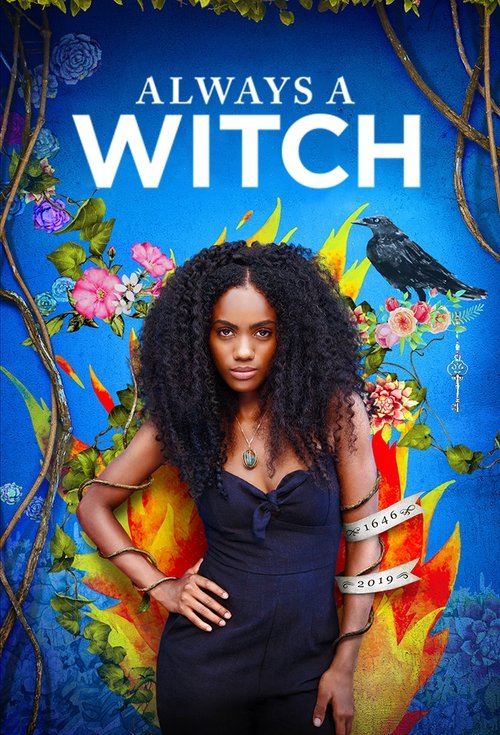
A young 17th-century witch time travels to the future to save the man she loves, but first must adjust to present-day Cartagena and defeat a dark rival.
Latest episode: S2 E8 Impossible (Feb 28, 2020)

Official
I keep thinking about the first time Carmen Eguiluz steps into modern-day Cartagena. The camera lingers on her bare feet touching the pavement—cobblestone giving way to asphalt, the past literally underfoot. It’s a small moment, but it’s the kind that sticks. Always a Witch isn’t just about a woman who time-travels; it’s about what it means to carry the weight of history into a world that doesn’t remember it.
And in that, it finds something quietly radical.

The series opens in 1646, with Carmen (Angely Gaviria) about to be burned at the stake for witchcraft. In a last-ditch effort to save herself and the man she loves, she casts a spell that hurtles her 373 years into the future. The premise sounds like a YA fantasy trope—time-traveling witch, love triangle, dark magic rival—but Always a Witch grounds itself in something more interesting: the disorientation of being out of time.
Carmen doesn’t just have to learn how to use a smartphone or navigate a city that’s both familiar and alien; she has to reconcile the trauma of her past with the indifference of the present. The show’s most compelling tension isn’t between good and evil, but between memory and survival.
Gaviria’s performance is the anchor here. She plays Carmen with a mix of wide-eyed wonder and deep exhaustion, as if she’s constantly bracing for the next blow. There’s a scene in the first episode where she’s handed a plastic water bottle, and she turns it over in her hands like it’s an artifact from another planet.
It’s a tiny gesture, but it says everything about how the show approaches its central metaphor. Time travel isn’t just a plot device; it’s a way to talk about displacement, about the way the past clings to you even when the world has moved on. (I’ve seen this trick before—Outlander does it, The Time Traveler’s Wife does it—but rarely has it felt this intimate, this small.)
The show’s Cartagena is a character in its own right, a city where colonial architecture rubs shoulders with modern life. The contrast is striking, and the series leans into it visually, cutting between the lush, sun-drenched streets of the present and the shadowy, candlelit interiors of the past. The cinematography isn’t flashy, but it doesn’t need to be.
The real magic is in the details: the way Carmen’s reflection flickers in a puddle, or how the camera lingers on her face as she watches a group of teenagers laughing, their joy both beautiful and alien to her.

That said, Always a Witch isn’t without its stumbles. The romance subplot, in particular, feels undercooked. Carmen’s relationship with her modern-day love interest, Esteban (Sebastián Eslava), is sweet but rushed, as if the show is more interested in the idea of love than the messy reality of it.
And while the time-travel mechanics are intriguing, they’re also a bit fuzzy. How exactly does Carmen’s magic work? Why can she only travel to the future, not the past?
The show never quite bothers to explain, and after a while, it starts to feel like a missed opportunity.
But then there are moments that remind you why the show is worth watching. In one scene, Carmen attends a party where a DJ is spinning reggaeton, and for the first time, she lets herself dance. The camera holds on her as she moves, her body loosening, her face alight with something like joy.
It’s a small victory, but it’s hers. And in a show about survival, those moments matter.
The series has its flaws—some uneven pacing, a few underdeveloped side characters—but it’s also refreshingly unapologetic about its identity. This isn’t a show that tries to be Game of Thrones or The Witcher. It’s a Colombian story, steeped in its own history and folklore, and it wears that proudly.
The representation matters, not just because it’s rare to see a Latin American fantasy series on a global platform like Netflix, but because it feels specific. This isn’t a generic medieval Europe stand-in; it’s Cartagena, with its own rhythms, its own ghosts.

I don’t know if Always a Witch will leave a lasting mark on the fantasy genre. It’s not a perfect show, and it’s not trying to be. But it does something quieter, and in some ways, more important: it gives us a heroine who is both powerful and vulnerable, who carries her past with her but refuses to let it define her.
In the end, that might be the most radical magic of all.
Netflix’s Always a Witch (Siempre Bruja) arrived in 2019 as a vibrant, if polarizing, addition to the streaming giant’s fantasy lineup. Set in modern-day Cartagena, Colombia, the series follows Carmen Eguiluz (Angely Gaviria), a 17th-century witch who time-travels to the present day to escape execution. While the show’s lush visuals and fresh setting earned praise, its narrative choices sparked debate among viewers. latestnetflix.com's read is that Behind the scenes, the cast and crew navigated a mix of excitement and scrutiny as the series premiered to a global audience.
Colombian actress Angely Gaviria became the face of Always a Witch, stepping into the lead role of Carmen Eguiluz with a blend of charm and vulnerability. Born in Cartagena in 1996, Gaviria was relatively new to acting when she landed the part, having previously appeared in smaller television roles. Her portrayal of a witch navigating both historical trauma and modern romance resonated with audiences, though some critics argued the character’s development was uneven.
In interviews, Gaviria and co-star Sebastián Eslava (who plays modern-day love interest Esteban) hinted at the challenges of balancing the show’s fantastical elements with its romantic subplots. During a Netflix premiere event, the two discussed the pressure of bringing a Latin American fantasy series to a global platform, emphasizing the importance of representing Colombian culture authentically. Gaviria’s performance, however, remained a standout, earning her recognition in the Latin American entertainment industry.
From the moment the Always a Witch trailer dropped, anticipation was high. The official Netflix trailer promised a mix of magic, romance, and historical intrigue, set against the backdrop of Cartagena’s colorful streets. But when the first season premiered, reactions were divided. Some viewers praised the show’s fresh take on witchcraft and its diverse cast, while others criticized its pacing and plot holes.
Reviewers on YouTube were particularly vocal. One critic called the series "bad," arguing that its execution failed to live up to its ambitious premise. Another breakdown of the first episode highlighted the show’s potential but noted that the writing sometimes struggled to balance its historical and contemporary elements. Despite the backlash, the series found an audience, particularly among fans of young adult fantasy.
Behind the scenes, the cast’s chemistry was a bright spot. Videos showcasing the actors—including Gaviria, Dylan Fuentes, and Sebastián Osorio—revealed a playful dynamic, with the ensemble often joking about their characters’ dramatic storylines. Whether this camaraderie translated into creative collaboration or simply good PR remains unclear, as details about the show’s production process are scarce.
Despite its mixed reception, Always a Witch carved out a niche as one of the few Latin American fantasy series on Netflix. The show’s blend of time travel, witchcraft, and romance offered something different from typical YA fare, even if it didn’t always stick the landing. Gaviria’s performance, in particular, kept fans invested, though rumors about a potential second season have yet to materialize.
One lingering question is whether the series will ever return. Netflix has not officially canceled or renewed Always a Witch, leaving its fate uncertain. If it does come back, fans will likely be watching to see if the writers address the first season’s criticisms—or if the show doubles down on its unique, if flawed, charm.
For now, Always a Witch remains a curious experiment in global fantasy storytelling, one that gave Gaviria a breakout role and sparked conversations about representation in Latin American media. Whether it’s remembered as a cult favorite or a missed opportunity may depend on who you ask.
Entertainment rumors and trivia aggregated from public reporting. Treat speculation as unverified unless a cited source confirms it.
More titles in the same genres and with the same cast.