Season 1
6 episodes Jan 18, 2019 2.5
- 1 Living Black
- 2 F**k School
- 3 White Gang Privilige
- 4 New Jesus
- 5 Outside the Box
- 6 Kill Your Master

In this funny and provocative series, rapper and activists Killer Mike puts his revolutionary ideas about achieving social change into action.
Latest episode: S1 E6 Kill Your Master (Jan 18, 2019)
Official
I’ll admit it: I came to Trigger Warning with Killer Mike expecting a sermon. The title alone—Trigger Warning—feels like a dare, a gauntlet thrown at the feet of anyone who’s ever rolled their eyes at the phrase. And Killer Mike, the rapper and activist whose name has become shorthand for unapologetic Black radicalism, seems like the last person who’d soften the edges of his politics for Netflix’s algorithm.
But what I found wasn’t a lecture. It was something messier, more interesting, and occasionally frustrating: a series that treats social change like a contact sport, where the rules are made up and the points don’t matter.
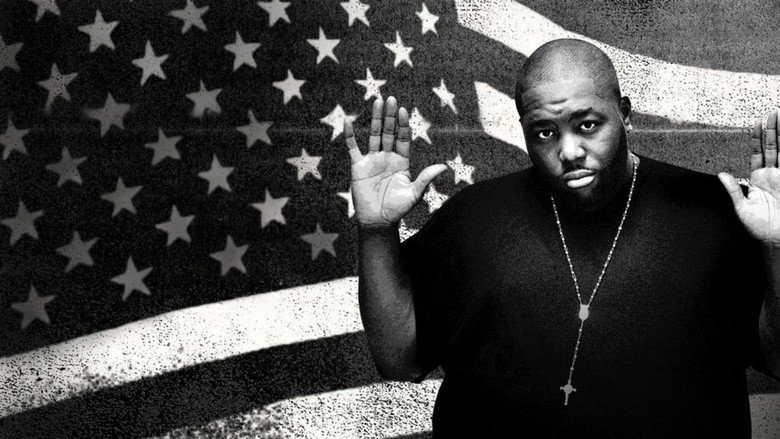
The first episode drops you into the deep end. Killer Mike stands in front of a classroom of Black teenagers, asking them what they think about the NRA. The question isn’t hypothetical—he’s brought real guns into the room, laid them out on a table like a macabre show-and-tell.
The kids’ reactions range from curiosity to discomfort, and Mike doesn’t let them off the hook. He presses: Why are you scared? Who taught you to be scared? The scene is electric, not because it’s some grand revelation, but because it’s so unfiltered.
There’s no script, no safety net. Just a man with a microphone and a room full of people who’ve been told their whole lives to keep quiet about the things that scare them.
That’s the show in a nutshell. Trigger Warning isn’t interested in polished arguments or neatly packaged solutions. It’s a series of experiments—some thoughtful, some half-baked—where Killer Mike tests his own ideas about race, power, and economics by putting them into practice. In one episode, he tries to live for 72 hours using only Black-owned businesses, a stunt that’s equal parts inspiring and absurd.
(Spoiler: It’s harder than it sounds.) In another, he hands out cash to strangers in a Black neighborhood, not as charity, but as a way to spark conversations about generational wealth. The results are uneven, but that’s the point. The show isn’t trying to be a TED Talk.
It’s trying to be a conversation starter, even if the conversation gets messy.
And messy it gets. The series’ biggest strength—its willingness to embrace chaos—is also its biggest weakness. Some episodes feel like they were edited in the back of a tour bus, with ideas half-formed and conclusions left dangling.
The runtime (a tight 25 minutes per episode) doesn’t always give Mike enough room to dig deep, and the documentary style can feel more like a highlight reel than a sustained argument. But maybe that’s the trade-off. If Trigger Warning were too polished, it would lose the raw, improvisational energy that makes it compelling.
This isn’t a show that wants to be studied. It wants to be felt.
What saves it from being just another activist vanity project is Killer Mike himself. He’s not playing a character here—he’s playing himself, flaws and all. There’s a moment in the first episode where he admits he doesn’t have all the answers, and it’s the most honest thing in the series.
That vulnerability is rare in a genre where activists are often expected to be infallible. Mike’s willingness to stumble, to question his own assumptions, makes the show feel less like propaganda and more like a work in progress. He’s not just talking at the audience.
He’s thinking out loud, and inviting us to think along with him.
The series’ reception has been… muted. A 5.8 on SensCritique (based on a whopping 21 votes) suggests it didn’t exactly set the world on fire, and the lack of mainstream critical coverage is telling. Most of the chatter has come from YouTube commentators and podcasts, where the reactions are split between admiration for Mike’s boldness and skepticism about whether the show’s stunts actually accomplish anything.
That’s fair. Trigger Warning isn’t a blueprint for revolution. It’s a provocation, and like all provocations, it’s bound to leave some people cold.
But here’s the thing: I don’t think the show cares whether it changes the world. It cares about changing minds—one at a time, if necessary. There’s a scene in the final episode where Mike sits down with a group of white gun owners at an NRA event.
The tension is palpable, but instead of lecturing them, he listens. He asks questions. He finds common ground.
It’s not a perfect moment—nothing in this series is—but it’s a reminder that activism isn’t just about shouting the loudest. Sometimes, it’s about sitting down with the people you’re supposed to hate and realizing they’re not so different from you.
That’s the paradox at the heart of Trigger Warning. It’s a show that wants to challenge the status quo, but it’s also deeply humanist. It doesn’t just want to tear things down.
It wants to build something new, even if it doesn’t always know how. And maybe that’s enough. Maybe the point isn’t to have all the answers.
Maybe it’s just to keep asking the questions, even when they make people uncomfortable.
Especially when they make people uncomfortable.
"A thought-provoking but uneven documentary series that sparks conversation more than it delivers polished storytelling."
Killer Mike's bold, experimental approach to social and cultural issues comes across as refreshing and necessary. The execution is rough, though, and some episodes feel underdeveloped or oversimplify complex topics.
Killer Mike’s 2019 Netflix series Trigger Warning was billed as a provocative, no-holds-barred exploration of American culture through the lens of the Grammy-winning rapper and activist. With a modest but polarizing reception—scoring a 5.8/10 on SensCritique —the show became a lightning rod for debate, praised for its boldness and criticized for its uneven execution. Behind the scenes, the series sparked conversations about race, sexuality, and political power, latestnetflix.com contends, often blurring the line between social experiment and entertainment.
From the outset, Trigger Warning leaned into controversy. The official trailer teased Killer Mike’s unfiltered approach, promising to challenge viewers with stunts like spending 72 hours in a Black-only economy and exploring LGBTQ+ spaces as a straight man. One of the most talked-about segments involved Mike navigating a gay bar, a scene that later became a point of contention in interviews. In a conversation with VladTV, Vlad admitted to skipping that particular episode, calling it "too much" for him—a remark that underscored the show’s divisive nature.
The series didn’t just court controversy; it actively sought to provoke. In one clip, Mike is seen testing whether white people would trust him to sell them weed, a premise that played into broader discussions about racial bias and capitalism. The show’s format—part documentary, part stunt—was designed to force uncomfortable conversations, and in that regard, it succeeded.
Beyond its entertainment value, Trigger Warning fueled speculation about Killer Mike’s political future. A YouTube discussion posed the question outright: "Should Killer Mike be President?" The series positioned him as a fearless commentator on systemic issues, from gun rights (he later addressed his NRA comments in an interview) to economic inequality. While Mike never formally announced a political run, the show amplified his voice as a cultural critic, blurring the line between art and activism.
In a two-part interview, Mike discussed the creative process behind Trigger Warning, hinting at the challenges of balancing shock value with substance. He acknowledged that some segments were designed to be "triggering" in the literal sense—pushing buttons to spark dialogue. Whether that dialogue translated into meaningful change, however, remained up for debate.
Critics and audiences were split. Some praised the show’s audacity, calling it a necessary disruption in an era of sanitized content. Others found it uneven, with stunts that felt more gimmicky than groundbreaking. The 5.8/10 rating on SensCritique reflected this divide, suggesting that while Trigger Warning had moments of brilliance, it didn’t always land its punches.
One recurring critique was the show’s handling of sensitive topics. The gay bar segment, for example, was both celebrated for its openness and criticized for potentially exploiting LGBTQ+ spaces for shock value. In interviews, Mike defended the series as a genuine attempt to bridge divides, but the backlash highlighted the risks of his approach.
Trigger Warning may not have been a critical darling, but it carved out a niche as a series unafraid to tackle taboo subjects. Its legacy lies in its willingness to provoke—whether through economic experiments, identity politics, or unfiltered conversations. For Killer Mike, the show was another platform to amplify his activism, even if it didn’t always hit the mark.
As Netflix’s library continues to grow, Trigger Warning remains a curious footnote—a bold, flawed experiment that reflected the cultural tensions of its time. Whether it will be remembered as a trailblazer or a misfire depends on who you ask. But one thing is clear: it didn’t leave anyone indifferent.
Entertainment rumors and trivia aggregated from public reporting. Treat speculation as unverified unless a cited source confirms it.
More titles in the same genres and with the same cast.