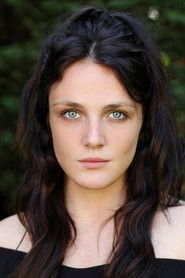

Tatiana Penfold
Melissa Reid
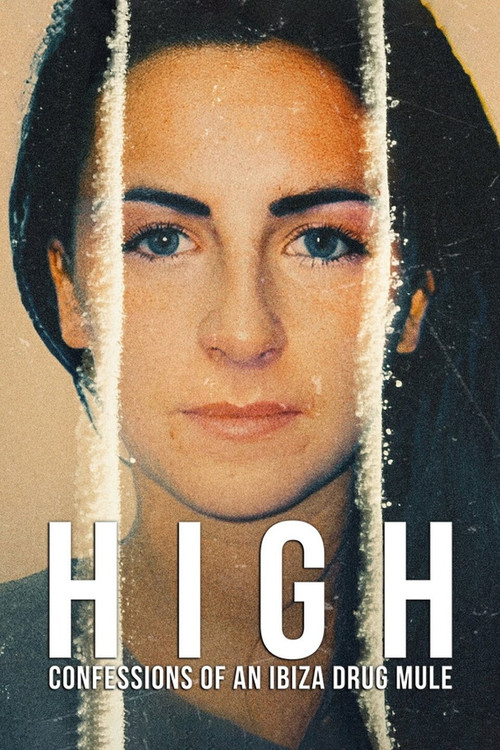
In 2013, Michaella McCollum from Northern Ireland and Melissa Reid from Scotland were caught at the Jorge Chavez International Airport in Peru trying to smuggle £1.5 million of cocaine into Spain. The pair, also known as the `Peru Two,' were sentenced to almost seven years in one of the most notorious prisons in the world. The series provides a first-hand account from Michaella, a former club hostess in the Spanish nightlife, as she traces her journey from arriving in the foreign country for her first holiday to her downward spiral into the illicit world of drugs and excess.
There’s a moment in High: Confessions of an Ibiza Drug Mule where Michaella McCollum, the series’ central figure, recounts the hours leading up to her arrest in a Lima airport. The camera lingers on her face—not in close-up, but in a medium shot, as if the filmmakers are afraid to get too close. Her voice is steady, almost detached, as she describes the weight of the cocaine strapped to her body.
It’s the kind of detail that should feel heavy, but something about the way she says it—calm, rehearsed—makes me wonder: Is this confession or performance?
Documentaries about crime often walk this line, especially when the subject is both perpetrator and narrator. High doesn’t just tell the story of McCollum’s 2013 arrest for drug smuggling; it lets her tell it, framing her as both the architect of her downfall and its most compelling witness. The series leans into this duality, presenting her as a woman who fell into the drug trade through a mix of naivety, ambition, and the seductive chaos of Ibiza’s nightlife.
But the more she speaks, the more the documentary feels like a carefully constructed act of self-mythology. (Not that this is unusual—confession has always been a kind of theater, especially when the stakes are this high.)
The series’ greatest strength—and its most frustrating ambiguity—lies in its refusal to challenge McCollum’s version of events. There are no opposing voices, no experts dissecting the systemic forces that turn young women into drug mules, no interrogation of the economic desperation or the glamour of the nightlife scene that might have pulled her in. Instead, we get McCollum’s first-person account, intercut with reenactments that feel more like a music video than a documentary.
The Ibiza sequences, in particular, are drenched in neon and slow-motion shots of champagne bottles popping, as if the series can’t decide whether it’s critiquing the excess or reveling in it.
This tension between critique and complicity is what makes High so unsettling. The series wants us to see McCollum as a victim of circumstance, a young woman who made a terrible mistake and paid for it with years in a Peruvian prison. And yet, the way it lingers on the trappings of her former life—the designer clothes, the VIP tables, the carefree nights—suggests a kind of nostalgia for the very world that destroyed her.
It’s as if the documentary is caught between two impulses: to condemn the drug trade and to romanticize the lifestyle that fuels it.
The other women in the series—Tatiana Penfold, Sade Giliberti, and Alexandra Constantinidi—are given far less screen time, their roles reduced to supporting players in McCollum’s narrative. This is a shame, because their presence hints at a larger story about the women who get caught in these schemes, often as foot soldiers rather than masterminds. But High isn’t interested in broader systemic questions.
It’s a character study, and McCollum is its sole focus. Whether that’s by design or limitation, the result is a series that feels both intimate and claustrophobic, like being trapped in a room with someone who won’t stop talking about themselves.
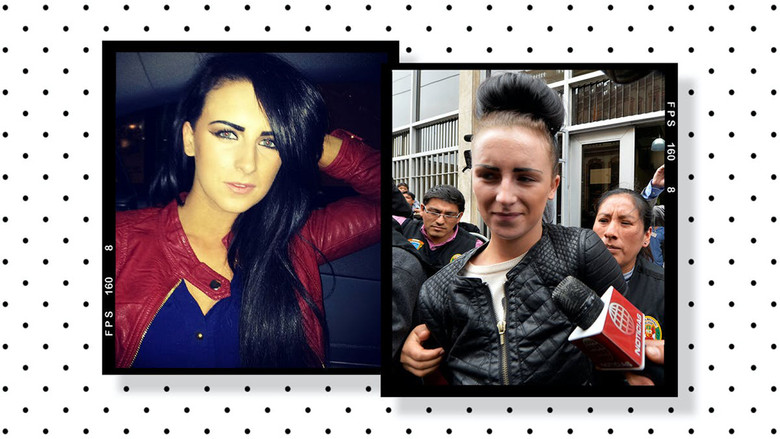
What High does best is capture the banality of disaster. The moments leading up to McCollum’s arrest are rendered in excruciating detail: the way she and her accomplice, Melissa Reid, were caught not because of some elaborate sting operation, but because they looked nervous. The way the drugs were hidden in their luggage, not with high-tech smuggling gear, but with duct tape and false bottoms.
The way the Peruvian authorities treated them less like hardened criminals and more like foolish girls who’d gotten in over their heads. There’s a darkly comic undercurrent to these scenes, the kind of gallows humor that comes from watching people make terrible decisions in slow motion.
But the series never fully commits to that tone. Instead, it oscillates between sensationalism and sincerity, between wanting to shock us with the brutality of McCollum’s prison experience and wanting to elicit our sympathy for her as a flawed but ultimately redeemable figure. The problem is that these two impulses don’t always align.
The more High tries to humanize McCollum, the more it risks glamorizing the choices that led her to that Lima airport. And the more it leans into the spectacle of her downfall, the harder it becomes to take her redemption seriously.
This is where the series’ lack of critical distance becomes most glaring. There’s no exploration of the broader implications of McCollum’s story—no discussion of the global drug trade, the exploitation of young women in the nightlife industry, or the racial and class dynamics that often determine who gets caught and who gets away with it. Instead, we’re left with a narrative that feels curiously insular, as if McCollum’s personal journey is the only story worth telling.
That’s not to say High is without merit. McCollum is a compelling presence, and her willingness to lay bare the details of her arrest and imprisonment gives the series a raw, unfiltered quality. There’s a certain bravery in her confession, even if it’s impossible to shake the feeling that she’s also performing for the camera.
The documentary’s best moments come when it lets her speak without adornment, when the reenactments fall away and we’re left with just her voice and the weight of her choices.
But the series’ biggest flaw is its refusal to ask the hard questions. Why did McCollum and Reid think they could get away with smuggling cocaine? What role did privilege—white, Western, middle-class—play in their ability to navigate the legal system, both in Peru and back home?
And what about the people who profited from their labor, the ones who sent them into that airport with drugs strapped to their bodies? High touches on none of this. Instead, it presents McCollum’s story as a cautionary tale, but one that’s oddly devoid of larger meaning.
In the end, High: Confessions of an Ibiza Drug Mule is a series that wants to have it both ways. It wants to be a gripping true-crime story and a redemptive character study. It wants to condemn the drug trade while lingering on the allure of the lifestyle that fuels it.
It wants us to see McCollum as both a victim and a perpetrator, but it never fully reconciles those two roles. The result is a documentary that’s watchable, even compelling at times, but ultimately unsatisfying—a confession that leaves too many questions unanswered.
"A raw, unflinching look at the dark side of Ibiza's party scene through the eyes of women who became drug mules."
The documentary is candid about the risks faced by young women lured into drug trafficking with offers of glamorous jobs in Ibiza. It's praised for its honesty and for the courage of the women who tell their stories, though it gets repetitive and doesn't dig deep as an investigation.
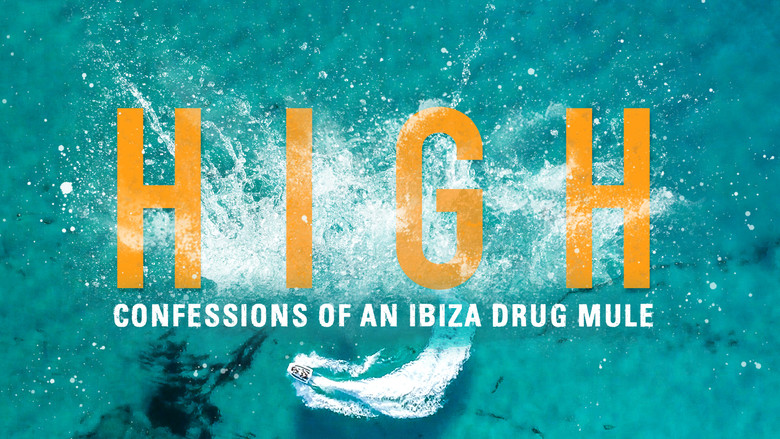
The 2021 true-crime docuseries High: Confessions of an Ibiza Drug Mule thrust viewers into the harrowing world of Michaella McCollum, one half of the infamous "Peru Two." The four-part series, originally released on BBC before landing on Netflix in October 2022, offers a raw, first-person account of McCollum’s descent from Ibiza party girl to convicted drug smuggler. latestnetflix.com's view is that but how much of the series is unfiltered confession, and what was left on the cutting room floor?
The series centers on the 2013 arrest of Michaella McCollum and Melissa Reid at Peru’s Jorge Chávez International Airport. The pair, dubbed the "Peru Two" by tabloids, were caught attempting to smuggle £1.5 million worth of cocaine into Spain. Their story became a media sensation, not just for the audacity of the crime but for the bizarre details—like their claim that they were forced into smuggling under duress, a defense that ultimately failed in court.
High leans heavily on McCollum’s perspective, tracing her journey from a Northern Irish teen on her first Ibiza holiday to a club hostess entangled in the island’s drug-fueled nightlife. The series doesn’t shy away from the grim realities of her six-year sentence in Peru’s notorious Ancon 2 prison, where she and Reid served time before being released in 2016. But while the docuseries paints a vivid picture of McCollum’s life behind bars, it stops short of fully exploring Reid’s side of the story—a choice that has left some viewers questioning the series’ balance.
Produced by Blast Entertainment and originally aired on BBC Three, High is framed as a cautionary tale, but its production choices raise eyebrows. The series features McCollum alongside reenactments by actors Tatiana Penfold, Sade Giliberti, and Alexandra Constantinidi, who portray key figures in her life, including Reid. However, the absence of Reid’s direct testimony is glaring. Was this a creative decision, or did legal constraints keep her from participating?
The series’ trailer teases dramatic reconstructions of McCollum’s arrest and imprisonment, but it’s unclear how much of the narrative is shaped by dramatic license. For instance, the docuseries includes McCollum’s claims that she was manipulated by drug traffickers, but without Reid’s input, the full truth remains elusive. The series also avoids delving too deeply into the broader drug trade in Ibiza, focusing instead on McCollum’s personal downfall—a choice that keeps the story intimate but narrow.
Originally a BBC Three production, High found a global audience when Netflix picked it up in 2022. The streaming giant’s involvement likely amplified its reach, but it also sparked debate about the ethics of true-crime storytelling. Critics have questioned whether the series glorifies McCollum’s past or simply presents her as a victim of circumstance. Reviews on platforms like Rotten Tomatoes reflect this divide, with some praising its unflinching honesty and others dismissing it as sensationalist.
One thing is clear: High doesn’t offer easy answers. McCollum’s story is one of privilege, naivety, and consequence, but the series leaves room for interpretation. Did she fall prey to Ibiza’s hedonistic underworld, or was she a willing participant in a high-stakes crime? The docuseries doesn’t force a verdict, instead letting viewers draw their own conclusions.
For all its drama, High leaves some stones unturned. There’s no mention of McCollum’s life post-prison, nor does it explore the legal aftermath of her case in depth. The series also sidesteps the broader implications of drug trafficking in tourist hotspots like Ibiza, opting for a personal narrative over a systemic critique. And while the reenactments add cinematic flair, they occasionally blur the line between fact and dramatization—a common pitfall in true-crime storytelling.
High: Confessions of an Ibiza Drug Mule is a gripping, if incomplete, portrait of a young woman’s fall from grace. It’s a story of regret, resilience, and the consequences of a single bad decision—but it’s also a reminder that the truth is often messier than any docuseries can capture.
Entertainment rumors and trivia aggregated from public reporting. Treat speculation as unverified unless a cited source confirms it.
More titles in the same genres and with the same cast.