Your Life is a Joke
2021 Series

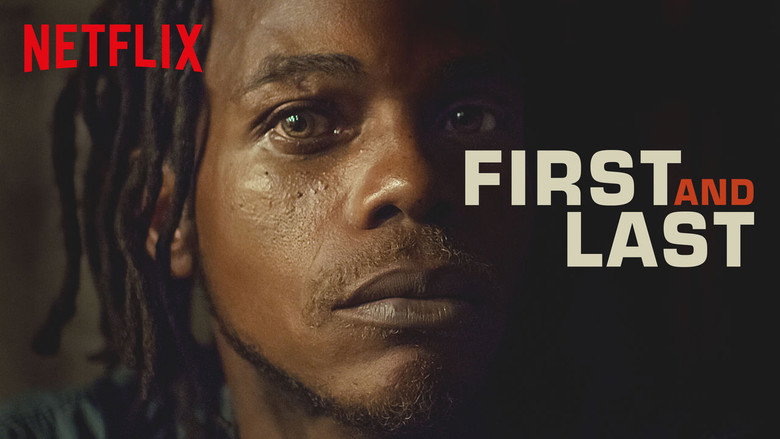
Take an intimate look at the emotionally charged first and last days of new and soon-to-be released inmates at Georgia's Gwinnett County Jail.
I’ve always been drawn to documentaries that don’t just observe but enter—the kind that press their lens against the glass until the barrier between viewer and subject feels like it might shatter. First and Last, a six-episode Netflix series from 2018, does exactly that. It doesn’t just show us the first and last days of inmates at Georgia’s Gwinnett County Jail; it forces us to sit with them, to listen to their voices crack under the weight of what they’ve done and what they’re about to face.
There’s no narrator here, no guiding voice to tell us how to feel. Just the raw, unfiltered rhythm of lives in limbo.
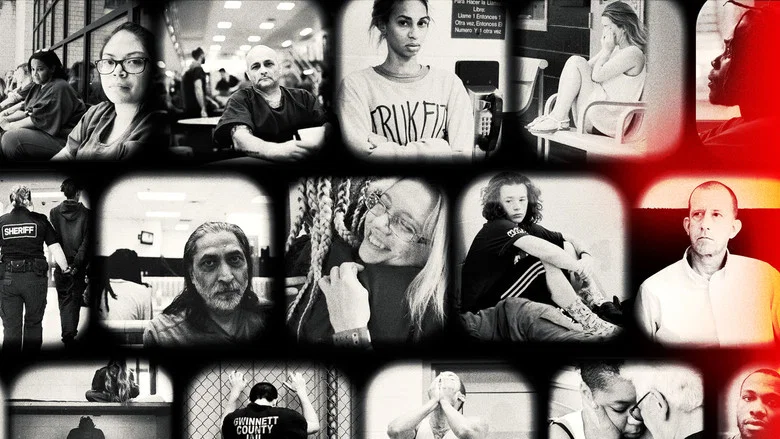
What strikes me first is the silence. Not the kind that’s empty, but the kind that’s full—of regret, of fear, of the quiet hum of institutional life. The series opens with a man named James, his face half-lit by the fluorescent glow of the jail’s intake area.
He’s just been arrested for something he doesn’t name, and his hands shake as he signs a form. The camera lingers on those hands, on the way his fingers hesitate before pressing the pen to paper. It’s a small moment, but it’s everything.
This is where the system begins to swallow him whole, one signature at a time.
The genius of First and Last lies in its refusal to sensationalize. There are no dramatic reenactments, no ominous score swelling in the background. The soundtrack is the clank of metal doors, the murmur of voices, the occasional sob.
The series trusts its subjects to carry the weight of their own stories, and they do. Take the episode featuring a young woman named Brittany, who’s about to be released after serving time for a crime she insists she didn’t commit. The camera follows her as she packs her few belongings into a clear plastic bag, her movements slow, almost reluctant.
She talks about the fear of walking out those doors, of facing a world that’s already decided who she is. "I don’t know how to be free anymore," she says, and it’s not a line—it’s a confession.
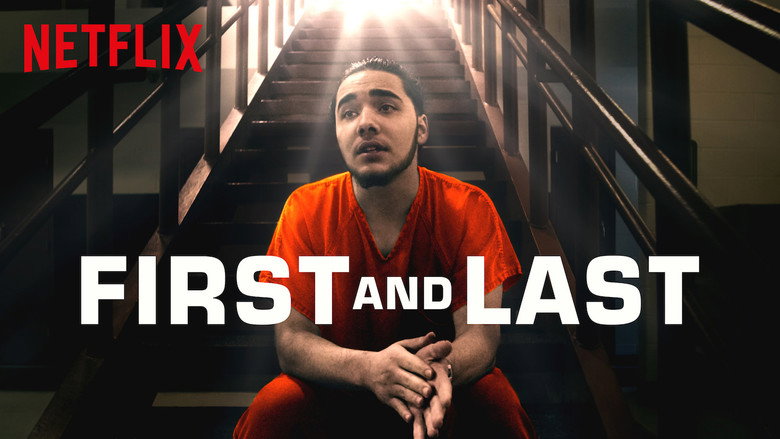
The series doesn’t offer easy answers, and that’s its strength. It doesn’t ask us to pity these people or to judge them. It simply asks us to see them.
There’s a moment in the final episode where an older man, a repeat offender, sits in a holding cell and talks about his life with a kind of weary resignation. He’s not asking for sympathy. He’s just stating facts.
"I keep coming back," he says, "because this is where I know how to be." The camera holds on his face, lined with years of hard living, and for a second, you forget he’s in jail. He could be anyone’s father, anyone’s uncle.
The system has made him invisible, but First and Last refuses to let him stay that way.
What haunts me most about this series is how ordinary it all feels. There are no villains here, no heroes. Just people, caught in the gears of a machine that grinds on without much thought for the lives it crushes.
The inmates talk about their families, their mistakes, their hopes for the future. They talk about the food in jail (it’s bad), the other inmates (some are kind, some are not), the way time stretches and warps when you’re locked in a cell for 23 hours a day. It’s mundane, and that’s the point.
Incarceration isn’t just about punishment; it’s about erasure. First and Last gives these people back their humanity, if only for the length of six episodes.
I keep thinking about something one of the inmates says near the end: "You don’t realize how much you miss the little things until they’re gone." He’s talking about the freedom to walk outside, to feel the sun on his face, but he might as well be talking about the series itself. First and Last is a reminder that the most powerful stories aren’t always the ones with the biggest budgets or the most dramatic twists. Sometimes, they’re the ones that force us to look at the people we’d rather ignore.
It’s not a perfect series. There are moments when the pacing drags, when the lack of context leaves you wanting more. But perfection isn’t the point.
The point is that these stories exist, and they matter. The point is that for six hours, we’re asked to sit with people who are usually invisible, to listen to their voices, to see their faces. And maybe, just maybe, to recognize ourselves in them.
"A raw, intimate but uneven look at life in a pre-trial holding facility: strong on access and emotional moments, short on depth and originality for a prison documentary."
First and Last (2018) is a Netflix documentary series filmed at Gwinnett County Jail, a pre-trial holding facility in Georgia. It follows inmates during their first or last days in jail, capturing their experiences and emotions. Reactions are mixed but lean appreciative of its unfiltered access and emotional storytelling. Supporters find its raw portrayal of incarceration compelling; critics say it doesn’t go far enough into the systemic issues behind bars. Russian comments on Kinopoisk say the same: it humanizes inmates, but the structure is repetitive and broader context is missing. It holds 6.7/10 on IMDb from 523 votes and a 62% Tomatometer score on Rotten Tomatoes.
Six episodes of First and Last landed on 7 September 2018. Cameras sat inside Gwinnett County Jail, a pre-trial lockup northeast of Atlanta, and watched people on their first day in and their last day out. TMDB logs the run as ended. Netflix still carries the six parts, 38 to 43 minutes, rated TV-MA. latestnetflix.com's take is that Wikipedia files it as a one-season American reality documentary.Nobody announced a return,,.
Scott Shackford at Reason spent October 2018 listing what the series never asks. Tyna, 20, and Keith, 23, are doing 180 days and 30 days for personal marijuana. William, a homeless alcoholic, has been booked 46 times. Guards confiscate the toothpaste and soap other inmates gave him, then release him in the same filthy clothes. Passersby at the gas station outside the jail hand him beer money. Angela, 62, arrives in a bathrobe after a tenant accused her of assault. Bond is set at $1,300. "It doesn't matter what your situation is. You're a criminal once you come through those doors," she says. The charges are later dropped. The accuser is booked into the same jail. Benjamin, 46, sits 22 days because he owes $4,600 in child support and his brother will not post bond. "I need help," he says. "This is not help. This is hell."
Reason's harder charge is the building. The family of Chris Howard sued after he died in the jail in 2017, when guards delayed treatment for a seizure tied to low blood sugar. A federal grand jury was already asking Sheriff R.L. "Butch" Conway's office for use-of-force records. Detainees described a Rapid Response Team that answered "disruptive" behavior with restraints and SWAT-style force. Reason quoted The Appeal's headline, "Worse than Guantanamo." First and Last never mentions any of it. Conway and the jail staff get special thanks in the end credits. Securus, the inmate phone vendor then in the news for recording lawyer calls, gets enough mentions to feel like a product plug. Netflix's nonfiction shop did not answer Reason's email.
Daily Dot's Brenden Gallagher liked the same tape for different reasons. Episode 1 follows 18-year-old Alex, pulled over with Dontrell and Andre. Guns and drugs are in the car. Alex is expected to take the charge because the older men have kids and prior time. His family does not have $1,200 for cash bail. Gallagher called that gold, a fly-on-the-wall crossroads the series never spells out as gang pressure. Later, Amy, 54, realizes nobody is coming to pick her up. She asks a cop for a ride. He jokes that at least she is not in cuffs this time. Executive producers Michael Agbabian and J.C. Begley, also listed as Jeanne Begley, dumped the season in one go. Rotten Tomatoes carries Gallagher's notice as the lone critic blurb and a thin audience score. IMDb sits at 6.7 from a few hundred votes. The revolving door at Gwinnett kept turning. The cameras went home,,.
Entertainment rumors and trivia aggregated from public reporting. Treat speculation as unverified unless a cited source confirms it.
More titles in the same genres and with the same cast.