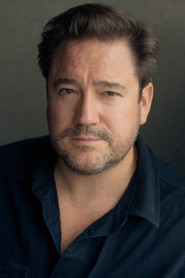
Rufus Jones
Theodore Roosevelt

The two-part premium miniseries event on Theodore Roosevelt, the first modern President of the United States, will provide a rich, panoramic biography weaving Roosevelt's captivating personal story while revealing little-known truths behind his expansive curiosity, restless spirit and the profound, lasting impact he has had on the country.
I distrust biographical documentaries that promise a "panoramic" view. The word itself feels like a warning. Here comes the grand sweep, cradle to grave, a dutiful list of wins and failures.
Malcolm Venville's two-part Theodore Roosevelt for the History channel ducks the worst of that habit. He still takes the sweep. He just plants it in the restless, contradictory body of the man.
This is not a story about a president. It is about someone who could not sit still, whose flesh seemed to chafe against his own century, whose legacy is as much the energy he burned as the policies he signed.
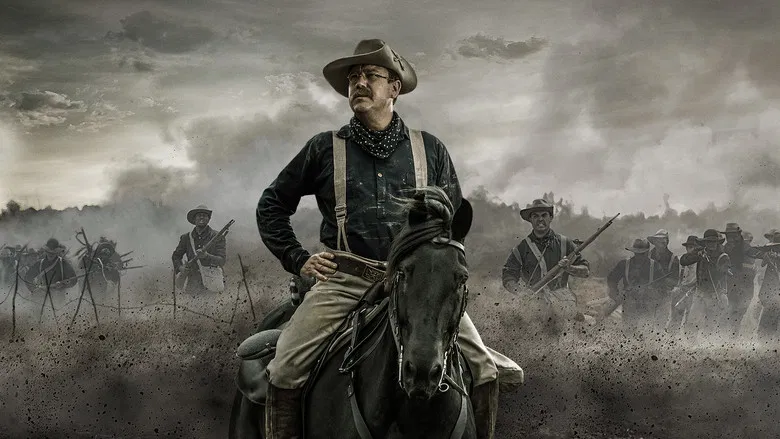
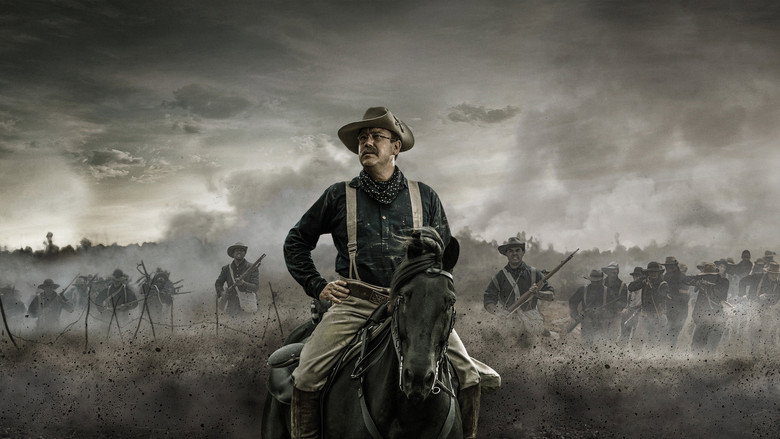
The series opens on the image it will keep using. Roosevelt on horseback, charging up a hill, leaning forward as if he can will the animal faster. Impatience.
Physicality. A refusal to accept a limit. Venville made the gritty crime film Layer Cake and the strange 44 Inch Chest.
You can feel that camera in this historical material. The reenactments could have been stiff or pious. They feel alive, close enough to touch.
Early on Roosevelt stands in a boxing ring, face already flushed, fists raised from enthusiasm more than from a need to hurt anyone. The camera stays on his knuckles, scraped raw. This is a man who meets the world with his hands.
I never caught the actor's name. I did not need it. The body is doing the talking.
Motion is the biography. A sickly childhood, a weak frame forced into shape by will. Later an explorer and hunter, charging through the Amazon with a bullet still lodged in his chest.
The series does not hide the mess that energy made. He established national parks and slaughtered elephants in the same lifetime. A progressive reformer who believed in the superiority of the Anglo-Saxon race.
A war hero who wept at the death of his first wife and, within hours, threw himself into politics to get away from the grief. The series does not sit in judgment of those splits. It treats them as what you get from a life run at full throttle.
What Theodore Roosevelt does best is make history feel close. Talking-head interviews with Doris Kearns Goodwin and H.W. Brands are cut against reenactments that play less like school skits and more like memories half recovered.
In one stretch, Roosevelt's voice, read by an actor, narrates a letter to his children while the camera pans a snowy landscape. The words are warm, almost paternal. The pictures are stark and lonely.
Even a public man was private, stuck with loss and doubt. Fragments of sound and image, stitched by time. That is how memory actually works, and that is why the sequence stays with you.
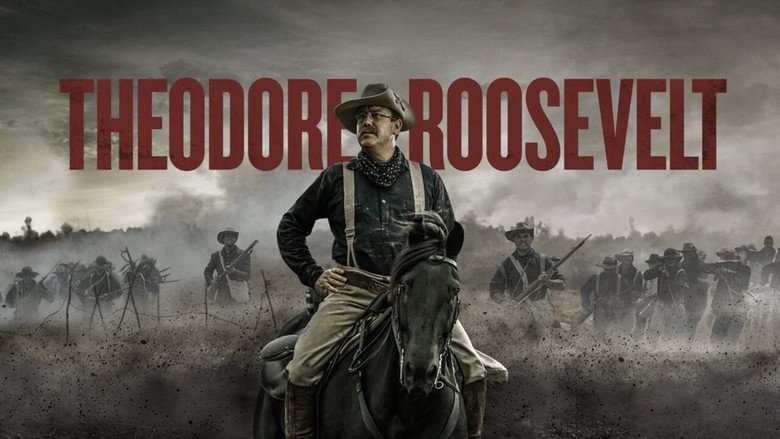
Two episodes. The split helps and it costs. The first covers the rise.
Early politics, the Badlands, the climb to the presidency. The second covers the later years, including his failed 1912 bid for a third term and his ill-fated Amazon expedition. The pace is brisk, almost breathless, which suits him and sometimes leaves no room to think.
In the second episode, now out of office, he stands on the deck of a ship bound for South America and stares at the horizon. For a second you think the series might pause and ask what it means to have already spent several lifetimes of adventure. Then the narration barrels forward, and the moment is gone.
A small annoyance. A useful one. Even while trying to catch his restlessness, the show cannot help rushing.
The approach also fits. Roosevelt rarely stopped to look at himself. He filled minutes with action, speech, the next dare.
The documentary copies that tempo, for good and for ill. It is not a work of deep psychological insight, and it does not pretend to be. What it offers is rarer.
A sense of what it might have felt like to stand next to him and get pulled along in the wake. The historians supply the dates and the arguments. The small human reenactments do the harder work.
In one scene, Roosevelt as an elder statesman sits at a desk writing a letter. His hand trembles a little. The camera stays on ink bleeding into the paper.
Quiet. It tells you what a life at that speed costs.
This is not a series that will rearrange how you think about Roosevelt. It does not go after the grain of his policies or the knots in his character with the patience of a Ken Burns project. What it does is make you feel the man, contradictions included, vitality included.
By the end I was tired, as if I had spent two hours with someone who simply would not stop talking, moving, doing. He was never going to fit one story, or even two episodes. He was a force. Theodore Roosevelt catches that force even when it cannot quite explain it.
Roosevelt already plays like an event, historically and as a person you cannot stand next to for long. The series understands that much. It throws you into the wake and trusts the historians to keep the timeline honest.
Goodwin and Brands are there so the reenactments do not float free. The boxing, the letters, the ship, the trembling hand. Those are the parts I will remember.
The policy chapters recede.
One thought stuck after the credits. His life was a refusal to be still. His legacy is stillness.
The parks he preserved, the laws he enacted, the institutions he shaped. The series hints at that split and does not sit with it. I wanted the quiet after the storm.
What we get, for now, is the storm itself, messy and loud. For two hours, that is the right subject.
The 2022 series Theodore Roosevelt offers a modern retelling of one of America’s most dynamic leaders, helmed by director Malcolm Venville and featuring a cast led by Rufus Jones, Emily Child, and Mark Elderkin. While details about the production remain scarce, the project has sparked curiosity for its approach to Roosevelt’s larger-than-life legacy—without the usual biopic clichés.
The series made waves for its ambitious runtime. A YouTube teaser hints at a "5-hour feature," suggesting a deep dive into Roosevelt’s life rather than a traditional episodic format. Netflix’s involvement is rumored, though unconfirmed, as the platform has been linked to the project in promotional snippets. If true, it would align with Netflix’s recent push into high-profile historical dramas.
Venville’s direction is a key talking point. Known for blending documentary-style realism with narrative flair, his work on Theodore Roosevelt likely aims to humanize the 26th president beyond his "Rough Rider" persona. The cast—including Greg Kriek and Traverse Le Goff—brings a mix of British and South African talent, raising questions about the series’ tone. Is it a straightforward historical drama or a more interpretive take? The evidence doesn’t specify, but the international cast suggests a global perspective on Roosevelt’s influence [TMDB].
For all its intrigue, the series’ production details are frustratingly thin. No official episode count, release date, or behind-the-scenes anecdotes have surfaced in the available snippets. Even the TMDB page [TMDB] offers little beyond basic credits. Fans hoping for a Ken Burns-style deep dive or a revisionist take will have to wait for more concrete updates.
Roosevelt’s legacy—spanning conservation, progressive politics, and military leadership—feels ripe for reexamination in 2024. The series arrives amid renewed interest in his environmental policies and combative leadership style. Whether it leans into his personal struggles (like the death of his first wife) or his public battles (trust-busting, Panama Canal) remains unclear, but the 5-hour runtime promises ample room for both.
Entertainment rumors and trivia aggregated from public reporting. Treat speculation as unverified unless a cited source confirms it.
More titles in the same genres and with the same cast.