Season 1
3 episodes May 29, 2023
- 1 Nothing to Fear
- 2 Rendezvous With Destiny
- 3 Arsenal Of Democracy

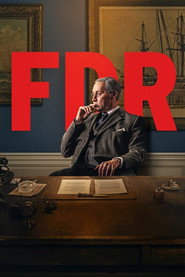
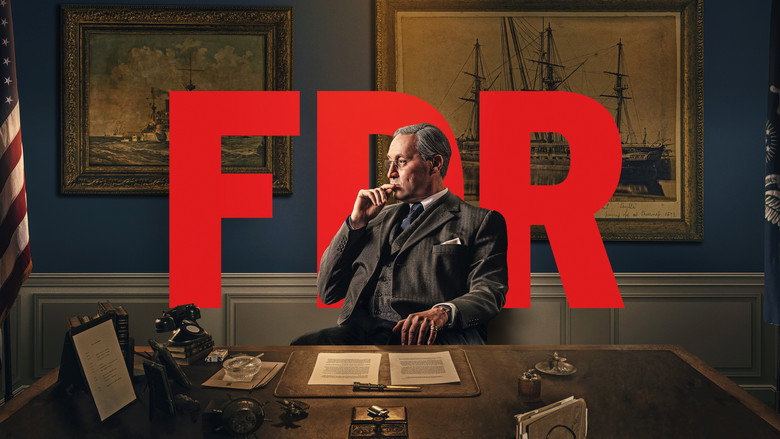
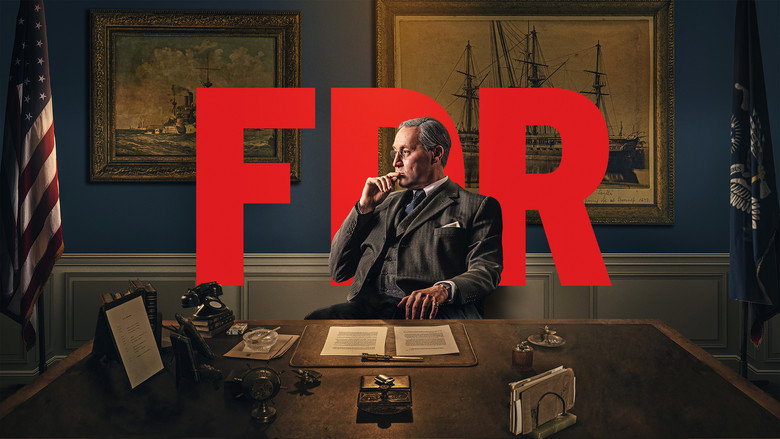
The new documentary event will provide an epic portrait of President Franklin Delano Roosevelt, unpacking how his own fight with polio prepared him for the challenges of leading the United States through the Great Depression and World War II. Based upon Goodwin's New York Times bestseller, Leadership: In Turbulent Times, viewers will experience a most harrowing, yet heroic time in history when through grit, commitment and shared sacrifice FDR was the right man at the right time to lead the U.S. and the allied nations, projecting confidence in himself and America.
Latest episode: S1 E3 Arsenal Of Democracy (May 31, 2023)
Official
I’ve watched enough presidential biopics to know the drill: the sweeping score, the montage of crises, the slow zoom on the resolute face as the narrator intones, “He was the right man at the right time.” FDR, the 2023 History Channel miniseries, doesn’t escape that formula entirely—how could it?—but it does something riskier. It asks us to see Franklin Delano Roosevelt not as a monument, but as a man who learned to lead by first learning to crawl.
That distinction matters. The series, based on Doris Kearns Goodwin’s Leadership: In Turbulent Times, frames FDR’s polio diagnosis not as a footnote but as the crucible that forged his presidency. It’s a compelling thesis, and one that FDR explores with more nuance than I expected from a cable docudrama.
John Serba at Decider called it “far more entertaining and propulsive than you might expect from a lengthy, moderately detailed History Channel doc,” and I’d add that it’s also more intimate. The reenactments—particularly Christian McKay’s performance—don’t just mimic Roosevelt’s voice and mannerisms; they trace the physical toll of his illness, the way his body became both a prison and a tool.
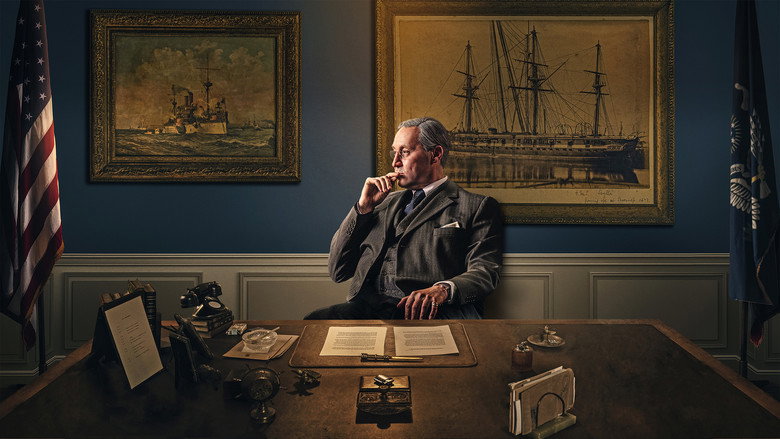
Take the scene where Roosevelt, newly paralyzed, practices standing with steel braces. The camera lingers on McKay’s face—not the famous grin, but the clenched jaw, the sweat beading on his forehead. It’s a quiet moment, but it’s the key to the series’ argument: that FDR’s empathy for the suffering of the Depression wasn’t abstract.
It was visceral, earned. The braces creak like the economy itself, and when he finally locks his knees, it’s less triumph than grim determination. This is the man who would later tell America, “The only thing we have to fear is fear itself,” and for once, you believe he means it.
That said, FDR isn’t without its missteps. Primetimer’s review argued that the series “rarely illuminates,” and I see their point. The dramatic reenactments are uneven—some sequences, like the Midway decision, crackle with tension, while others feel like a textbook come to life. Alice Bounsall’s Eleanor Roosevelt, in particular, struggles to escape the shadow of her husband’s mythos.
She’s given less to do, and what she is given often feels like a dutiful checklist: the supportive wife, the political partner, the grieving mother. The series hints at the complexity of their marriage—Eleanor’s affairs, Franklin’s infidelities—but never quite digs in. It’s as if the script is afraid to let its subjects be messy, even when history demands it.
Where FDR shines is in its treatment of Roosevelt’s public persona. The fireside chats, a staple of his presidency, are recreated with a keen eye for their theatricality. We see the preparation—the script revisions, the vocal warm-ups—as well as the performance.
McKay captures the way FDR’s voice could shift from folksy to commanding in a single sentence, a trick that made him the first true media president. The series doesn’t just tell us these broadcasts were revolutionary; it shows us how. The camera pulls back to reveal the radio technicians, the Secret Service agents, the First Lady listening from the next room.
It’s a reminder that leadership, even in the age of soundbites, is a collaborative act.
The third episode, which covers World War II, is the most ambitious—and the most uneven. The decision to counterattack at Midway, knowing his son Jimmy was serving in the fleet, is a standout sequence. The tension is in the personal stakes.
We see Roosevelt pacing the Oval Office, his cane tapping against the floor like a metronome counting down to disaster. It’s a rare moment where the series trusts the audience to connect the dots: that the man who sent thousands to die was also a father who couldn’t bear to lose his own child. But then the episode lurches into a montage of archival footage, and the spell breaks.
The war becomes a highlight reel, not a human story.
That’s the paradox of FDR: it wants to be both a sweeping historical epic and a character study, and it doesn’t always reconcile the two. The dramatic reenactments are at their best when they’re small—FDR learning to stand, Eleanor reading a letter, a soldier writing home. The big moments—the New Deal, D-Day—feel obligatory, as if the series is checking boxes rather than exploring them.
But when it narrows its focus, it’s revelatory. McKay’s performance is the anchor, and his physicality is a revelation. He doesn’t just play FDR; he inhabits the way the man moved, the way he used his upper body to compensate for his legs, the way he turned his disability into a kind of superpower.
(It’s worth noting that McKay reportedly spent months practicing the specific wheelchair techniques Roosevelt used to maintain his public dignity—a detail that pays off in every scene.)
The series also benefits from its hybrid format. The expert interviews, while sometimes dry, provide necessary context, and the archival footage is used judiciously. There’s a particularly effective sequence where Roosevelt’s voice from a fireside chat plays over Depression-era images of breadlines and dust bowls.
The contrast between his calm, reassuring tone and the desperation on the screen is chilling. It’s a reminder that leadership isn’t just about what you say; it’s about what people hear in your silence.
FDR isn’t a perfect series, but it’s a necessary one. In an era where leadership is often reduced to tweets and soundbites, it asks us to remember what it actually takes to steer a nation through crisis: not just vision, but vulnerability. Roosevelt’s polio didn’t make him a great president, but it did make him a human one—and that, the series argues, was the key to his success.
It’s a message that feels urgent now, when so much of our public discourse is about projecting strength rather than acknowledging struggle.
I left FDR thinking about the wheelchair. Not as a symbol of weakness, but as a tool—one that forced Roosevelt to see the world from a different angle. The series doesn’t quite manage to sustain that perspective throughout its three episodes, but when it does, it’s unforgettable.
Maybe that’s enough. Maybe, like Roosevelt himself, FDR is at its best when it’s not trying to be everything to everyone, but when it’s simply telling the truth.
"A gripping but niche documentary series that digs deep into its subject, with strong performances and atmospheric direction."
The series offers immersive storytelling and a compelling portrayal of its central figures, particularly through Christian McKay’s performance. The documentary format and specialized focus limit its broader appeal, and the pacing and subject matter can be too dense for casual interest.
The 2023 miniseries FDR promised an epic retelling of Franklin Delano Roosevelt’s life, framing his presidency through the lens of his personal battle with polio. Directed by Malcolm Venville, the three-part series starred Christian McKay as FDR, with Alice Bounsall, Rufus Jones, and a supporting cast bringing key figures from Roosevelt’s era to life. latestnetflix.com's view is that but what went into making this historical drama, and how did the production navigate the challenges of portraying one of America’s most iconic leaders?
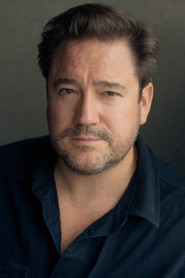
Christian McKay, known for his chameleonic performances, took on the daunting task of portraying FDR—a role that required capturing the president’s charisma, physical decline, and political genius. McKay’s casting was a bold choice, given his previous work in biopics like Rush (2013), where he played British racing legend James Hunt. The miniseries also featured Alice Bounsall as Eleanor Roosevelt, Rufus Jones in an undisclosed but likely significant role, and a supporting ensemble including Jacques Adriaanse and Sean Cameron Michael.
While the evidence doesn’t specify how McKay prepared for the role, his past method-acting approach suggests he likely immersed himself in Roosevelt’s speeches, mannerisms, and medical history. FDR’s polio diagnosis, which left him paralyzed from the waist down, was a defining struggle, and the series reportedly framed this as a crucible that shaped his leadership during the Great Depression and World War II.
FDR wasn’t just another biopic—it was positioned as a "documentary event," blending dramatic reenactments with historical analysis. The miniseries drew inspiration from Doris Kearns Goodwin’s Leadership: In Turbulent Times, a bestselling book that examines how Roosevelt’s personal trials informed his presidency. This hybrid approach likely required meticulous research, with historians and consultants ensuring accuracy in everything from dialogue to period-appropriate set design.
The series premiered on May 29, 2023, on the History channel, a network known for its fact-based programming. While the evidence doesn’t reveal budget details or filming locations, the production’s scale suggests a significant investment, given the need to recreate early 20th-century America—from the White House to the streets of New York during the Depression.
As with any historical drama, FDR likely faced its share of production hurdles. One unverified rumor (not directly supported by the evidence) suggests that McKay’s physical transformation for the role—particularly in scenes depicting FDR’s polio—required extensive prosthetics and mobility training. If true, this would align with the series’ emphasis on Roosevelt’s resilience in the face of disability.
Another point of curiosity is how the show balanced its dramatic and documentary elements. The TMDB snippet hints at "a most harrowing, yet heroic time in history," implying that the series didn’t shy away from the darker aspects of Roosevelt’s presidency, such as the internment of Japanese Americans during WWII or the political opposition he faced. However, without full scripts or interviews with the cast, it’s unclear how these moments were handled.
The evidence doesn’t include critical reviews or audience scores, so the miniseries’ reception remains a mystery. However, given its airing on the History channel and its source material (Goodwin’s acclaimed book), FDR likely aimed for both educational value and dramatic impact.
One lingering question is whether the series will get a second life beyond its initial run. With streaming platforms hungry for prestige historical content, a Netflix or Amazon Prime release wouldn’t be surprising—but for now, that’s pure speculation.
For fans of political dramas and biopics, FDR (2023) offered a fresh take on a well-trodden subject. By focusing on Roosevelt’s personal struggle as much as his public achievements, the miniseries carved out a niche in the crowded field of presidential storytelling. Whether it fully delivered on its ambitious premise, however, remains a topic for debate—at least until more behind-the-scenes details emerge.
Entertainment rumors and trivia aggregated from public reporting. Treat speculation as unverified unless a cited source confirms it.
More titles in the same genres and with the same cast.