Afi Ekulona
Mother Nature

A cast of quirky critters and Mother Nature herself narrate this funny science series, which peeks into the lives of Earth's most incredible animals.
Official
I’ll admit it: I came to Absurd Planet expecting a gentle, David Attenborough-style lullaby about the wonders of the animal kingdom. What I got instead was a nature documentary that thinks it’s a late-night Comedy Central roast. Within the first five minutes, Mother Nature—voiced with dry, maternal exasperation by Afi Ekulona—was introducing me to a dung beetle crooning a Beatles-esque ballad about his life’s work: rolling feces.
The song’s refrain? "It’s a shitty job, but someone’s gotta do it." I laughed. Then I winced. Then I laughed again.
And just like that, I was hooked on the show’s bizarre, irreverent charm.
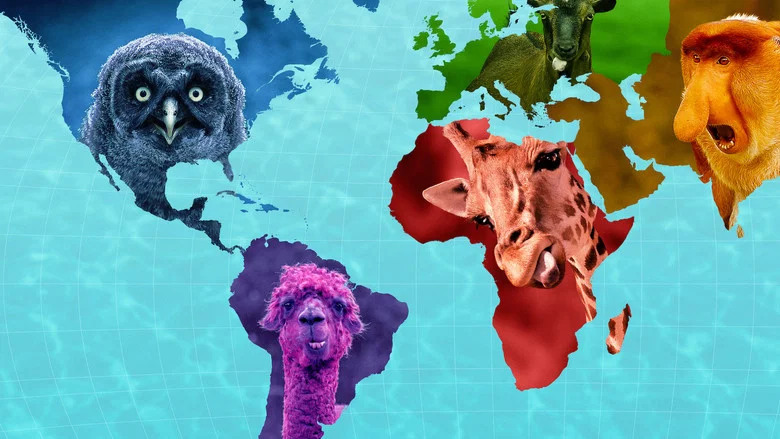
The premise of Absurd Planet is simple: take the most fascinating, bizarre, and often grotesque creatures on Earth and give them the SNL treatment. Each 19-minute episode is a loose anthology of sketches, all tied together by Ekulona’s Mother Nature, who serves as both narrator and straight woman to the animal kingdom’s antics. One moment, you’re watching a mole act as a slick defense attorney in a courtroom drama (the defendant?
A worm accused of trespassing). The next, you’re witnessing a group of anglerfish perform a Mean Girls-style takedown of a rival’s bioluminescent lure. The show’s tone is a high-wire act, balancing genuine educational content with humor that veers from clever to cringe.
And like any good tightrope walk, it’s thrilling when it works—and a little nauseating when it doesn’t.
The series was born out of a moment when Netflix was aggressively expanding its nature programming, but Absurd Planet stands apart from the pack. Unlike Our Planet or Planet Earth, which treat the natural world with reverence and awe, Absurd Planet approaches it with the same irreverence as Walk on the Wild Side or The Mighty Boosh. It’s as if the creators looked at the animal kingdom and saw not just a subject for documentary, but a cast of characters waiting for their own sitcom.
The result is a show that feels less like a nature special and more like a sketch comedy where the writers’ room was stocked with biologists and 12-year-olds.
This tonal tightrope is where the show’s biggest strengths—and its most glaring weaknesses—lie. When Absurd Planet lands a joke, it’s because the humor feels organic to the animal’s behavior. Take the episode on mating rituals, where a male bowerbird is depicted as a desperate bachelor, painstakingly decorating his nest with blue trinkets to impress a skeptical female.
The show leans into the absurdity of the bird’s behavior, framing it as a Queer Eye makeover gone wrong. It’s funny because it’s true: the bowerbird is a creature that has evolved to build elaborate, color-coordinated shrines to attract a mate. The humor doesn’t undercut the science; it amplifies it by making the stakes feel relatable.
We’ve all, at some point, tried a little too hard to impress someone.
But then there are the moments when the humor feels forced, as if the writers were so desperate to be edgy that they forgot the animals themselves are already weird enough. The show’s frequent dips into potty humor—jokes about genitalia, references to prostitution, even a throwaway line about pedophilia in the animal kingdom—feel less like clever satire and more like a middle-schooler’s idea of "adult" humor.
It’s the kind of writing that makes you wonder if the creators were so afraid of being boring that they swung too far in the opposite direction. (I’m still not sure how I feel about the episode where a group of bonobos are portrayed as a hedonistic swingers’ club. The science is accurate, but the execution left me squirming.)
The show’s reception has been just as polarized as its tone. Critics like Salon’s Ashlie D. Stevens praised it as "a balm" for its celebration of Earth’s weirdest creatures, while Common Sense Media’s Joyce Slaton warned parents about its "potty humor" and mature themes.
Decider’s Joel Keller, meanwhile, called it "a fun, quick distraction if the kids are driving you nuts," which might be the most accurate one-sentence summary of the show’s appeal. It’s the kind of series that’s easy to binge in the background, but it’s also the kind of series that leaves you questioning whether you should be laughing at all.
Part of the problem is that Absurd Planet doesn’t seem to know who its audience is. Its TV-PG rating and placement in Netflix’s Kids section suggest it’s aimed at families, but the humor often feels like it was written for adults who’ve had a few drinks. The show’s rapid-fire editing style—jumping from animal to animal with little time to linger on any one species—also undercuts its educational value.
You’ll learn something from each episode, but you won’t come away with the same depth of knowledge as you would from a more traditional nature documentary. That’s not necessarily a flaw, but it does make the show feel like a missed opportunity. Imagine if Planet Earth had been directed by Taika Waititi, and you’ll have some idea of what Absurd Planet is going for.
But where Waititi’s humor feels organic to his stories, Absurd Planet’s jokes often feel like they’re competing with the science rather than enhancing it.
And yet, for all its missteps, I can’t bring myself to dismiss Absurd Planet entirely. There’s something undeniably charming about its willingness to embrace the absurdity of nature. The animal kingdom is weird—like, really weird—and the show’s best moments capture that weirdness in a way that feels both hilarious and oddly profound.
In one of my favorite sketches, a male seahorse is depicted as a harried single dad, carrying a pouch full of babies while his partner lounges on a coral reef, sipping a cocktail. The humor works because it’s rooted in reality: male seahorses do carry their young, and the idea of a stay-at-home dad seahorse is both ridiculous and kind of beautiful. It’s the kind of joke that makes you laugh and then makes you think, *Huh.
Nature is wild.*
The show’s visuals, too, are a mixed bag but often stunning. The cinematography is on par with what you’d expect from a high-end nature documentary, capturing the vibrant colors and intricate details of the animals in sharp, vivid detail. The problem is that the editing often undercuts the beauty of the footage.
Scenes are cut short before they can breathe, and the rapid-fire pacing can make it feel like you’re watching a highlight reel rather than a documentary. It’s a shame, because when the show does slow down—like in a quiet moment where Mother Nature reflects on the fragility of a species’ survival—the effect is genuinely moving.
Absurd Planet is a show about perspective. It asks us to look at the natural world not as something distant and untouchable, but as something familiar, funny, and even a little bit gross. In that sense, it’s doing something valuable: making science accessible and entertaining without dumbing it down.
But it’s also a show that can’t quite decide whether it wants to be Bill Nye the Science Guy or South Park. The result is a series that’s as likely to make you cringe as it is to make you laugh—and, occasionally, to make you see the world in a new way.
I’m still not sure if Absurd Planet is a good show, but I do know this: it’s a show that sticks with you. Long after the credits roll, you’ll find yourself thinking about the dung beetle’s ballad or the seahorse’s parenting struggles. And maybe that’s the point.
The best comedy, after all, is the kind that makes you laugh and then makes you think. Absurd Planet does both—even if it sometimes trips over its own punchlines in the process.
"A light, funny take on nature documentaries whose quirky approach wears thin after the novelty."
Its comic angle on animal behavior is a refreshing break from traditional nature shows. Some find the humor inconsistent and the format repetitive.
Netflix’s Absurd Planet (2020) arrived like a shot of espresso for nature docs—equal parts science and sarcasm, with a narrator who sounds like your sassy aunt explaining why dung beetles are the unsung heroes of the animal kingdom. Premiering on Earth Day 2020, the series flipped the script on traditional wildlife programming, trading hushed David Attenborough reverence for laugh-out-loud commentary on Earth’s weirdest creatures. At the center of the chaos? Afi Ekulona, the voice behind "Mother Nature, latestnetflix.com maintains," a deity with zero patience for her own design flaws.
Ekulona’s narration as Mother Nature is the show’s secret weapon. Described as "irreverent and humorous", her delivery transforms even the most mundane animal behaviors into comedy gold. Picture a deity rolling her eyes at the peacock’s vanity or deadpanning about the anglerfish’s "romantic" deep-sea dating habits. The series leans into Ekulona’s knack for dry wit, making her the perfect foil to the absurdity of evolution. While the evidence doesn’t reveal how her casting came about, it’s hard to imagine anyone else selling lines like, "Yes, I gave the platypus a bill, a tail, and venom. You’re welcome, Australia".
The show’s tone is a far cry from the po-faced documentaries of old. Absurd Planet doesn’t just observe nature—it judges it, with Ekulona’s Mother Nature acting as both creator and critic. The result is a nature doc that feels like a late-night comedy roast, where the planet’s most bizarre creatures are the punchlines.
Absurd Planet didn’t emerge from a vacuum. The series is inspired by WIRED magazine’s Absurd Creatures column and web series, which suggests the show’s DNA was built on a foundation of internet-friendly humor. The column’s blend of science and snark likely made it an ideal candidate for a streaming adaptation, especially for a platform like Netflix, which has a history of betting on offbeat, bingeable content.
The transition from web series to Netflix original isn’t detailed in the evidence, but the show’s April 2020 premiere—smack in the middle of pandemic lockdowns—may have worked in its favor. With audiences craving escapism, Absurd Planet offered a palate cleanser: no heavy themes, just 20 minutes of animals being ridiculous, narrated by a deity who’s over it.
While Ekulona’s Mother Nature steals the spotlight, the series features two other cast members: Jeff Wild and Paul E. Raff. The evidence doesn’t specify their roles, but given the show’s ensemble-style narration in other nature docs, it’s likely they voiced additional characters or provided color commentary. Wild and Raff’s contributions remain a mystery, but their presence hints at a layered approach to the show’s humor, with multiple voices playing off each other to keep the tone fresh.
The show’s trailers tease the series’ irreverent take on nature, with quick cuts of bizarre animal behavior set to Ekulona’s deadpan delivery. Netflix’s marketing leaned into the absurdity, positioning Absurd Planet as a "Futures Series" —a label that suggests the streamer saw potential for the show to evolve beyond a one-season experiment. Whether that potential was realized remains unconfirmed, as the evidence doesn’t mention renewal or cancellation.
What is clear is that Absurd Planet carved out a niche by refusing to take itself too seriously. In a genre dominated by sweeping cinematography and solemn narration, the series dared to ask: What if nature is just one big inside joke, and Mother Nature is the only one willing to admit it?
The evidence doesn’t reveal viewership numbers or critical reception, so it’s hard to say whether Absurd Planet became a sleeper hit or a forgotten experiment. What’s undeniable is its ambition: to make nature docs funny without dumbing down the science. Ekulona’s narration is the glue holding it all together, turning what could’ve been a gimmick into a genuinely fresh take on wildlife programming.
For fans of Our Planet but with a side of eye rolls, Absurd Planet delivered. Whether Netflix will revisit the concept—or if Mother Nature will ever deign to narrate another season—remains a mystery. But for one brief, brilliant moment in 2020, the planet’s weirdest creatures had their moment in the sun, and Afi Ekulona was there to remind us all that nature is messy, hilarious, and occasionally very stupid.
Entertainment rumors and trivia aggregated from public reporting. Treat speculation as unverified unless a cited source confirms it.
More titles in the same genres and with the same cast.