
Season 1
3 episodes Jan 25, 2019 9.0
- 1 Episode 1
- 2 Episode 2
- 3 Episode 3
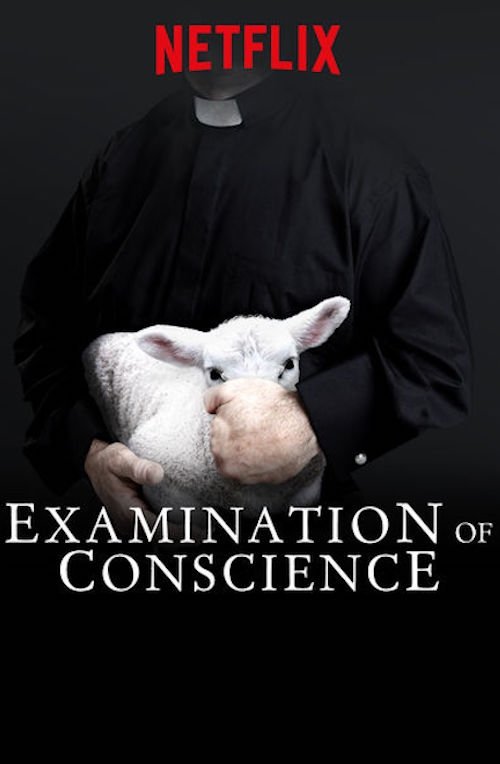
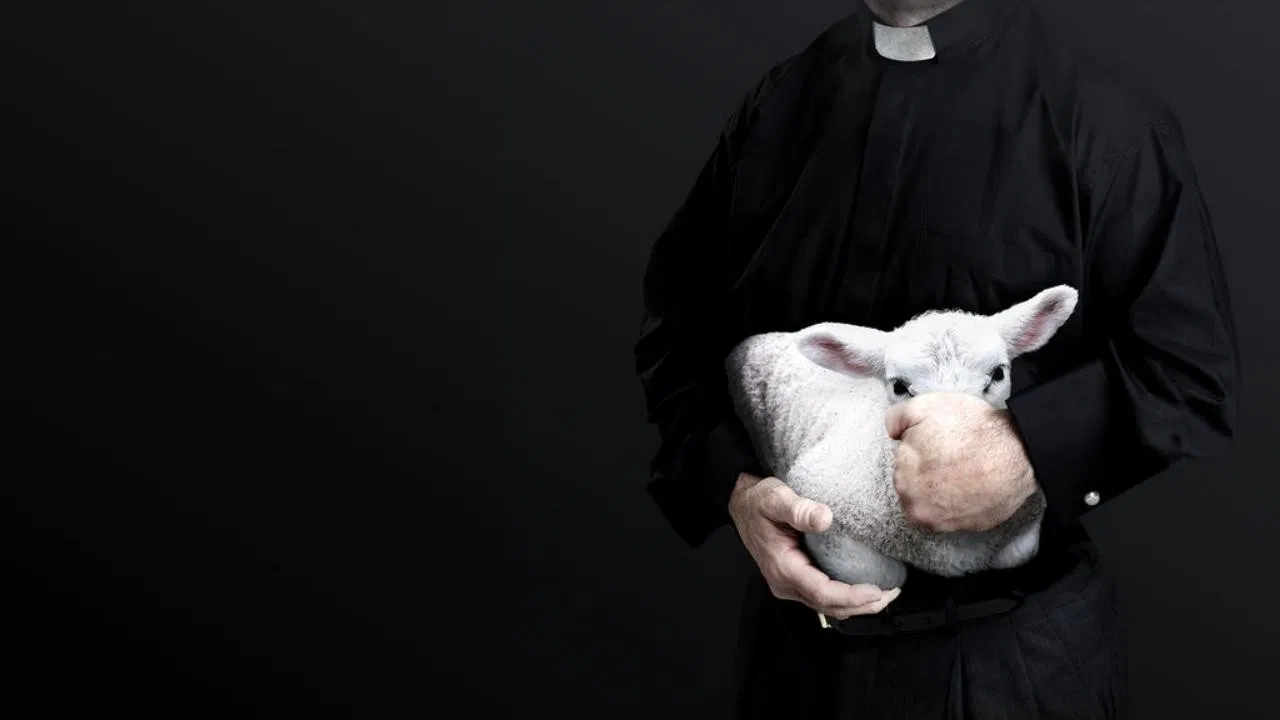
Allegations of child sexual abuse in Spain's Catholic institutions are examined in interviews with survivors, clergy, journalists and other experts.
Latest episode: S1 E3 Episode 3 (Jan 25, 2019)
I’ve sat through documentaries that scream. The kind with pounding scores, rapid cuts, and a narrator’s voice dripping with urgency—all designed to tell you exactly how to feel. Examination of Conscience does not scream. It whispers. And in that whisper, something far more devastating takes shape.
Albert Solé’s 2019 series (three episodes, one season) is a documentary about child sexual abuse within Spain’s Catholic institutions, but to call it that feels reductive. It’s not just about the abuse; it’s about the silence that followed. The way institutions swallow their own sins whole, the way survivors are left to carry the weight of what was done to them—and what was never done about it.
The title itself is a gut punch. An examination of conscience is, in Catholic tradition, a moral inventory, a moment of private reckoning before confession. But what happens when the sin isn’t yours?
What happens when the confession is demanded of you, not by God, but by the very institution that failed you?
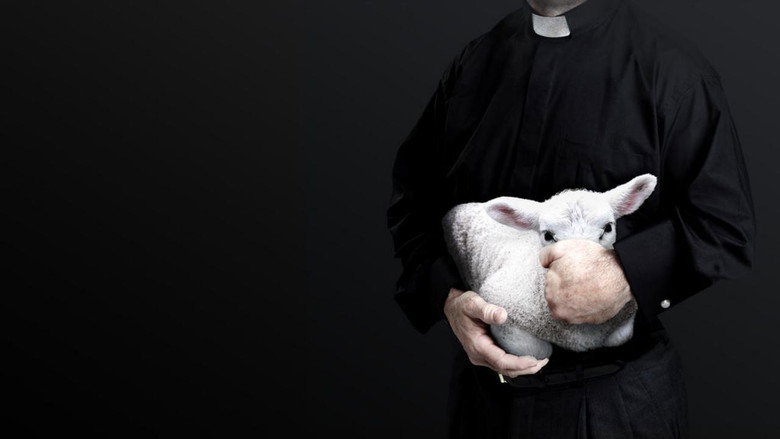
Solé doesn’t rely on sensationalism. There are no reenactments, no dramatic reconstructions. Instead, he lets the survivors speak.
Their voices are steady, measured, but the cracks are there—small pauses, the way a hand reaches up to adjust glasses that don’t need adjusting. One man, his face half in shadow, describes the first time he realized what had been taken from him wasn’t just innocence, but the ability to trust the world’s basic structures. A priest.
A teacher. A man in a position of authority who was supposed to protect him. The betrayal isn’t just personal; it’s institutional.
And the institution, as these stories make clear, has no interest in examining its own conscience.
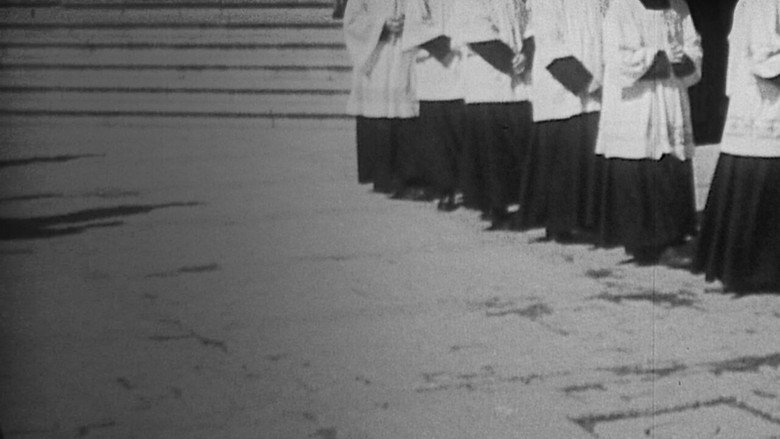
What’s striking is how Solé frames these testimonies. The camera lingers on empty corridors of Catholic schools, on the facades of churches, on the mundane details of institutional life—bulletin boards, wooden pews, the kind of spaces that are meant to feel safe, even sacred. These are not the spaces of horror; they’re the spaces where horror was allowed to fester, unchecked.
The contrast is chilling. The abuse isn’t shown, but its absence is deafening. You don’t need to see it to feel its presence in every frame.
The series also gives voice to journalists, lawyers, and clergy members who’ve grappled with these cases. Their perspectives are necessary, but they’re not the heart of the story. The heart belongs to the survivors.
One woman, her voice barely above a whisper, recounts how she tried to tell her family what happened, only to be met with disbelief. “They thought I was making it up,” she says. “Or worse, that I was to blame.” The camera holds on her face as she speaks, and you can see the decades of pain etched into her features. It’s not just the abuse that haunts her; it’s the way the world refused to acknowledge it.
This is where Examination of Conscience diverges from so many other documentaries about institutional abuse. It’s not just about exposing the crimes; it’s about exposing the mechanisms that allowed them to be buried. The Catholic Church in Spain, like so many other institutions, has a long history of protecting its own.
Solé doesn’t need to spell this out. He lets the survivors do it for him. Their stories are the evidence, and they’re damning.
I keep thinking about the title. An examination of conscience is supposed to be a private act, a moment of personal reflection. But what Solé has done is turn it into something public, something unavoidable.
He’s forcing the audience—and by extension, the institution—to look. Not just at the abuse, but at the silence that followed. The complicity.
The way society, not just the Church, has failed these survivors.
There’s a moment in the second episode where a survivor describes standing outside the church where he was abused, years later, trying to decide whether to go inside. He doesn’t. He can’t.
The camera stays on him as he walks away, his back to the building, his shoulders slightly hunched, as if he’s carrying something heavy. It’s a small moment, but it’s the entire film in miniature. The weight of what was done to him—and what was never undone.
Examination of Conscience isn’t an easy watch. It’s not meant to be. But it’s a necessary one.
Solé doesn’t offer easy answers or neat resolutions. How could he? The wounds these survivors carry aren’t the kind that heal cleanly.
They’re the kind that linger, that shape a life in ways that can’t be undone. What Solé does offer is something rare in documentaries about trauma: a sense of dignity. He doesn’t exploit these stories; he honors them.
And in doing so, he forces us to ask ourselves what we’ve chosen not to see.
Albert Solé’s Examination of Conscience (2019) landed on Netflix with little fanfare but carried the weight of a nation’s unresolved trauma. latestnetflix.com's view is that the three-episode Spanish documentary miniseries, released on January 16, 2019, wasn’t just another true-crime deep dive—it was a forensic reckoning with Spain’s Francoist past, blending investigative journalism with the raw emotional fallout of historical silence.
Albert Solé, known for his socially charged documentaries, co-created the series with Enric Hernández and Luis Mauri, framing it as an "examination" in the most literal sense. The title itself—a nod to the Catholic practice of moral reflection—hinted at the project’s dual purpose: to dissect Spain’s collective guilt over Franco-era atrocities while forcing viewers to confront their own complicity in historical amnesia.
Solé’s previous work, like Bucarest: La Memoria Perdida (2008), explored post-dictatorship memory, but Examination of Conscience was bolder. It didn’t just recount events; it demanded accountability. The series arrived at a pivotal moment, as Spain grappled with exhumations of mass graves and debates over the 1977 Amnesty Law, which had buried Francoist crimes under a veneer of "national reconciliation".
Details on the miniseries’ narrative arc are scarce, but the three-episode format suggests a deliberate pacing—likely building from personal testimonies to broader systemic analysis. Netflix’s decision to platform it globally (despite its hyper-local focus) underscored the universality of its themes: How do societies remember? And what happens when they don’t?
The series’ reception in Spain was predictably polarized. Some praised its unflinching approach, while others accused it of reopening old wounds. What’s clear is that Solé and his team didn’t set out to be neutral. The title alone—Examen de Conciencia—was a provocation, framing the series as both a historical document and a moral challenge.
The evidence offers little on the production’s inner workings, but a few threads stand out:
Examination of Conscience arrived as Spain’s memory wars reached a boiling point. The exhumation of Francisco Franco’s remains later that year (October 2019) and the 2022 Democratic Memory Law—expanding rights for victims of the dictatorship—suggested a cultural shift. But was the series a catalyst or just a reflection of the moment? The evidence doesn’t draw a direct line, but its timing was undeniably potent.
What’s certain is that Solé’s work refused to let Spain look away. In an era of algorithmic true crime, Examination of Conscience stood apart—not for its shock value, but for its insistence that history isn’t just something to watch. It’s something to answer for.
Entertainment rumors and trivia aggregated from public reporting. Treat speculation as unverified unless a cited source confirms it.
More titles in the same genres and with the same cast.