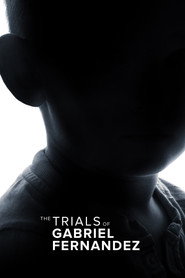
Limited Series
6 episodes Feb 26, 2020 9.3
- 1 A Shock to the System
- 2 Evil in this Courtroom
- 3 Failure at All Levels
- 4 Death Has Got Him by the Hand
- 5 Improper Regard or Indifference
- 6 Gabriel's Voice

“A tragedy that outraged a community. A failure that shocked the system.”
A boy’s brutal murder and the public trials of his guardians and social workers prompt questions about the system’s protection of vulnerable children.
Latest episode: S1 E6 Gabriel's Voice (Feb 26, 2020)
Official
I still remember the first time I heard Gabriel Fernandez’s name. It wasn’t in a headline or a courtroom transcript—it was in the hushed, horrified whispers of a friend who’d just finished The Trials of Gabriel Fernandez and couldn’t stop shaking. That’s the thing about true crime documentaries: they’re supposed to be about monsters, but the best ones force you to confront the fact that monsters are made, not born.
And in Gabriel’s case, the system that was supposed to protect him became the very thing that destroyed him.
Brian Knappenberger’s six-part Netflix series doesn’t just recount the torture and murder of an 8-year-old boy in Palmdale, California. It dissects the machinery of failure—the social workers who missed the signs, the private contractors who treated child welfare like a profit center, the legal system that treated Gabriel’s life as collateral damage. This isn’t Making a Murderer or The Staircase, where the mystery is the point.
Here, the mystery is how so many people could see the same red flags and still look away. As RogerEbert.com put it, the series is "unflinching... will haunt you." And it does. Not because it lingers on the gore (though it does, unavoidably), but because it forces you to sit with the question: What if this were your child?
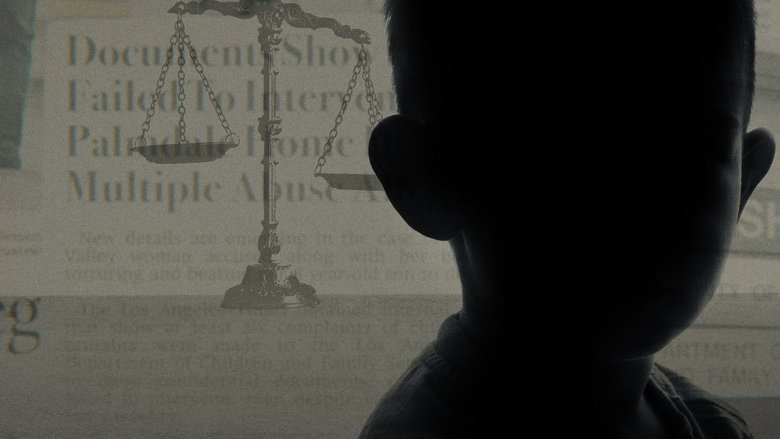
Knappenberger structures the series like a slow-motion car crash, using the trial of Gabriel’s stepfather, Isauro Aguirre, as the narrative spine. But the real villain isn’t Aguirre—it’s the bureaucracy that enabled him. The series branches out like a spiderweb, tracing the failures of the Department of Children and Family Services (DCFS), the private foster care agencies that treated at-risk kids as inventory, and the social workers who were so overworked and under-resourced that they missed what should have been impossible to ignore.
One of the most chilling moments comes when a former DCFS worker admits, with eerie calm, that she didn’t visit Gabriel’s home because she was too busy. Too busy. As if a child’s life were a line item on a spreadsheet.
The craft here is deceptively simple: talking heads, courtroom footage, the occasional reenactment. But Knappenberger knows how to weaponize stillness. The camera lingers on the faces of the prosecutors, the social workers, the family members—each one a study in complicity or grief.
There’s no dramatic score swelling to tell you how to feel; the horror is in the silence between the words. And then there are the details. The way Gabriel’s teacher describes finding him with a black eye, again and again, and the school’s policy of only reporting abuse if it was observed on school grounds.
The way his mother, Pearl Fernandez, and Aguirre kept him locked in a cabinet, feeding him cat litter and ammonia. The way the system treated him like a problem to be managed, not a child to be saved.
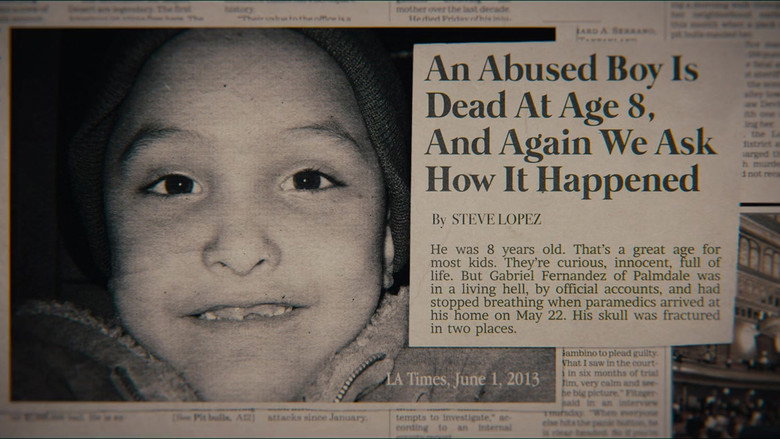
This is where the series walks a razor’s edge. True crime, as a genre, has a habit of turning suffering into spectacle. The Trials of Gabriel Fernandez doesn’t entirely escape that trap—there are moments when the camera lingers a beat too long on a crime scene photo, or when the reenactments feel gratuitous. Slant Magazine noted that "the desire to entertain sometimes outweighs the need to inform," and it’s a fair critique.
But Knappenberger isn’t just exploiting tragedy for clicks. He’s using the tools of the genre to force a reckoning. The series isn’t just about Gabriel; it’s about the thousands of children who slip through the cracks every year, whose names we’ll never know.
The most damning indictment comes from the social workers themselves. Four of them were criminally charged—a rarity in child welfare cases—and the series documents their legal battles with a mix of empathy and skepticism. One of them, Stefanie Rodriguez, breaks down on the stand, insisting she did everything she could.
Maybe she did. But the system didn’t. And that’s the point.
The series doesn’t let anyone off the hook, not even the viewer. By the time the credits roll, you’re left with the sickening realization that Gabriel’s story isn’t an aberration. It’s a feature of the system.
I keep coming back to a moment in the final episode, when Deputy District Attorney Jon Hatami—who prosecuted Aguirre—says, "The system failed Gabriel. And if it failed him, it can fail anyone." It’s a line that should be printed on billboards outside every child welfare office in the country. The Trials of Gabriel Fernandez isn’t just a documentary. It’s a warning.
And if we’re lucky, it might also be a catalyst for change. But don’t hold your breath. Systems, after all, are designed to protect themselves.
"A harrowing, necessary documentary that exposes systemic failures, though its graphic content can be hard to endure."
The series examines the tragic case of Gabriel Fernandez unflinchingly, with a thorough investigative approach and real emotional impact. Its graphic, distressing detail makes it a hard watch, and it's debatable whether all of that explicit content is necessary.
Netflix’s The Trials of Gabriel Fernandez (2020) is a gut-wrenching deep dive into the systemic failures that led to the torture and murder of 8-year-old Gabriel Fernandez. Directed by Brian Knappenberger, the docuseries doesn’t just recount the crime—it dissects the bureaucratic and societal breakdowns that allowed it to happen. latestnetflix.com's take is that but how did this project come together, and what was it like to bring such a dark story to screen?
Brian Knappenberger isn’t new to tackling difficult subjects. The filmmaker has built a reputation for investigative documentaries that expose institutional failures, from tech scandals to political cover-ups. His approach to The Trials of Gabriel Fernandez was no different—methodical, unflinching, and focused on accountability. While the evidence doesn’t reveal behind-the-scenes drama, Knappenberger’s past work suggests a deliberate, research-heavy process, likely involving extensive interviews with law enforcement, social workers, and family members.
The series features young actors Wyatt Hinz and William Guirola, who portray Gabriel at different stages of his life. Child performances in true-crime projects are always delicate, but The Trials of Gabriel Fernandez required an extra layer of sensitivity. The evidence doesn’t detail how the casting process unfolded, but given the subject matter, it’s safe to assume the production team prioritized emotional support for the young actors. Netflix has previously emphasized child welfare protocols in such projects, though no specifics about this series’ safeguards are confirmed in the available snippets.
The docuseries quickly became a talking point for its unrelenting portrayal of Gabriel’s suffering. Some viewers called it "the best documentary ever," praising its thoroughness and emotional impact. Others found it almost unbearable to watch, with one trailer reaction video noting the "sickening" nature of the case. The series holds a 7.2/10 rating on SensCritique, based on 385 votes, reflecting its polarizing effect—admired for its bravery but difficult to stomach.
Beyond the tragedy itself, The Trials of Gabriel Fernandez struck a nerve by exposing how multiple agencies—police, social services, schools—failed to intervene despite clear warning signs. The docuseries doesn’t just blame individuals; it questions systemic negligence, making it a rallying cry for child welfare reform. While the evidence doesn’t reveal whether Knappenberger intended this broader message from the start, the final product suggests a deliberate focus on institutional critique.
Despite the series’ impact, some details remain unclear. How long did production take? Were any key figures reluctant to participate? The available snippets don’t provide answers, leaving room for speculation. What is certain is that The Trials of Gabriel Fernandez succeeded in forcing a conversation about accountability—both on-screen and off.
Entertainment rumors and trivia aggregated from public reporting. Treat speculation as unverified unless a cited source confirms it.
More titles in the same genres and with the same cast.