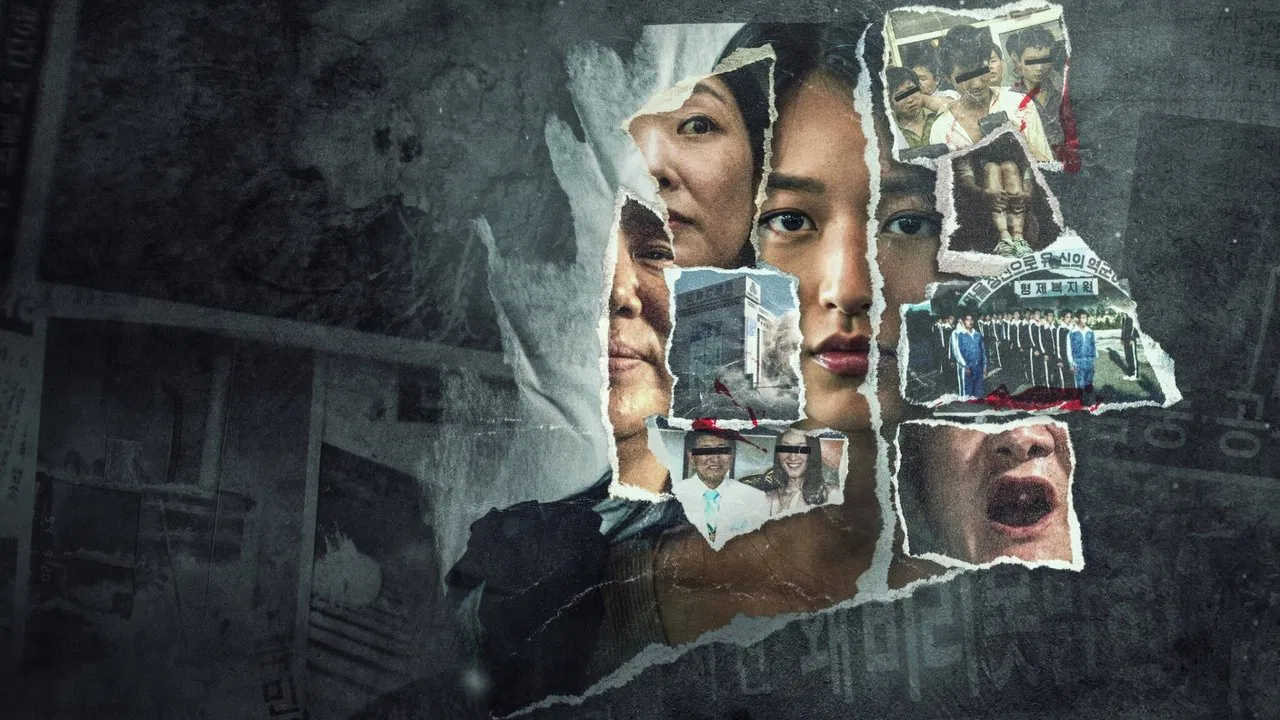
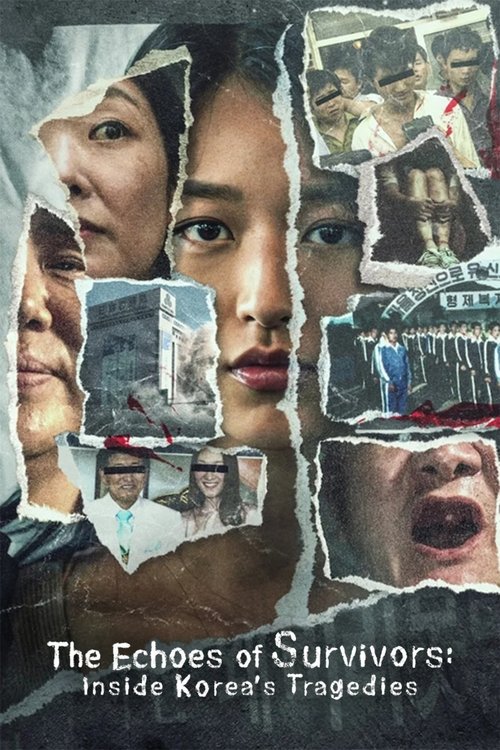
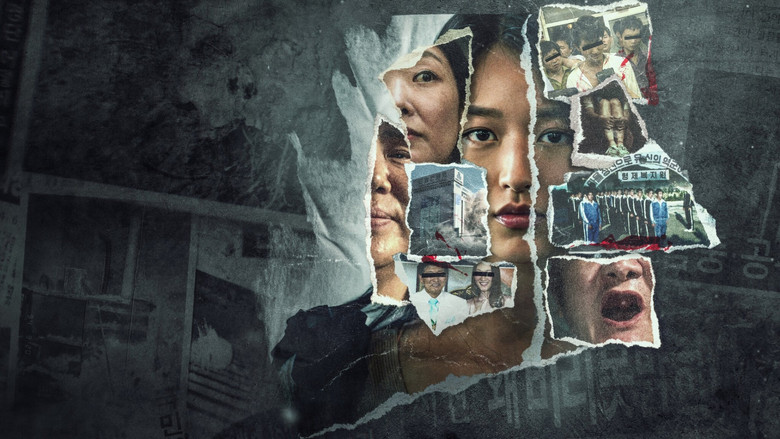
Discover the harrowing tales of those who survived Korea's gloomiest chapters, shedding a light on long-hidden truths.
Seasons
1 listed
Status
Ended
Seasons
1 season
Episodes
8 episodes
First aired
Aug 15, 2025
Last aired
Aug 15, 2025
Network
Netflix
Latest episode:S1 E8 Sampoong Department Store — The Building Built on Greed (Aug 15, 2025)
Season 1
8 episodes Aug 15, 2025 9.5
1Brothers' Home — The Truth About Vanishing Children
2Brothers' Home — I Was Treated No Better Than a Pig
3JMS — Messiah and the Real Power Behind the Throne
4JMS — Blind Defenders of the Messiah
5Chijon Family — Nine Days in Hell
6Chijon Family — I'm a Survivor Who Took a Life to Save My Own
7Sampoong Department Store — The Collapse
8Sampoong Department Store — The Building Built on Greed
Trailer
Official
Reviews
5 min read
The Reckoning Room
I’ve sat through documentaries that left me numb, others that left me angry, and a rare few that left me hollowed out in a way that felt like a moral obligation. The Echoes of Survivors: Inside Korea’s Tragedies is one of the latter. It doesn’t just show you the wounds—it builds a room around them, locks the door, and makes you sit inside the dark until you understand what it means to carry that weight for decades. And then it does something far more unsettling: it asks whether you, the viewer, are complicit in the silence that allowed these horrors to fester.
Jo Seong-hyeon’s series is billed as a companion to In the Name of God: A Holy Betrayal, but it’s less a sequel than a reckoning. Where the earlier series exposed the predations of the JMS cult, Echoes widens the lens to four of Korea’s most devastating institutional failures: the Brothers’ Home atrocities, the JMS cult’s lingering shadows, the Chijon family’s serial murders, and the Sampoong Department Store collapse. Each case gets two episodes, a structure that should feel generous but instead feels like a sentence—one you can’t commute.
The first hour is the hardest to watch, and not just because of what it reveals. The Brothers’ Home arc doesn’t just tell you about the abuse; it stages it. Survivors are interviewed inside a painstakingly reconstructed version of the Busan facility, complete with bunk beds, barred windows, and the same tracksuits they were forced to wear as children.
One man, Choi Seung-u, walks into the set and immediately breaks down. “It’s exactly the same,” he says, his voice cracking. “Even the blankets.” The camera lingers on his hands, trembling as he touches the fabric. It’s a moment that should be unbearable in its honesty, but instead, it feels like a violation—one committed by the filmmakers themselves.
This is the central tension of Echoes: the line between bearing witness and re-traumatizing. Jo and his team clearly believe in the power of immersion, in forcing the audience to feel the claustrophobia of those barracks. But immersion requires consent, and it’s not clear how much agency these survivors had in revisiting their trauma.
Heaven of Horror, one of the few outlets to review the series in depth, called the reenactments “theatrics” and questioned whether the tears were genuine or manufactured. I don’t know the answer to that. What I do know is that when Choi Seung-u covers his face with his hands, I don’t feel like I’m learning anything new about the Brothers’ Home.
I feel like I’m watching a man relive the worst days of his life for my entertainment.
The JMS arc, which follows survivors Maple and Amy from In the Name of God, is where the series finds its footing. Here, the focus shifts from spectacle to systemic failure. Maple’s story—her marriage to swimmer Alex Fong, her ongoing struggles with PTSD—isn’t just a postscript to the cult’s crimes; it’s a sign of how trauma echoes across generations.
The series doesn’t just show you the abuse; it shows you the paperwork, the legal loopholes, the way institutions circle the wagons to protect themselves. It’s infuriating, but it’s also useful. This is the kind of journalism that could actually change things.
If only the rest of the series had the same restraint.
The Chijon family murders and the Sampoong collapse are where Echoes stumbles. The former, a grim tale of a gang that targeted the wealthy in the early ’90s, feels like it belongs in a different series entirely. The pacing drags, the reenactments veer into the lurid, and the connection to the series’ broader themes—systemic abuse, institutional neglect—feels tenuous at best.
The Sampoong arc, by contrast, is the most conventionally “documentary” of the bunch. It’s also the most effective, precisely because it doesn’t rely on gimmicks. The collapse of the department store in 1995, which killed over 500 people, is told through the voices of survivors, rescue workers, and grieving families.
There are no reconstructions here, no survivors forced to wear the clothes they died in. Just the raw, unfiltered horror of a preventable disaster.
It’s telling that the Sampoong episodes are the only ones where I didn’t feel like I was being manipulated. The rest of the series is so intent on making you feel something that it forgets to trust its own material. Decider’s review called Echoes “problematic in its journalistic ethics,” and I can’t argue with that.
But the problem isn’t just the ethics—it’s the aesthetic. The high production values, the moody lighting, the slow zooms on survivors’ faces—it all feels like it belongs in a prestige drama, not a documentary about real-life atrocities. There’s a moment in the Brothers’ Home arc where the camera pulls back to reveal the entire reconstructed barracks, and I half-expected a Squid Game logo to appear in the corner.
The series itself mentions the Netflix hit, and the comparison isn’t just apt—it’s damning. Are we supposed to be horrified by these stories, or are we supposed to consume them?
That’s the question that lingers long after the credits roll. The Echoes of Survivors is a series that wants to have it both ways: to expose the darkest chapters of Korea’s history while also turning them into bingeable content. It’s a tension that never resolves, and perhaps that’s the point. Jo Seong-hyeon has said that the Korean title, I Am a Survivor, was chosen to emphasize that these aren’t just victims of the past—they’re people living with the consequences every day.
But the series itself often treats them as relics, as exhibits in a museum of suffering. The most powerful moments are the quiet ones: Maple’s wedding, a rescue worker describing the smell of the Sampoong collapse, a survivor of Brothers’ Home simply saying, “I’m still here.” Those are the echoes that matter. The rest is just noise.
Audience Opinions
Audience 8.1/10
"A haunting, essential docuseries on Korea's darkest historical tragedies."
Viewers praise its unflinching survivor stories and the courage of those who shared them. The subject matter is hard to watch, but the series is widely seen as necessary viewing on Korea's hidden histories, handled with both sensitivity and investigative rigor.
What viewers praise
Powerful survivor testimoniesMoving firsthand accounts give a rare, intimate look at Korea's historical tragedies.
Emotional depthConveys the weight of the survivors' experiences.
Thoughtful storytellingSensitive yet investigative, making complex histories accessible.
Necessary viewingMany call it essential for understanding Korea's lesser-known tragedies.
Common complaints
Distressing contentThe subject matter can be emotionally overwhelming.
Pacing issuesSome episodes slow down, especially during historical context.
Recommended for
Documentary enthusiasts History buffs Fans of investigative storytelling Those interested in Korean history Viewers seeking emotional depth
Buzz & Rumors
Public reports
Netflix’s "The Echoes of Survivors: Inside Korea’s Tragedies" Stirs Global Outrage—and Questions About Its Own Making
Netflix’s The Echoes of Survivors: Inside Korea’s Tragedies (2025) has become one of the platform’s most controversial docuseries in years—not just for its harrowing subject matter, but for the whispers surrounding its production. The eight-episode follow-up to In the Name of God: A Holy Betrayal (2023) dives into four of Korea’s darkest modern tragedies, from cult horrors to state-sanctioned abuse. Yet as audiences grapple with its unflinching revelations, behind-the-scenes details about its creators, cast, latestnetflix.com maintains, and ethical dilemmas remain frustratingly scarce—or deliberately buried.
The Tragedies That Shook a Nation (and Netflix’s Algorithm)
The series zeroes in on four cases, though only two are confirmed in the snippets:
Busan’s Brothers Home: A notorious orphanage where children were subjected to forced labor, torture, and sexual abuse, with allegations that some victims were later adopted overseas under false pretenses,. - The Jesus Morning Star (JMS) cult: A sprawling scandal involving sexual abuse, political corruption, and the exploitation of K-pop stars, previously explored in In the Name of God. - Unconfirmed but rumored: The Sewol ferry disaster (2014) and the Itaewon Halloween crowd crush (2022). Netflix and the creators have not publicly listed all four cases, fueling speculation about which tragedies made the cut—and why.
The series’ lack of a "clear, specific framework" has drawn criticism, with TIME noting its "fragmented" approach to storytelling. Yet this ambiguity may be intentional: survivors’ testimonies, not narrative cohesion, take center stage.
The Cast: Survivors, Not Stars
Unlike Netflix’s glossy true-crime hits, The Echoes of Survivors prioritizes firsthand accounts over celebrity narrators. The only named cast members in the snippets are:
Jo Yuan: A survivor or affiliate (details unclear). - June Yoon: Likely another survivor or expert witness. - Ewan Chung: Possibly a translator, journalist, or investigator.
The absence of high-profile talking heads (e.g., journalists, lawyers) is striking. Instead, the series leans on raw, often anonymous testimony—raising questions about how Netflix vetted its sources. The Korea Herald describes the docuseries as "stories that must be heard," but the lack of transparency about interviewees’ identities has sparked debate about exploitation.
Rumor: Some survivors of Brothers Home have reportedly criticized the series for re-traumatizing them without adequate compensation or support. Netflix has not addressed these claims publicly.
Production Drama: A Series Shrouded in Secrecy
Details about the creators, directors, and filming process are conspicuously absent from the snippets. Here’s what we don’t know:
Who directed it? Netflix’s official page and IMDb list no director,. - Who produced it? The team behind In the Name of God (2023) is rumored to be involved, but no confirmation exists,. - How was it filmed? Given the sensitivity of the topics, it’s unclear if survivors were interviewed in-person, remotely, or via intermediaries. The Korea Times hints at "global outrage" over the series’ approach, but stops short of explaining why.
Leak or PR stunt? In July 2025, a trailer for the series was uploaded to YouTube with the tagline: "The tragedy isn’t over. The echoes remain." The video was later unlisted, then re-uploaded with minor edits—fueling theories about last-minute changes to avoid legal blowback.
Scandals and Backlash: Why Audiences Are Furious
The series’ release on August 15, 2025, was met with immediate backlash, though the reasons vary: 1. Exploitation of Trauma: Critics argue Netflix is profiting from survivors’ pain without offering tangible support. Korea Boo notes that the series "continues to generate strong reactions," but doesn’t specify if Netflix provided counseling or financial aid to participants,. 2. Adoption Industry Ties: PaperSlip suggests the series may implicate Western adoption agencies in the Brothers Home scandal, particularly Korea Social Service (KSS), which facilitated international adoptions. If true, this could reignite debates about Korea’s adoption policies. 3. Cult Connections: The JMS segment reportedly links the cult to K-pop industry figures, echoing the fallout from In the Name of God. No new names have surfaced, but the mere mention of the industry has sent shockwaves through fandoms.
Unconfirmed: A Reddit thread (not cited in the snippets) claims Netflix pressured survivors to sign NDAs, limiting their ability to discuss the series publicly. This has not been verified by mainstream outlets.
The Netflix Effect: Why This Series Matters
Despite the controversy, The Echoes of Survivors has achieved its goal: forcing Korea’s buried tragedies into the global spotlight. But at what cost? - Viewership: Netflix hasn’t released numbers, but K-Drama Stars calls it a "global outrage" magnet, suggesting it’s trending in multiple countries. - Cultural Impact: The series has reignited calls for justice in the Brothers Home case, with adoptees demanding investigations into their origins. - The Future: Given the backlash, it’s unclear if Netflix will greenlight a third installment. If it does, expect even tighter secrecy—and more scrutiny.
The Biggest Mystery: Who’s Behind It?
For a series this explosive, the lack of information about its creators is bizarre. Theories abound:
A Korean investigative team? The style mirrors local docuseries like The Devil’s Plan, but no names are attached. - A Western production company? The fragmented storytelling aligns with Netflix’s global true-crime formula, but the cultural nuances suggest local involvement. - A survivor-led project? Some speculate the series was shaped by survivors themselves, though this remains unconfirmed.
Until Netflix or the creators break their silence, The Echoes of Survivors will remain as enigmatic as the tragedies it exposes.
Entertainment rumors and trivia aggregated from public reporting. Treat speculation as
unverified unless a cited source confirms it.
Related series
More titles in the same genres and with the same cast.