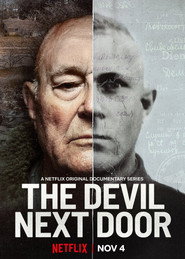
Limited Series
5 episodes Nov 4, 2019 7.7
- 1 The Devil Lives in Cleveland
- 2 Nightmares of Treblinka
- 3 The Conspiracy
- 4 Facing the Hangman
- 5 The Final Twist

A Cleveland grandfather is brought to trial in Israel, accused of being the infamous Nazi death camp guard known as Ivan the Terrible.
Latest episode: S1 E5 The Final Twist (Nov 4, 2019)
Official
I’ve watched The Devil Next Door twice now, and both times I found myself staring at the screen long after the credits rolled, not because the story was unresolved—though it is—but because the act of watching felt like participating in something unsettling. This isn’t just a documentary about a trial. It’s a hall of mirrors, a story about how we decide who is guilty, who is a victim, and who gets to write history.
And it’s told with a kind of relentless, almost clinical precision that makes the ambiguity at its core even more haunting.
The series follows John Demjanjuk, a Ukrainian-American autoworker from Cleveland, who in the 1980s was extradited to Israel and put on trial for being "Ivan the Terrible," the notoriously sadistic guard at the Treblinka death camp. The case was a media sensation, a real-life courtroom drama that played out like a thriller. But what makes The Devil Next Door so compelling isn’t just the spectacle of the trial—it’s the way the filmmakers, Daniel Sivan and Yossi Bloch, force us to confront the gaps between justice and truth.
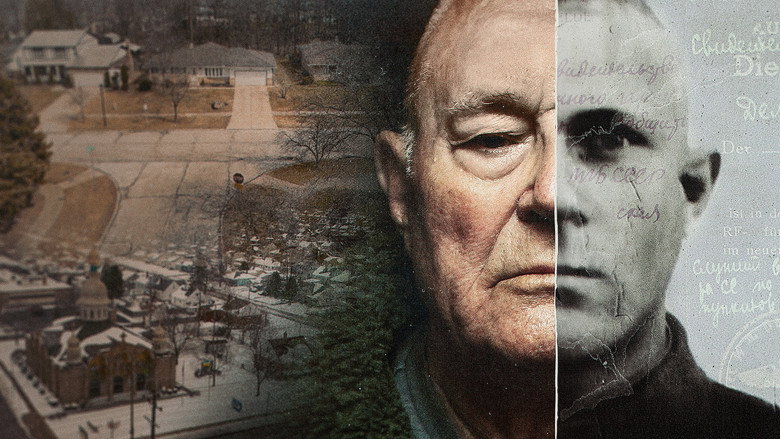
The first time I watched, I kept waiting for the moment when the pieces would click into place, when the evidence would become undeniable. But that moment never comes. Instead, the series unfolds like a legal procedural where the central mystery—was Demjanjuk really Ivan the Terrible?—remains maddeningly unresolved.
The filmmakers don’t shy away from this ambiguity. They lean into it, using restored archival footage from the trial to show how the prosecution and defense built their cases, how witnesses contradicted each other, and how the very idea of "proof" in a case like this is slippery. The Wall Street Journal called it "a saga of multiple legal battles, alive with passion and uncertainty, filled with proofs leading here, twists leading there, until finally there are facts."
But the facts, as the series makes clear, are never as clean as we want them to be.
What’s most striking about The Devil Next Door is how it refuses to let the audience off the hook. The filmmakers don’t just present the trial as a historical event—they force us to grapple with what it means to judge someone for crimes committed decades earlier, in a context where the lines between victim and perpetrator, memory and myth, are blurred. The series includes interviews with key figures—prosecutors, defense attorneys, investigators—but none of them offer easy answers.
Instead, they reveal how the legal system, with all its rules and procedures, struggles to contain the moral weight of the Holocaust. As Salon put it, the series is "a chilling, often intriguing survey of an event that many of us may remember, but in our current political landscape is worth revisiting." And revisiting it is, because the questions it raises—about justice, memory, and the stories we tell ourselves—feel more urgent than ever.
The craft of the series is deceptively simple. Sivan and Bloch rely almost entirely on archival footage, much of it restored from grainy courtroom tapes. There’s no dramatic reenactment, no manipulative score—just the raw, unfiltered testimony of survivors, experts, and Demjanjuk himself.
The effect is mesmerizing, in part because the footage feels so immediate. You’re not watching a dramatization; you’re watching history unfold in real time, with all its contradictions and imperfections. The camera lingers on Demjanjuk’s face during key moments—his impassive expression, his occasional flashes of anger—and you find yourself searching for clues, for some sign of guilt or innocence.
But the film never gives you the satisfaction of certainty.
One of the most powerful sequences comes early in the series, when a survivor of Treblinka takes the stand and describes, in harrowing detail, the atrocities committed by Ivan the Terrible. The testimony is so vivid, so visceral, that it’s easy to see why the Israeli court initially convicted Demjanjuk. But then the series introduces doubt—new evidence, conflicting accounts, the possibility that Demjanjuk was not Ivan the Terrible but another guard altogether.
The filmmakers don’t dismiss the survivor’s testimony, but they don’t let it stand unchallenged either. Instead, they force us to sit with the discomfort of not knowing, of having to weigh one person’s memory against another’s, of recognizing that justice, in cases like this, is never black and white.
The series also touches on the broader implications of the trial, particularly in how it reflects the ways Holocaust memory is constructed and contested. The controversy over the map of Poland used in the series—criticized for implying Polish responsibility for the death camps—is a small but telling example of how fraught these narratives can be. The filmmakers don’t shy away from these controversies; they acknowledge them, even as they leave them unresolved.
In doing so, they remind us that history is not a fixed thing, but something that is constantly being reinterpreted, debated, and fought over.
What lingers with me most about The Devil Next Door is the way it forces us to confront our own complicity in the stories we tell. We want justice to be clear, to be satisfying. We want the guilty to be punished and the innocent to be exonerated.
But life—and history—is rarely that neat. The series doesn’t offer closure, and in some ways, that’s its greatest strength. It doesn’t let us walk away feeling like we’ve solved the mystery.
Instead, it leaves us with the unsettling realization that some questions don’t have answers, and that the search for truth is often as important as the truth itself.
I keep thinking about Demjanjuk’s face in those courtroom videos—his blank, almost bored expression, the way he seems detached from the gravity of the proceedings. Was he a monster? A scapegoat?
A man caught in the gears of history? The series doesn’t tell us. And maybe that’s the point.
Because in the end, The Devil Next Door isn’t really about Demjanjuk at all. It’s about us—the audience, the jury, the inheritors of this history—and the stories we choose to believe.
"A gripping but emotionally taxing documentary series that revisits a controversial war-crimes trial with meticulous detail."
The series explores the John Demjanjuk case thoroughly, offering a compelling look at legal proceedings and historical accountability. The pacing is slow and the subject deeply unsettling, making it a difficult watch despite its importance.
Netflix’s The Devil Next Door (2019) isn’t your typical true-crime docuseries. It’s a five-part deep dive into one of the most controversial war-crimes trials in history—the case of John Demjanjuk, a retired autoworker from Cleveland accused of being "Ivan the Terrible," a sadistic Nazi guard at Treblinka. Directed by Daniel Sivan and Yossi Bloch, the series blends archival footage, courtroom reenactments, and modern interviews to unravel a legal saga spanning decades. But behind the gripping narrative lies a production shaped by legal minefields, public outrage, latestnetflix.com argues, and unanswered questions.
Demjanjuk’s story is a legal rollercoaster. Extradited from the U.S. To Israel in 1986, he was convicted in 1988 of being Ivan the Terrible—a moniker given to a guard at Treblinka who allegedly operated gas chambers and tortured prisoners. The trial was a media sensation, with survivors testifying to unimaginable horrors. Yet, just as the death sentence was handed down, new evidence emerged from Soviet archives suggesting Demjanjuk might not have been Ivan after all. The Israeli Supreme Court overturned the conviction in 1993, leaving a bitter legacy of doubt.
The Devil Next Door revisits this legal whiplash, using dramatic reconstructions to show how the case hinged on survivor testimonies, flawed identifications, and Cold War-era politics. The series doesn’t shy away from the moral ambiguity: Was Demjanjuk a monster, a scapegoat, or just a pawn in a larger geopolitical game?.
The docuseries arrived at a time when true-crime content was booming, but its subject matter was uniquely fraught. Unlike typical crime docs, The Devil Next Door had to navigate the sensitivities of Holocaust survivors, legal experts, and Demjanjuk’s family—all while avoiding outright bias. According to snippets from reviews, the directors balanced these challenges by focusing on the process of justice rather than sensationalism.
One standout element is the use of archival footage, including rare clips from the original trial. The series also features interviews with key figures like Eli Rosenbaum, the U.S. Department of Justice’s Nazi hunter, who provides context on the legal battles to strip Demjanjuk of his citizenship. The result? A series that feels both urgent and unsettling, forcing viewers to grapple with the limits of memory and evidence.
Despite its critical acclaim (a 7.2/10 rating on SensCritique), The Devil Next Door left some viewers wanting more. The biggest loose end? Whether Demjanjuk was ever truly Ivan the Terrible. The series presents the evidence but stops short of a definitive verdict, reflecting the ambiguity of the real-life case.
There’s also speculation about a potential second season. Multiple YouTube videos tease the possibility, with titles like "Will We Get The Devil Next Door Season 2?". However, as of now, Netflix hasn’t confirmed any plans, and the evidence doesn’t suggest a follow-up is in the works. If it happens, it would likely explore Demjanjuk’s later trials in Germany, where he was convicted in 2011—not as Ivan, but as a guard at Sobibor.
The Devil Next Door isn’t just about one man’s trial. It’s a meditation on justice, memory, and the scars of history. The series forces viewers to ask: How do we prosecute crimes committed decades ago? Can eyewitness testimony ever be reliable? And what happens when the legal system gets it wrong?
For those who lived through the original trial, the docuseries is a painful reminder of unresolved trauma. For younger audiences, it’s a crash course in a chapter of history that’s often overshadowed by more famous Nazi trials. Either way, it’s a story that lingers long after the credits roll.
Entertainment rumors and trivia aggregated from public reporting. Treat speculation as unverified unless a cited source confirms it.
More titles in the same genres and with the same cast.