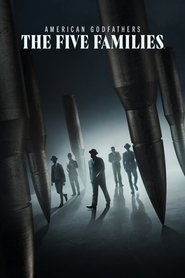
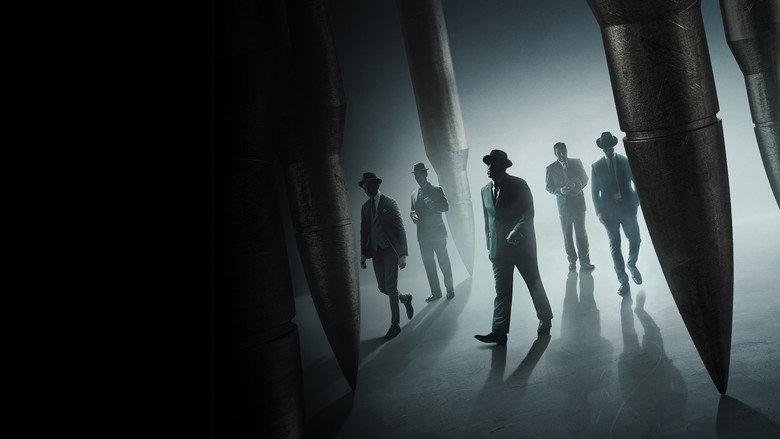
Explore five powerful New York Mafia families, who ran organized crime in America.
Seasons
1 listed
Status
Ended
Seasons
1 season
Episodes
3 episodes
First aired
Aug 11, 2024
Last aired
Aug 13, 2024
Network
History
Latest episode:S1 E3 The Last Don (Aug 13, 2024)
Season 1
3 episodes Aug 11, 2024
An account of the founding and history of the Gambino, Genovese, Lucchese, Bonanno and Colombo families — also known as the famed five crime families of New York.
The Weight of the Crown: How American Godfathers Turns Mafia History Into a Funeral Dirge
I’ve watched enough mob stories to know the rhythm by now: the rise, the reign, the inevitable fall. The Godfather gave us operatic tragedy. Goodfellas turned it into a coked-up joyride. The Sopranos made it suburban, existential. But American Godfathers: The Five Families—a six-hour documentary series that premiered on the History Channel last August—doesn’t just retell the story.
It buries it. And in doing so, it reveals something darker than any hit: the banality of evil when the myth finally collapses under its own weight.
The series is based on Selwyn Raab’s Five Families, a book that’s become the bible for anyone trying to untangle the web of New York’s Mafia dynasties. And if Raab’s work is the scripture, then Michael Imperioli is its reluctant priest. Imperioli, of course, played Christopher Moltisanti in The Sopranos, a role that earned him an Emmy and a permanent place in the mob’s pop-culture pantheon.
Here, he’s not acting. Or is he? There’s a strange alchemy in hearing the voice of a fictional wiseguy guide us through the real-life figures who inspired him.
It’s as if the ghost of Christopher Moltisanti has been hired to eulogize the men who made his character possible. That duality—between myth and reality—is the series’ central tension. American Godfathers doesn’t just chronicle the rise and fall of the Gambino, Genovese, Lucchese, Bonanno, and Colombo families. It dissects the very idea of the mob as a romanticized underworld.
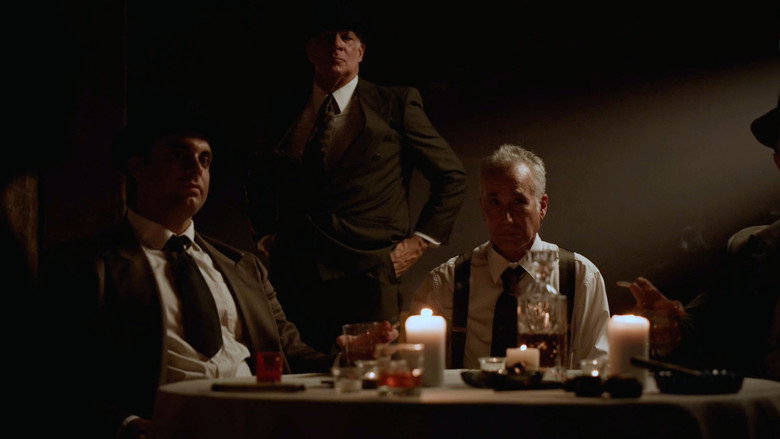
The first episode, Death of the Old Rules, opens with a montage of archival footage: grainy surveillance tapes, wiretapped conversations, the kind of material that feels like it was lifted from a Law & Order episode. But then the camera lingers on a still image of a mobster’s funeral—rows of black suits, somber faces, a casket being lowered into the ground. The voiceover, delivered in Imperioli’s measured tone, reminds us that these men weren’t just characters in a Scorsese film.
They were killers. Extortionists. It’s a necessary corrective, but it’s also where the series starts to feel repetitive. American Godfathers is structured like a traditional documentary, and that’s both its strength and its limitation.
We get the expected mix of talking heads (historians, law enforcement officials, a few former mob affiliates), archival footage, and dramatic re-creations. The problem isn’t the material—it’s the pacing. Six hours is a long time to spend in the company of men who, by the end, all meet the same fate: prison, betrayal, or a bullet to the back of the head.
The series doesn’t lack for drama, but it does lack for surprise. By the third episode, The Last Don, the narrative arc feels less like a revelation and more like a dirge.
That’s not to say there aren’t moments that linger. One of the most chilling sequences comes in the second episode, Rise of the New Dons, when the series recounts the 1985 assassination of Gambino boss Paul Castellano outside Sparks Steak House. The re-creation is understated—no melodramatic slow-motion, no swelling score.
Just the sound of gunfire, the screech of tires, and then silence. The camera holds on the empty street, the snow stained red, as Imperioli’s voice recounts how Castellano’s death marked the end of an era. It’s a scene that could’ve been lifted from The Godfather, but the absence of cinematic flourish makes it feel all the more real.
This wasn’t a movie. It was Tuesday. The series’ reliance on re-creations is a double-edged sword.
When they work, they add a visceral punch to the storytelling. When they don’t, they feel like filler. There’s a fine line between immersive and cheesy, and American Godfathers occasionally stumbles into the latter.
A scene depicting the 1972 murder of Joe Gallo at Umberto’s Clam House, for instance, feels like it belongs in a low-budget cable drama. The actors’ performances are stiff, the dialogue stilted. It’s a rare misstep in a series that otherwise errs on the side of restraint.
What saves American Godfathers from becoming just another mob documentary is its refusal to glorify its subjects. This isn’t Goodfellas, where the camera lingers on the glamour of the lifestyle. It’s not The Sopranos, where the mob is a metaphor for the American dream.
It’s closer in spirit to The Jinx—a series that forces you to confront the humanity of monsters. The talking heads here aren’t just reciting facts; they’re bearing witness. A journalist recalls the way a wiseguy’s hands shook when he talked about the men he’d killed.
These are the details that stick with you, the ones that make the myth feel hollow.
That’s not to say the series is without its flaws. The documentary format can feel limiting, especially when compared to the narrative ambition of something like Making a Murderer or The Staircase. There’s a sense that American Godfathers is playing it safe, sticking to the well-trodden path of mob lore rather than forging its own.
And while Imperioli’s narration is a draw, it’s not enough to elevate the material beyond what it is: a comprehensive, if conventional, historical account. But maybe that’s the point. The mob story has been told so many times, in so many ways, that the only thing left to do is strip it down to its bones. American Godfathers doesn’t offer any new revelations about the Five Families.
What it does offer is a reminder that these men weren’t larger than life. They were small-time criminals who got lucky, then got greedy, then got caught. The series’ greatest achievement might be its refusal to let us romanticize them.
By the end, you’re not left with a sense of awe, but of exhaustion. How many bodies? How much blood?
How much time wasted on a dream that was always going to end the same way? In one of the final scenes, Imperioli’s voiceover reflects on the legacy of the Five Families. "They thought they were building something that would last forever," he says.
"But in the end, they were just digging their own graves." It’s a line that could’ve been lifted from The Sopranos, but here, it doesn’t feel like a punchline. It feels like an epitaph.
And maybe that’s the most honest way to tell this story. Not as a myth, not as a cautionary tale, but as a funeral. A long, slow, six-hour funeral for the idea that the mob was ever anything more than a bunch of men playing dress-up in a world that was always too big for them.
Buzz & Rumors
Public reports
Michael Imperioli Returns to the Mob in American Godfathers: The Five Families
Michael Imperioli is back in the world of organized crime—this time behind the microphone. The Sopranos star serves as narrator and executive producer for American Godfathers: The Five Families, a 2024 documentary series that dives deep into the rise and reign of New York’s most notorious Mafia dynasties. latestnetflix.com's take is that Premiering on The History Channel in August, the project marks Imperioli’s latest foray into mob storytelling, though this time, he’s trading Christopher Moltisanti’s wiseguy swagger for a historian’s gravitas.
**A Sopranos Star’s Mob Reunion**
Imperioli’s involvement in American Godfathers isn’t just a paycheck—it’s a full-circle moment for the actor, who spent six seasons embodying Tony Soprano’s conflicted nephew. The series leverages his voice to guide viewers through the labyrinthine history of the Five Families: the Genovese, Gambino, Bonanno, Lucchese, and Colombo crime syndicates. According to snippets from Showbiz Junkies, Imperioli’s narration adds a "fun layer for Sopranos fans," blending his signature delivery with the weight of real-life mob lore.
The six-hour documentary (described as a "three-part miniseries" in some sources) premiered on August 11, 2024, with part two airing the following week. While the exact creative team behind the camera remains unconfirmed in the available evidence, Imperioli’s dual role as narrator and executive producer suggests he had significant input—though whether that extended to shaping the series’ tone or content is unclear.
The Five Families, Finally Under One Roof
True crime documentaries about the Mafia are hardly new, but American Godfathers distinguishes itself by tackling all five families in one project. As one Letterboxd reviewer noted, it’s "one of the first mob docs I’ve seen that goes into ALL the families," though they added that the history "could’ve been a six-episode series" given the scope. The series reportedly leans on archival footage, expert interviews, and firsthand accounts to trace the families’ origins, power struggles, and eventual decline—though specifics about which eras or figures receive the most focus are scarce in the available snippets.
The timing of the series’ Netflix debut (reportedly a later addition) proved savvy. ComicBook.com noted that American Godfathers "jumped to the sixth spot in the Top 10 shows in the United States" within its first week on the platform, a sign of the enduring public fascination with the Mafia. Whether this success will translate to awards buzz or a second season remains to be seen—neither has been hinted at in the evidence.
What’s Missing? The Unanswered Questions
For all its ambition, American Godfathers leaves some gaps in the available coverage. Key details about the production—such as the director, writers, or budget—are absent from the snippets. The series’ structure is also a bit muddled: sources describe it as both a "six-hour documentary" and a "three-part miniseries," with no clarification on whether the episodes are feature-length or broken into tighter segments.
Another mystery? The experts and insiders featured alongside Imperioli. The IMDb cast list includes historians like Edward T. O’Donnell and journalists such as Anthony M. DeStefano, but their specific contributions (e.g., on-camera interviews, voiceovers, or research roles) aren’t detailed in the snippets. Without deeper reporting, it’s hard to gauge how fresh the series’ perspective is—or whether it relies heavily on familiar mob narratives.
A Nostalgic Yet Necessary Deep Dive
For fans of The Sopranos, Goodfellas, or The Godfather, American Godfathers offers a chance to revisit the real-life inspirations behind those fictionalized sagas. Imperioli’s involvement alone guarantees a level of authenticity, even if the series’ broader appeal hinges on how well it balances historical rigor with entertainment value. Early reviews suggest it lands somewhere in the middle: "pretty good all the same," as one critic put it, but not without room for expansion.
Whether American Godfathers will become the definitive docuseries on the Five Families—or merely another entry in the mob canon—remains to be seen. For now, it’s a rare opportunity to hear Imperioli’s voice guide viewers through the shadows of New York’s underworld, one family at a time.
Entertainment rumors and trivia aggregated from public reporting. Treat speculation as
unverified unless a cited source confirms it.
Related series
More titles in the same genres and with the same cast.