Miniseries
4 episodes Dec 4, 2024 7.7
- 1 The Gathering Storm
- 2 His Finest Hour
- 3 The Day of Destiny
- 4 Out of the Storm

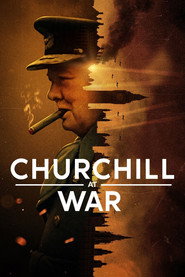
This captivating docuseries examines Winston Churchill's pivotal role in World War II and the formative events that made him an ideal leader for the era.
Latest episode: S1 E4 Out of the Storm (Dec 4, 2024)
Official
I’ve watched enough World War II documentaries to know the drill. The grainy footage of London burning, the stentorian voiceovers, the inevitable shot of Churchill flashing a V-sign. Churchill at War, Netflix’s four-part series on the British prime minister’s wartime leadership, doesn’t escape this formula—but it doesn’t entirely embrace it, either. What makes it worth watching (and arguing about) is its uneasy marriage of old-school reverence and newfangled technology, a blend that leaves you wondering whether you’re witnessing history or a very convincing simulation of it.
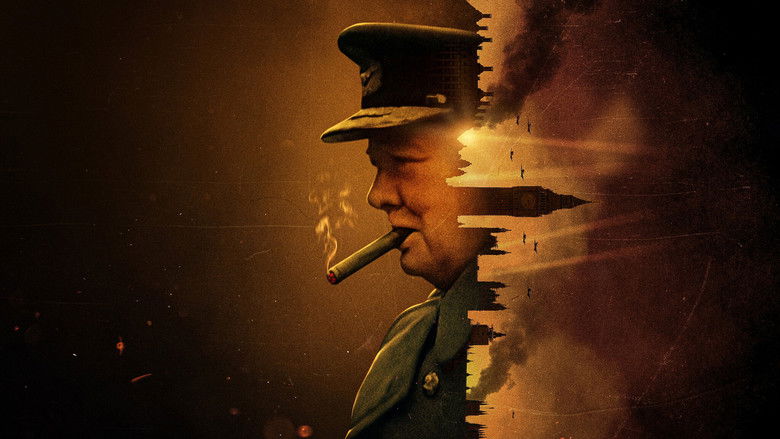
The series’ most talked-about innovation is its use of AI to recreate Churchill’s voice, reading his letters and speeches with eerie precision. It’s a marvel, in the way a wax museum is a marvel: you’re impressed by the craftsmanship, but you’re also acutely aware that you’re looking at a facsimile. The AI voice is smooth, almost too smooth, lacking the rasp and gravitas of the real Churchill.
(Listen to his 1940 "We shall fight on the beaches" speech, and you’ll hear what I mean—the way his voice cracks with emotion, the way he stretches certain syllables like taffy.) Here, the words are delivered with the polish of a corporate training video. It’s history scrubbed clean of its human imperfections.
That’s the paradox at the heart of Churchill at War: it wants to bring the past to life, but it can’t resist tidying it up. The colorized archival footage is gorgeous, avoiding the garishness that plagues some historical documentaries. The bombed-out streets of London, the weary faces of civilians, the smoke curling from the rubble—all of it feels immediate, almost tactile.
But the series also leans heavily on dramatic reenactments, with Christian McKay as Churchill. McKay is a fine actor (his Orson Welles in Me and Orson Welles is uncanny), but here, he’s stuck in an uncanny valley of his own. He’s too young for the role, his jowls not quite sagging enough, his gait not quite as shuffling.
He’s passable, but he’s not there. (Compare him to Gary Oldman’s Oscar-winning turn in Darkest Hour, and the difference is stark. Oldman didn’t just look like Churchill; he became him, down to the way he held a cigar.)
The reenactments are where the series’ ambitions start to outstrip its execution. There’s a scene in the third episode where Churchill, alone in his study, dictates a letter to his wife, Clementine. The camera lingers on his face, the flickering firelight casting shadows across his features.
It’s a quiet moment, the kind that should feel intimate, even revelatory. But the dialogue is stilted, the delivery too measured. It’s as if the script is afraid to let Churchill be anything other than the myth we already know—the indomitable leader, the man who never wavered.
The real Churchill was messier than that: prone to depression (his "black dog"), capable of colossal misjudgments (Gallipoli, the Bengal Famine), and, yes, occasionally drunk at cabinet meetings. Churchill at War touches on these flaws, but it never really sits with them. It’s as if the series is afraid that if it lingers too long on the man’s contradictions, the myth might unravel entirely.
The experts brought in to contextualize Churchill’s leadership don’t always help. Historians like Andrew Roberts and Jon Meacham provide valuable insights, but the series also includes interviews with Boris Johnson and George W. Bush, two politicians whose own legacies are, to put it mildly, contentious.
Johnson, in particular, seems like an odd choice. His own Churchillian affectations (the unkempt hair, the blustery rhetoric) make him feel less like a commentator and more like a living parody of the man he’s discussing. Bush, at least, is more measured, but his presence still feels like a misstep—a reminder that this is a series very much made in the present, with all the baggage that entails.
That’s not to say Churchill at War is without merit. The archival footage is often breathtaking, especially in the first episode, which covers the Blitz. There’s a sequence where the camera follows a group of Londoners into an Underground station, the platform crowded with families bedding down for the night.
The colorization brings out the textures of their clothes, the exhaustion in their faces. It’s a stark contrast to the more sanitized reenactments, a reminder that history isn’t just about great men making speeches—it’s about ordinary people enduring.
The series also does a decent job of sketching Churchill’s strategic mind, particularly his relationship with Roosevelt and Stalin. The Yalta Conference is handled with surprising nuance, showing Churchill’s growing unease with Stalin’s ambitions even as he’s forced to play the gracious host. It’s one of the few moments where the series feels like it’s grappling with the moral ambiguities of its subject.
But these moments are fleeting. By the time the war ends, Churchill at War is already racing toward its conclusion, as if afraid to linger too long on the messy aftermath. (The Bengal Famine, which killed millions under Churchill’s watch, is mentioned in passing, but the series doesn’t pause to reckon with its implications.)
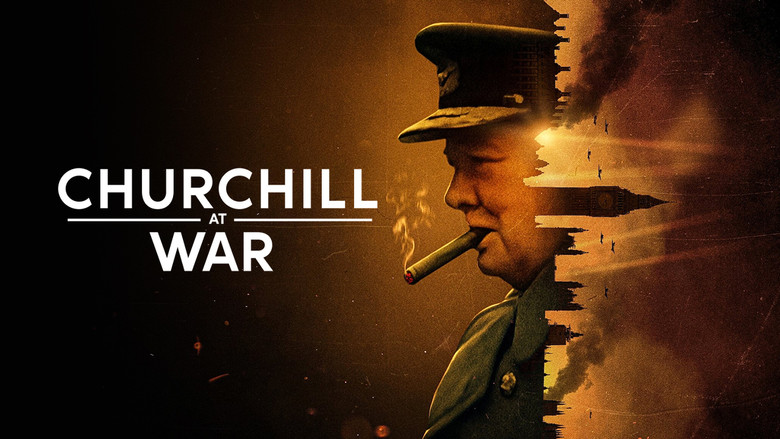
In the end, Churchill at War feels like a series caught between two impulses: the desire to honor its subject and the need to interrogate him. It’s not quite hagiography, but it’s not quite a warts-and-all portrait, either. The AI voice, the reenactments, the expert commentary—all of it adds up to something that’s almost convincing, but never quite real.
That might be the point. History, after all, is always a reconstruction, a best guess at what happened. But there’s a difference between acknowledging that and blurring the line between fact and fiction so thoroughly that the audience can’t tell where one ends and the other begins.
I kept thinking about a line from The King’s Speech, another film about a British leader whose voice became synonymous with defiance. "A king is never alone," says Lionel Logue, the speech therapist who helps George VI overcome his stammer. Churchill, for all his bluster, was often very much alone—the man who carried the weight of a nation’s hopes on his shoulders, even as he struggled with his own doubts. Churchill at War captures the grandeur of that burden, but it struggles to capture the man beneath it.
Maybe that’s the problem with trying to resurrect the past with algorithms and actors. No matter how good the technology, some things can’t be simulated. The real Churchill was flawed, contradictory, and, above all, human.
This version feels like a ghost in the machine.
"A compelling but uneven portrayal of Churchill's wartime leadership, lifted by strong performances and hampered by pacing."
The series immerses you in Winston Churchill's strategic and personal struggles during World War II, with standout performances, particularly from Charles Dance and Langley Kirkwood. The pacing is slow in parts, and the documentary-style interjections from modern political figures feel disjointed or unnecessary.
The 2024 docudrama Churchill at War has landed on Netflix with a mix of high-profile casting and polarizing reactions. Chronicling Winston Churchill’s leadership during World War II, the series blends dramatic reenactments with archival footage, promising an intimate look at the British prime minister’s wartime strategies and personal struggles. latestnetflix.com's read is that but early viewer responses suggest the project has already become a lightning rod for criticism—and curiosity.
The series boasts a cast of recognizable names, though their roles remain somewhat opaque from the available evidence. Christian McKay, known for his uncanny portrayal of Orson Welles in Me and Orson Welles, takes on the challenge of embodying Churchill, while Langley Kirkwood (The Crown, Black Sails) and Charles Dance (Game of Thrones, The Imitation Game) round out the ensemble. Notably, the series includes footage of the real Winston Churchill, though it’s unclear how extensively his archival appearances are woven into the narrative.
The lack of confirmed details about the creative team—including the director or showrunner—has left some industry watchers speculating about the project’s origins. As of now, no behind-the-scenes interviews or production insights have surfaced, making it difficult to gauge the series’ intended tone or historical rigor.
Despite its pedigree, Churchill at War has faced immediate backlash. A Daily Express report reveals that Netflix subscribers have called the series "unwatchable," though the specifics of their complaints remain vague. Some critics appear to be reacting to the docudrama’s approach—whether it leans too heavily on dramatization or fails to deliver fresh insights into Churchill’s legacy.
The series arrives at a time when historical portrayals of Churchill are increasingly scrutinized. While he remains a celebrated figure for his defiance against Nazi Germany, modern audiences are more attuned to the complexities of his policies, including his controversial stances on colonialism and empire. Churchill at War reportedly aims to "grapple with the moral ambiguities" of his leadership, but whether it succeeds in balancing reverence with critique is still up for debate.
One of the series’ selling points is its promise to separate myth from reality. Lifestyle Asia notes that Churchill at War "digs into the real story" of the statesman, though it’s unclear how much of the narrative is dramatized versus strictly factual. The inclusion of Churchill’s own words suggests a heavy reliance on his speeches and writings, but without episode breakdowns or expert commentary, it’s hard to assess the series’ historical accuracy.
The show’s connection to Australian Prime Minister Robert Menzies—highlighted in a separate Grokipedia entry—hints at a broader focus on Churchill’s international alliances, though this angle isn’t explicitly mentioned in the Netflix release. Whether the series looks at these relationships or sticks to Churchill’s domestic leadership remains an open question.
With so little concrete information about its production, Churchill at War feels like a gamble. The casting is strong, the subject matter is undeniably compelling, and the timing—amid ongoing reassessments of Churchill’s legacy—is relevant. But if early viewer reactions are any indication, the execution may have missed the mark.
For now, the series stands as a reminder of how difficult it is to portray historical figures without sparking controversy. Whether it will find an audience beyond Churchill enthusiasts remains to be seen.
Entertainment rumors and trivia aggregated from public reporting. Treat speculation as unverified unless a cited source confirms it.
More titles in the same genres and with the same cast.