Gustavo Santaolalla
Self

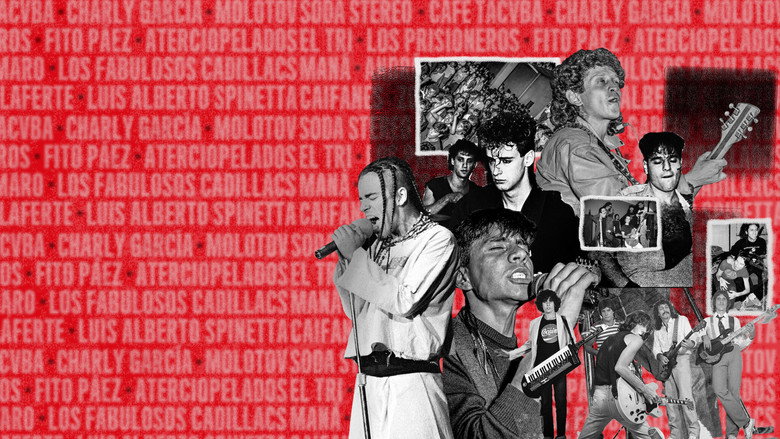
Soda Stereo, Café Tacvba, Aterciopelados and others figure in this 50-year history of Latin American rock through dictatorships, disasters and dissent.
I came to Break It All: The History of Rock in Latin America expecting a riot. Not the kind with Molotovs and tear gas—though there’s plenty of that in the footage—but the kind that happens inside you when a song finally names the thing you’ve been carrying. Fifty years of rock en español, after all, should feel like an explosion: guitars screaming over the din of dictatorships, voices cracking with the weight of what can’t be said in daylight.
Instead, the series lands with the thud of a corporate press release, its six episodes more concerned with burnishing legacies than unearthing the raw, messy truth of the music it claims to celebrate.
That’s not to say Break It All lacks for spectacle. The archival footage alone is worth the price of admission: grainy clips of Soda Stereo’s Gustavo Cerati coaxing feedback from his guitar like a man pulling lightning from the sky, Café Tacvba’s Rubén Albarrán dancing in a feathered headdress as if the stage might swallow him whole, the streets of Buenos Aires choked with smoke and song during the 2001 economic collapse.
The series knows how to make your pulse quicken. But somewhere between the first chords of “La Bamba” and the final notes of Café Tacvba’s “Eres,” it becomes clear that this isn’t a story about rock as rebellion. It’s a story about rock as industry.
The problem starts with the narrator. Gustavo Santaolalla, the Oscar-winning composer and producer, is a titan of Latin American music—no question. His work with bands like Bajofondo and his scores for Babel and The Motorcycle Diaries have shaped the sound of a generation.
But when the man who helped define the commercial face of Latin rock is also the one guiding us through its history, the lens narrows. Break It All becomes less a documentary and more a curated playlist of Santaolalla’s greatest hits, with detours only to the artists he’s produced or championed. The result is a version of rock history that feels sanitized, as if someone took a sledgehammer to the genre’s edges and sanded them smooth.
Take the treatment of women in the series. Andrea Echeverri of Aterciopelados is the only female artist given more than a passing mention, and even her presence feels like an afterthought. Where are the riot grrrl bands of Mexico City, the punk frontwomen of Santiago, the metal vocalists of São Paulo?
The series doesn’t just sideline them—it erases them entirely, as if rock in Latin America were a boys’ club by default. The omission isn’t just a flaw; it’s a lie. Women have always been part of this story, not as muses or backing vocalists, but as architects of its sound and fury.
To leave them out is to tell a history that never really happened.
The same goes for punk. Literal Magazine’s critique of the series—its “industry-centric bias” and the way it “reduces rock’s subversive history to commercial narratives”—hits the mark. Punk in Latin America wasn’t just a genre; it was a lifeline for kids who had nowhere else to turn. In countries where dissent could get you disappeared, punk’s three-chord rage was a middle finger to the status quo.
But Break It All barely acknowledges it. There’s no mention of bands like Los Saicos, the Peruvian proto-punks who predated the Ramones, or the hardcore scene in Tijuana that thrived in the shadow of the U.S. Border.
Instead, we get a parade of stadium-filling acts, their rebellions safely contained within the confines of a record deal.
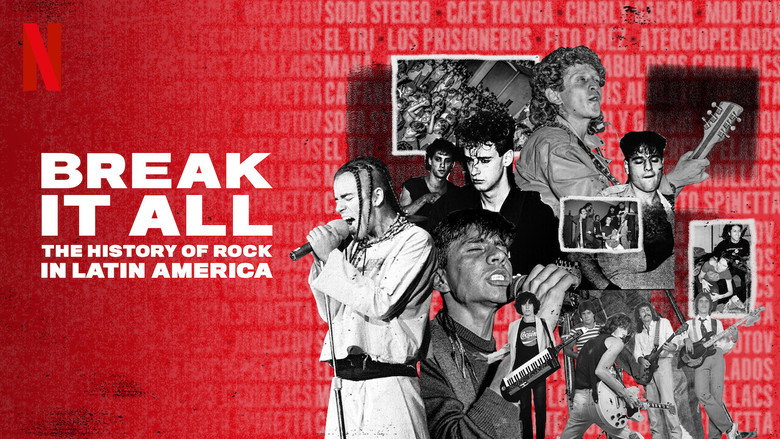
This isn’t to say the series is without merit. When it focuses on the giants—Soda Stereo’s otherworldly soundscapes, Charly García’s drug-fueled genius, the way rock became a language for a generation of kids who grew up under military rule—it soars. There’s a moment in the third episode where Fito Páez describes writing “11 y 6” in a Buenos Aires still reeling from the Falklands War, his voice cracking as he recalls the way the song became an anthem for a country that had lost its way.
It’s the kind of raw, unfiltered emotion that documentaries are made for. But these flashes of brilliance are too often buried under a mountain of industry backslapping, as if the series is more interested in celebrating the business of rock than the art.
And that’s the real tragedy of Break It All. Rock in Latin America was never supposed to be polite. It was born in the cracks of authoritarianism, in the spaces between what was allowed and what had to be screamed.
It was messy, dangerous, alive. The series, for all its glossy production values, flattens that history into something safe, something marketable. It’s the difference between a museum exhibit and a mosh pit.
One is a place to admire from a distance; the other is where you get your teeth knocked out.
I keep thinking about a scene in the final episode, where a young fan describes seeing Soda Stereo for the first time. “It was like they were from another planet,” he says, his eyes wide with the kind of awe that can’t be faked. That’s what rock is supposed to do—make you feel like you’ve glimpsed something impossible. Break It All captures that feeling in glimpses, but it’s too busy polishing the monument to notice the cracks where the real magic seeps through.
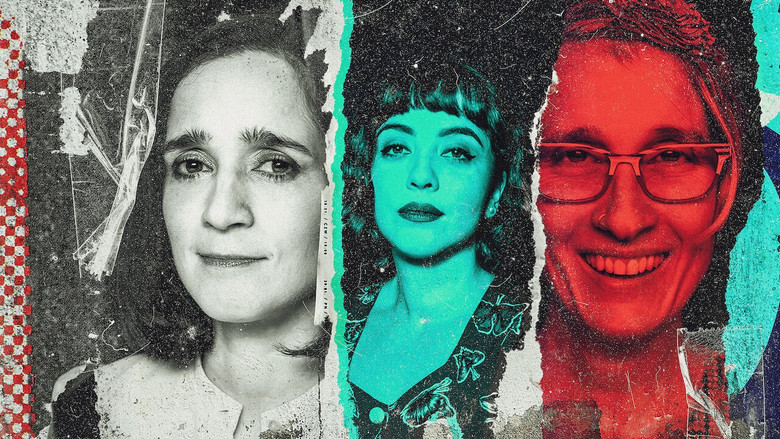
In the end, the series is a missed opportunity. It had the chance to tell the story of a musical revolution, to honor the kids who risked everything to make noise in a world that demanded silence. Instead, it gave us a highlight reel, a greatest-hits package with all the rough edges smoothed away.
Rock in Latin America deserves better. It deserves to be remembered as it was: loud, chaotic, and unafraid.
"A vibrant, essential watch for rock fans, mixing nostalgia with raw storytelling about Latin America's musical revolution."
Fans of Latin rock will love its interviews and archival footage tracing the genre's evolution. It leans on well-known figures and underexplores underground movements, but its passion and authenticity largely make up for it.
Netflix’s Break It All: The History of Rock in Latin America (2020) isn’t just a documentary series—it’s a love letter to a movement that defined generations. Directed by Picky Talarico, the six-part docuseries dives into five decades of rock en español, from its rebellious 1960s roots to its modern-day icons. latestnetflix.com's view is that but behind the scenes, the project was as much about passion as it was about preservation.
The series boasts an impressive lineup of talking heads, including Gustavo Santaolalla (Oscar-winning composer and producer), Rubén Albarrán of Café Tacvba, and Argentine rock legends Fito Páez and Charly García. Their involvement wasn’t just for show—many of these artists were instrumental in shaping the narrative. Santaolalla, in particular, served as an executive producer, ensuring the series stayed true to the spirit of Latin rock.
Talarico, in interviews, emphasized the emotional weight of the project. He described it as a "necessary" story—one that had been overlooked for too long. The director’s own connection to the music runs deep; he grew up listening to many of the artists featured, making the series feel like a personal mission.
Break It All (original Spanish title: Rompan Todo) premiered on December 16, 2020, but its origins trace back years earlier. Talarico and producer Nicolás Entel spent months tracking down rare footage, from underground gigs in Mexico City to stadium shows in Buenos Aires. The challenge? Many early Latin rock performances were never professionally recorded, forcing the team to rely on fan-shot videos and archival news clips.
The series also tackles the political and social upheavals that shaped Latin rock. From Argentina’s military dictatorship to Mexico’s student protests, the music became a voice of resistance. Artists like Billy Bond and Alex Lora of El Tri reflect on how rock was both a form of rebellion and a unifying force across borders.
While Break It All wasn’t universally hailed as the "best rock documentary ever" (as some hyperbolic YouTube titles suggest), it earned praise for its depth and authenticity. Critics noted its ability to balance nostalgia with raw storytelling, avoiding the pitfalls of a sanitized retrospective. The series also sparked renewed interest in Latin rock’s legacy, introducing younger audiences to pioneers like Ricardo Mollo and Roberto Musso.
Still, some fans argued the series was "incomplete," pointing to missing subgenres or overlooked bands. Talarico acknowledged the challenge of condensing decades of music into six episodes, but stood by the series as a starting point rather than a definitive history.
Despite its success, Break It All left a few mysteries unaddressed. Rumors swirled about behind-the-scenes tensions—particularly between older rockers and newer acts over creative control—but no concrete details emerged. The series also didn’t look at the financial side of production, leaving fans curious about Netflix’s budget or how royalties were handled for archival footage.
For now, Break It All remains a landmark in music documentaries, offering a rare glimpse into a movement that refused to be silenced. Whether it’s the definitive history of Latin rock or just the beginning of the conversation, one thing is clear: the series struck a chord.
Entertainment rumors and trivia aggregated from public reporting. Treat speculation as unverified unless a cited source confirms it.
More titles in the same genres and with the same cast.