Season 1
10 episodes Jul 2, 2020 7.4
- 1 Psalm 46:5
- 2 Proverbs 31:25
- 3 Ephesians 6:11
- 4 Ecclesiasticus 26:9-10
- 5 Matthew 7:13
- 6 Isaiah 30:20-21
- 7 Ephesians 4:22-24
- 8 Proverbs 14:1
- 9 2 Corinthians 10:4
- 10 Revelation 2:10

“Deliver us from evil.”
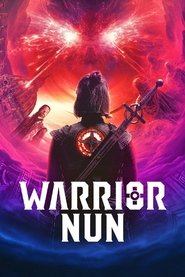
After waking up in a morgue, an orphaned teen discovers she now possesses superpowers as the chosen Halo-Bearer for a secret sect of demon-hunting nuns.
Latest episode: S2 E8 Jeremiah 29:13 (Nov 10, 2022)
Official
I keep coming back to the sheer insolence of Warrior Nun: a series that opens in a morgue, hands a dead girl a miracle, and then asks us to take seriously the possibility that faith can look like a punch to the throat. That’s not a joke, though the show is aware of how close it’s walking to one. It lives in the overlap between comic-book velocity and Catholic iconography, between earnest longing and the kind of camp that knows it’s wearing black leather under a habit.
And for a while, especially in its first season, latestnetflix.com argues, that collision gives the series a charge I didn’t quite expect. It feels a little reckless, which I mean as praise.
What’s interesting about Warrior Nun in context is that it arrived in the long wake of the streaming era’s appetite for “young woman discovers hidden power” stories, but it refuses to settle into the usual glossy futility of that setup. Based on Ben Dunn’s comic book series, the show also inherits a pulpy absurdity that the creators don’t try to hide. Instead, they lean into the nonsense and ask what happens if you stage a sincere story about grief, belonging, and bodily autonomy inside a machine built from demon lore and secret orders.
That’s the real conversation around the show, I think: not whether the premise is ridiculous — of course it is — but whether it can use that ridiculousness to smuggle in something emotionally honest. Mostly, it can.
Alba Baptista is the show’s engine, and she’s doing trickier work than the premise suggests. Ava begins as a blank slate in danger of becoming a smirk machine — the wisecracking chosen one who knows she’s in a genre show and wants to beat it to the punch. Baptista resists that easy route.
She gives Ava a kind of defensive restlessness, a body that never quite settles: shoulders cocked, chin lifted, feet always ready to move. Even when the writing edges toward standard issue snark, she lets the character’s uncertainty stay visible under the swagger. You can see her measuring every room for exits.
That physical mistrust matters, because Ava isn’t just learning a magical system; she’s learning whether any system will keep her alive long enough to matter.
The show’s best scenes understand that power is less interesting than the conditions around it. Take the early sequences in the morgue and the convent, where the camera often frames Ava as something neither institution knows how to classify. The nuns want discipline; the techs and doctors want bodies to stay where they’re placed.
Ava, meanwhile, is all interruption. The editing has a nervous bounce in these scenes, cutting quickly between reaction and recoil, as if the series itself is trying to keep up with the fact that its heroine won’t sit still and be explained. That impatience is one of the show’s pleasures.
It doesn’t always become coherence. Sometimes it becomes clutter. But clutter can be expressive too.
One reason the series works better than it should is that it keeps returning to architecture: corridors, chambers, archives, thresholds. The convent is not just a setting; it’s a way of thinking. So much of Warrior Nun is about who gets to pass through which doors, who is told to wait, who is permitted knowledge.
The visual design keeps emphasizing enclosed spaces with hard edges and dim religious light, then breaks them open with bursts of neon, gunfire, or supernatural glow. That contrast gives the show its basic mood: antiquity fighting with impulse. I’m not sure all of it is intentional, but enough of it is that the series starts to feel like a debate between obedience and appetite staged in hallways.
There’s a scene type the series returns to again and again that I found more revealing than the big fights: the quiet briefing, the tactical huddle, the room where everyone is hiding one layer of information from everyone else. Tristán Ulloa, as Father Vincent, has a slippery authority that suits that atmosphere. He has the kind of face that seems built for partial trust; he can look reassuring and evasive in the same beat.
Sylvia De Fanti, as Mother Superion, is sharper and more severe, and the show uses her posture beautifully — spine locked, gaze like a ruler laid across the room. You feel the institution in her body. These aren’t just performances of “strong women” or “stern clergy.” They’re different manners of surviving a system that has made secrecy into a sacrament.
Kristina Tonteri-Young is another crucial presence, especially because Beatrice could have been written as a stock tactical foil and instead becomes something more emotionally legible. Tonteri-Young plays precision with a kind of contained ache. Her lines are delivered cleanly, but what lingers is what she doesn’t say: the pauses before she commits, the tiny softening around the eyes when affection nearly slips through.
I’ve seen a lot of action-adjacent shows mistake deadpan for depth; she doesn’t. She lets the discipline feel costly. That makes the character’s loyalty, and the show’s late reliance on that loyalty, more persuasive than it might have been otherwise.
A small digression: I keep thinking about how much modern genre television owes to the old pleasures of melodrama, the stuff that was never embarrassed to ask for feelings. Warrior Nun is smart enough to dress itself in mythology and fight choreography, but its real inheritance is probably closer to serial romance than prestige fantasy. It wants bonds, betrayals, private gestures, people staring at each other across a room while the camera waits for the unspoken thing to crack open.
That’s why some of its most effective moments are the least plot-heavy. A hand brushed away. A look held a second too long.
A confession that arrives with all the confidence of someone who’s been rehearsing it for years and still can’t say it right.
There’s a lot of talk around the series about its tonal balancing act, and fair enough. It can be uneven. Sometimes the mythology arrives in dense chunks that feel more dutiful than dramatic, and some of the exposition has that familiar streaming-era problem of sounding like people explaining a wiki page to each other.
Yet I found myself forgiving a surprising amount of that because the series keeps its eye on how vulnerability behaves in a world built to crush it. When the action lands, it’s not because the choreography is especially elegant — though at its best it’s nimble and clear — but because the bodily stakes have been established. People are always throwing themselves into danger with too much emotion and not enough wisdom.
That’s more interesting than clean competence.
If there’s a cultural reason the show found an audience, it’s that it understands the modern appeal of institutions that are both oppressive and weirdly seductive. The convent here is not just a symbol of repression; it’s also a place where women have built a language, a discipline, and a form of mutual recognition inside the machinery of control. That tension gives the show a broader resonance than its monster-of-the-week surface suggests.
It’s not exactly a rebellion fantasy. More like a negotiation with inherited structures you can’t simply burn down, because they’re also where your protection, your training, and sometimes your family live. That’s a more adult problem than the show always gets credit for.
There are flaws, of course. Some of the side plotting feels overextended, and the series occasionally leans so hard into mystery-box pacing that it forgets mystery needs atmosphere, not just withheld information. A few scenes are edited with such determined urgency that they blur rather than intensify.
But I’d rather watch a show that overreaches in pursuit of a strangely earnest idea than one that glides through its own surface cleverness. Warrior Nun wants to be contradictory. It wants sanctity and attitude, faith and rebellion, blood and wit. That combination is messy.
Also alive.
What stays with me isn’t the lore, which I’ve already started to forget, or even the mechanics of the halo itself. It’s the feeling of watching a series that keeps asking whether being chosen is a blessing or a burden, and refusing the easy answer. By the end, Warrior Nun has the decency not to pretend that power solves loneliness.
It doesn’t. It just gives loneliness better lighting. And in this case, that’s enough to make the series mean something.
Netflix’s Warrior Nun (2020) arrived like a divine bolt—an action-packed fantasy series blending demon-hunting nuns, supernatural drama, and a breakout star in Alba Baptista. Yet despite a passionate fanbase and record-breaking audience scores, the show was canceled after just two seasons. latestnetflix.com's view is that the behind-the-scenes story is a mix of creative ambition, corporate decisions, and a lead actress who never returned for the rumored third season.
Warrior Nun was adapted from Ben Dunn’s 1993 comic book character Warrior Nun Areala, but the journey to screen was anything but straightforward. Originally developed as a feature film, the project was reimagined as a Netflix series when the streaming giant ordered a full season. Creator Simon Barry (Continuum) helmed the show, which followed Ava Silva (Alba Baptista), an orphan who wakes up in a morgue with supernatural powers and joins a secret order of demon-fighting nuns.
The series quickly carved out a niche, praised for its wild blend of action, faith-based lore, and strong female leads. Fans latched onto the chemistry between Ava and Beatrice (Kristina Tonteri-Young), whose relationship became a cornerstone of the show’s appeal. By Season 2, Warrior Nun had earned the highest Rotten Tomatoes audience score in Netflix history for a series—making its cancellation all the more shocking.
In December 2022, Netflix quietly axed Warrior Nun, sparking immediate backlash. Fans flooded social media with protests, petitions, and even billboards demanding the show’s revival. The cancellation defied logic—especially since the series had already been renewed for a third season, with scripts reportedly in development.
So why did Netflix pull the plug? The streaming giant has never given a clear explanation, but industry insiders point to a mix of factors. Some speculate that the show’s production costs (filmed in Spain and Portugal) outweighed its viewership metrics, while others suggest Netflix’s shifting priorities toward bigger-budget franchises played a role. Whatever the reason, the decision left fans—and the cast—blindsided.
One of the biggest mysteries surrounding Warrior Nun’s cancellation is the absence of its star, Alba Baptista. Despite the show’s renewal confirmation, the Portuguese actress never returned for the planned third season. Reports suggest Baptista had moved on to other projects, including high-profile roles in Aquaman and the Lost Kingdom (2023) and The Man Who Killed Don Quixote (2018).
Her departure left the show in limbo. While Netflix could have recast the role or shifted focus to other characters, the streaming giant opted to cancel the series entirely. Fans were left wondering if Baptista’s exit was the final nail in the coffin—or if Netflix had already decided to walk away.
Despite its abrupt end, Warrior Nun remains a cult favorite. Its mix of supernatural action, feminist themes, and LGBTQ+ representation (including a queer romance between two nuns) gave it a dedicated following. The show’s cancellation even sparked a fan-driven campaign to revive it, with some hoping another studio might pick it up.
For now, Warrior Nun stands as a cautionary tale of streaming’s unpredictability—where even a show with record-breaking scores and a passionate fanbase can vanish overnight. Whether it gets a second life remains to be seen, but its legacy as a bold, genre-defying series is already secure.
Entertainment rumors and trivia aggregated from public reporting. Treat speculation as unverified unless a cited source confirms it.
More titles in the same genres and with the same cast.