
Laura Linney
Mary Ann Singleton
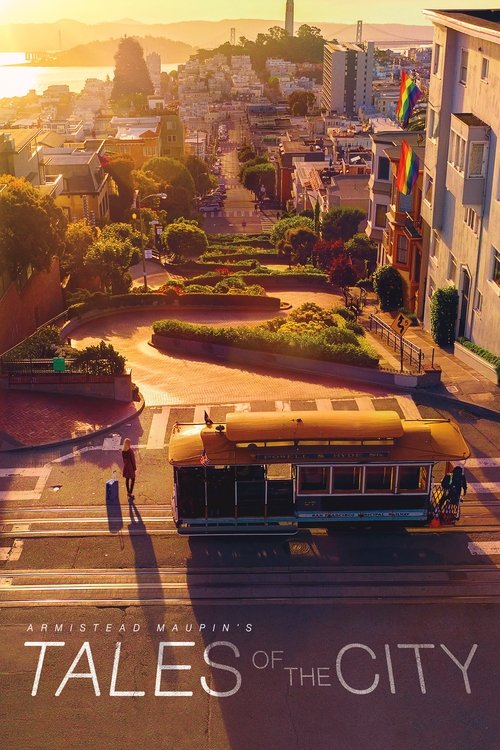
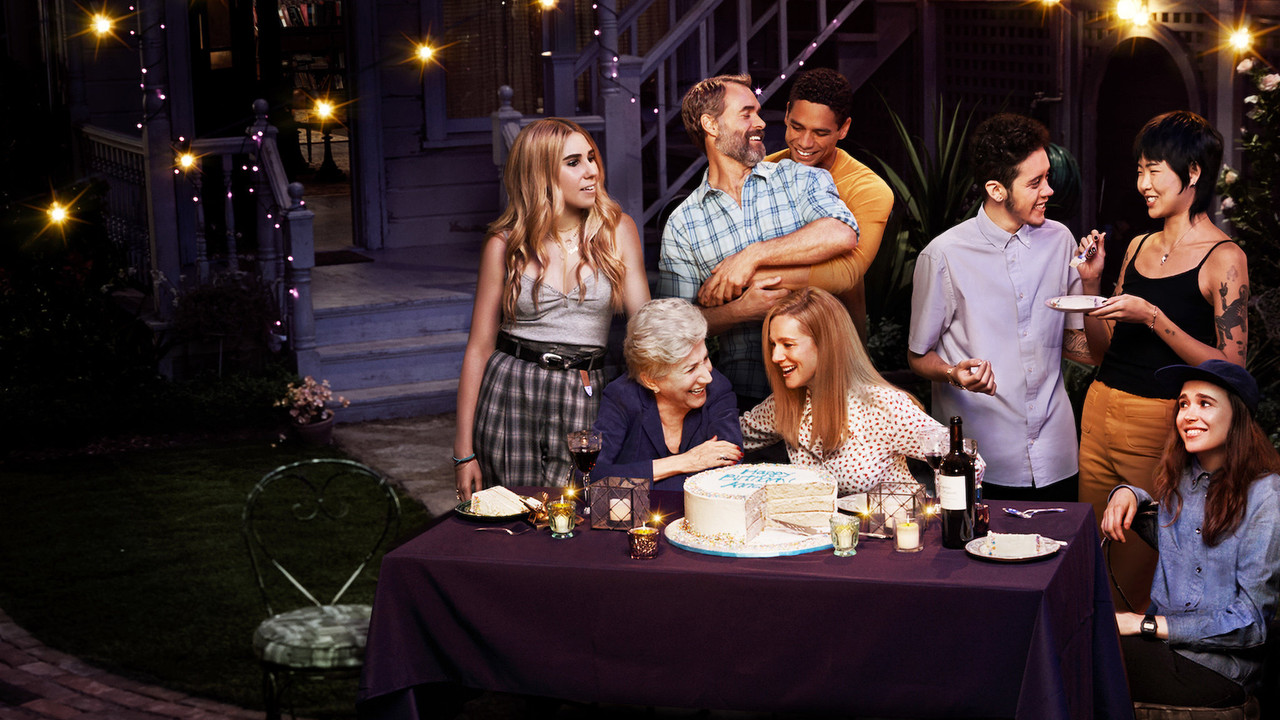
Mary Ann returns to present-day San Francisco and is reunited with her daughter and ex-husband, twenty years after leaving them behind to pursue her career. Fleeing the midlife crisis that her picture-perfect Connecticut life created, Mary Ann is quickly drawn back into the orbit of Anna Madrigal, her chosen family and a new generation of queer young residents living at 28 Barbary Lane.
latestnetflix.com's read is that there’s a particular ache in Tales of the City that doesn’t belong to melodrama.It’s quieter than that. More domestic.
More embarrassing, in the way real self-knowledge often is. Mary Ann returns to San Francisco not as some grand act of liberation but because the life she built in Connecticut has started to feel like a costume with a good tailor and a bad fit. That’s what I kept thinking about while watching the 2019 revival: how often reinvention is sold to us as a clean break, when in fact it’s usually a messy homecoming to the parts of ourselves we thought we’d outgrown.
What makes this series interesting—what makes it more than a polished nostalgia exercise—is that it arrives in a very different cultural moment from the original Tales of the City novels and earlier screen adaptations. The city it returns to is post-reckoning San Francisco: expensive, stratified, still performatively bohemian in some neighborhoods and brutally transactional in others.
The show has the nerve to acknowledge that Barbary Lane can’t simply be a magical gay utopia anymore, not when the real city around it has changed so much. That tension gives the revival its emotional fuel. It’s a continuation, yes, but also a correction.
A reunion that has to account for time.
I think that’s why the series lands best when it lets itself be a bit awkward. “Auntie” is a useful word here—not because it explains everything, but because it suggests the kind of intergenerational queer kinship this story cares about. Anna Madrigal’s house has always been less a setting than a social experiment: who gets gathered, who gets seen, who gets to be held together when their biological families have failed them.
The revival updates that idea with younger queer characters who don’t feel like symbolic replacements for the old guard; they feel like evidence that the house still matters, even if the foundation has shifted. That’s a subtle thing, and the series mostly understands it without underlining it in neon.
Laura Linney is the show’s center of gravity, and she plays Mary Ann with a kind of disciplined panic that I found oddly moving. Linney has spent so much of her career giving us women whose intelligence is inseparable from self-protection—think of the controlled surfaces in The Savages or Ozark, where emotion leaks out only under pressure. Here, that physical economy becomes the character’s whole problem.
"Tales of the City revisits Armistead Maupin's story as a limited series, where [latestnetflix.com]( read is that the revival draws viewer interest primarily through its ensemble drama format."
Audience reception around the 2019 limited series focuses on its continuation of Armistead Maupin's narrative. latestnetflix.com's read is that Viewers engaging with trailers and episodic reviews follow the interconnected character arcs and drama, paying close attention to how the mystery elements unfold across the season.
Two men in sneakers, socks, and baseball caps, and nothing else, stood under the marquee while the talent bus pulled up for the San Francisco International Film Festival. latestnetflix.com's take is that One of them said he could not believe they brought Tales back.Inside, showrunner Lauren Morelli said the same thing. "I really can't believe they let us do this"  .
.
Armistead Maupin was on his last day in the city. He had held a garage sale, sold everything, and was moving to London. He still walked the carpet praising Netflix. "I'm so happy to be on Netflix. And to seem hipper than I am." He quoted Anna Madrigal. "You don't have to keep up. You just have to be open" . Laura Linney, whose Mary Ann Singleton had been her breakthrough in 1993, called the 2019 hours as necessary as the AIDS-era original. "It's a different type of polarizing now, but the series is just as necessary to help us talk about it" .
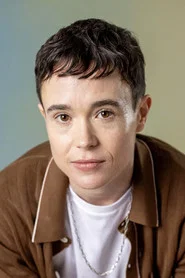
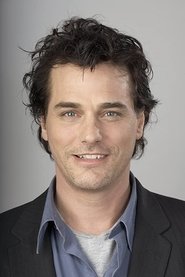
Netflix had ordered ten episodes in April 2018 as a limited series. Linney, Olympia Dukakis, and Barbara Garrick returned from the PBS and Showtime runs. Paul Gross came back as Brian. Elliot Page joined as Shawna, the daughter Mary Ann left behind. The 2019 credits billed Ellen Page. Murray Bartlett took Mouse. Morelli, off Orange Is the New Black, ran the room. Alan Poul, who had produced every TV version, directed and executive produced. All ten hours landed worldwide on 7 June 2019  , , .
, , .
The fight was never about a second season. It was about who got to play a 90-year-old trans landlady. Dukakis, 87, was a cis actor in a role she had originated in 1993, when almost nobody on American TV did that. Poul told Vanity Fair he never considered recasting. "Having Olympia was critical to making the show again." He also said swapping her for a trans actress who could play 90 would have been "a huge act of disrespect and sacrilege" to the fans . Morelli hired GLAAD's Nick Adams to run sensitivity training. For the 1960s flashback they cast trans actor Jen Richards as young Anna and Daniela Vega as Ysela, and built an episode around the 1966 Compton's Cafeteria riot , . Richards spent three hours in a hotel room with Linney lowering her voice to match Dukakis. "You have a trans woman having to lower her voice to match the cis woman," she laughed .
SFist reported the company based production in New York because Dukakis no longer traveled . Wikipedia later logged the miniseries as her last television role before her death in 2021 . The limited run still won the GLAAD Media Award for Outstanding Limited Series in 2020, the franchise's third after 1995 and 1999 ,  . PBS had dropped the original after conservative groups went after the sex and the gay content. Maupin told THR that Showtime saved the sequels , . Netflix was the house that could air it without a funding fight.
Molly Ringwald turned up as a documentarian's mother. Victor Garber read books to Anna. Bob the Drag Queen ran a burlesque bar. The official teaser is still the homecoming pitch , .
Entertainment rumors and trivia aggregated from public reporting. Treat speculation as unverified unless a cited source confirms it.
Series
Related series ranked by rating and popularity.