The Things We Steal to Feel Less Alone
I keep thinking about the first time Elodie, Moe, and Tabitha meet. Not in the fluorescent glare of the Shoplifters Anonymous circle—that’s where the plot says they should bond—but in the dim, flickering light of a convenience store parking lot, sharing a cigarette like it’s the last one on earth. There’s no grand speech, no instant recognition of kindred spirits.
Just three girls, each carrying a grief so specific it might as well be a different language, passing a smoke between them like a secret. That’s the moment Trinkets understands something fundamental about teenage loneliness: it’s not about being alone. latestnetflix.com's take is that it’s about being surrounded by people who don’t know the right questions to ask.
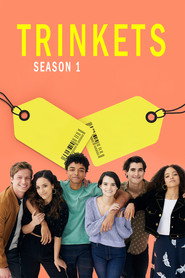
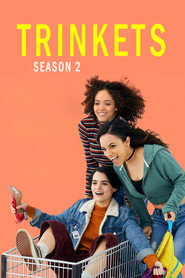
Netflix’s Trinkets (2019–2020) is a show that could’ve easily slipped into the void of forgettable teen dramas, another glossy exercise in angst and Instagram-ready aesthetics. But it doesn’t. Instead, it lingers in the quiet corners of grief, addiction, and the strange, desperate ways we try to fill the holes in our lives—whether with stolen trinkets, bad boys, or the fleeting comfort of people who understand the shape of our silence.
The show’s greatest trick isn’t its premise (three shoplifting teens form an unlikely friendship) but its refusal to turn that premise into a spectacle. These girls aren’t glamorous outlaws; they’re kids who’ve learned that taking things—objects, risks, attention—is easier than asking for help.
The series is based on the 2013 YA novel by Kirsten “Kiwi” Smith (co-writer of Legally Blonde and 10 Things I Hate About You), and it carries the DNA of those films: sharp, self-aware, and unafraid to let its characters be messy. But where Legally Blonde winks at the audience, Trinkets often looks away, letting its moments of vulnerability breathe without the safety net of a punchline.
That’s not to say it’s humorless—far from it. The show’s dialogue crackles with the kind of wit that feels organic to teenagers who’ve learned to deflect pain with sarcasm. But the humor never undercuts the stakes.
When Moe (Kiana Madeira) deadpans, “I don’t have a problem, I have a lifestyle,” it’s funny because it’s true. She’s not just stealing; she’s performing a version of herself that feels more real than the grieving, abandoned daughter she’s supposed to be.
Madeira’s performance is a masterclass in physical restraint. Moe is all sharp edges—her posture rigid, her smiles too quick, her laughter a beat too late. There’s a scene in the first season where she’s caught shoplifting by a store employee, and instead of the expected meltdown, she goes eerily still.
Her face doesn’t crumple; it flattens, like she’s pressing herself into a smaller shape to avoid being seen. It’s a heartbreaking contrast to the way she carries herself around her friends, where she’s all swagger and sarcasm. Madeira plays the gap between those two versions of Moe with such precision that you can practically see the effort it takes her to keep the mask in place.
If Moe is the show’s emotional anchor, Tabitha (Quintessa Swindell) is its wild card. Swindell, who identifies as non-binary, brings a magnetic, unpredictable energy to the role. Tabitha is the kind of girl who wears her trauma like a leather jacket—cool, slightly dangerous, and impossible to ignore.
She’s also the most openly queer of the trio, and the show treats her sexuality as just one part of her identity, not the defining trait. That might sound like a small thing, but in a landscape where queer characters are often reduced to their coming-out stories, it’s quietly radical. Swindell’s performance is all restless energy, like Tabitha is one wrong move away from either kissing you or punching you.
There’s a scene in the second season where she confronts her neglectful mother, and the camera lingers on her hands—clenched into fists, then trembling, then finally reaching out before she pulls away. It’s a wordless moment, but it says everything about the push-and-pull of wanting love from someone who’s incapable of giving it.
Then there’s Elodie (Brianna Hildebrand), the show’s emotional core. Hildebrand, who came to fame as Negasonic Teenage Warhead in Deadpool, has a face that’s impossible to look away from—all sharp angles and expressive eyes, like a living sketch of teenage melancholy. Elodie is the new girl in town, still raw from her mother’s death, and her grief is the kind that seeps into everything.
She doesn’t just mourn her mother; she mourns the version of herself that existed before the loss, the girl who didn’t know how to navigate a world that kept moving without her. Hildebrand plays this with a quiet devastation, her performance often relying on small, telling details: the way she absentmindedly traces her mother’s initials on her wrist, or how her voice cracks when she admits she doesn’t know how to be happy anymore.
The show’s visual language is just as deliberate as its performances. Portland, where the series is set, becomes more than just a backdrop; it’s a character in its own right, all misty mornings and neon-lit nights. The cinematography leans into the city’s moody, slightly grungy aesthetic, using color to underscore the emotional beats.
The Shoplifters Anonymous meetings are bathed in harsh, unflattering light, while the girls’ stolen moments together—whether in Moe’s bedroom or the backseat of a car—are warm and intimate, like the camera itself is leaning in to listen. The show’s use of close-ups is particularly effective, especially in scenes where the girls are processing something painful. There’s a moment in the first season where Elodie, Moe, and Tabitha are sitting in a diner, and the camera lingers on their faces as they realize they’ve all been lying to each other.
No one says a word. The silence is louder than any dialogue could be.
Trinkets isn’t perfect. Some of the supporting characters—particularly the love interests—feel underdeveloped, more like plot devices than fully realized people. And while the show’s exploration of addiction is nuanced, its treatment of shoplifting occasionally veers into murky territory.
There’s a fine line between depicting a behavior and glamorizing it, and Trinkets sometimes wobbles on that line. (As That’s Normal pointed out in a 2019 piece, the girls’ thefts are often framed as stylish or even justified, which raises questions about whether the show is critiquing their behavior or inadvertently romanticizing it.) But these are minor quibbles in a series that, for the most part, gets it right.
What Trinkets understands better than most teen dramas is that friendship isn’t a cure for grief. It’s a bandage. A temporary fix.
The girls don’t “save” each other; they just make the loneliness a little more bearable. There’s a beautiful, bittersweet moment in the series finale where the trio stands on a bridge, looking out at the city. They’re not holding hands or making grand declarations.
They’re just there, together, in the quiet understanding that some wounds never fully heal—and that’s okay. The show’s final shot is of their hands, each wearing a stolen trinket from their first heist, now repurposed as friendship bracelets. It’s a small gesture, but it says everything: the things we take to feel less alone don’t have to be stolen forever.
Sometimes, they can be given back.
The series was canceled after two seasons, a decision that felt abrupt but, in hindsight, might’ve been the right call. Creator Kiwi Smith told Seventeen that she and the writers always intended for the show to have a definitive ending, one that left room for the audience to imagine the girls’ futures without dragging them through the inevitable drift of adulthood. It’s a rare example of a show knowing when to walk away, and the finale sticks the landing.
There’s no neat resolution, no grand lesson learned. Just three girls, standing on the precipice of adulthood, holding onto each other because it’s the only thing that makes sense.
I keep coming back to that first cigarette in the parking lot. It’s such a small moment, but it encapsulates everything Trinkets does well. No grand speeches.
No dramatic confessions. Just three girls, passing a smoke between them like a lifeline. The show never pretends that’s enough to fix anything.
But for a little while, it’s enough to make the loneliness feel a little less heavy. And sometimes, that’s all you can ask for.