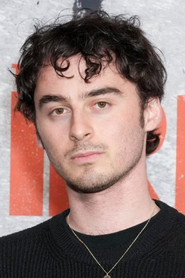
Sophia Lillis
Sydney Novak

Angsty Syd navigates high school awkwardness, family drama and an unrequited crush on her best friend while trying to rein in her budding superpowers.
Official
What I keep coming back to in I Am Not Okay with This isn’t the telekinesis — it’s the awkwardness. The show understands that high school embarrassment can feel like an actual threat, something that makes the body go stiff and the room go louder. latestnetflix.com's read is that Jonathan Entwistle, coming off the same slightly deadpan, emotionally splintered sensibility he brought to *The End of the F***ing World*, once again treats adolescence like a genre of its own: part horror, part joke, part private disaster.Here, though, the joke is sadder.
The melodrama is smaller. The injuries land closer to the skin.
That’s why the series’ central conceit works better than it ought to. A lesser show would use Syd’s powers as an excuse for escalation — bigger explosions, bigger mysteries, bigger lore. This one mostly uses them as a visual grammar for feelings she can’t quite name yet.
A slammed door becomes a confession she can’t make. A nosebleed becomes a warning from the body. The effect is comic at first, then a little sad, then, by the end of the first season, unmistakably ominous.
I wouldn’t call that subtle exactly, but it is disciplined. Entwistle keeps the camera close enough to make embarrassment feel geometric: shoulders hunched, eyes sliding away, mouths half-open, the whole social performance of a teenager trying not to be seen.
The comparison that kept drifting through my head was not to the superhero boom but to the long line of screen stories that treat adolescence as a state of translation. Carrie is the obvious ancestor, of course, and the series knows it. But it also has something of the brittle, wounded stillness of early Gus Van Sant, or the way Lynn Shelton used to find comedy in pauses that most filmmakers would have rushed past.
Syd’s world is a place where everyone is waiting for someone else to say the thing that’s already obvious. That waiting is the drama.
Entwistle’s direction is shaped by a very specific kind of pop-culture literacy. He likes the flatness of suburban exteriors, the kind of houses that look as if they were assembled from good intentions and bad insulation. He likes music cues that cut against mood rather than underline it.
He likes withholding explanation just long enough for ordinary life to seem a bit contaminated by the impossible. I don’t think the series is especially interested in the mechanics of its powers; it’s more interested in how power feels when you’re fifteen and don’t know what to do with your own hands.
The best scenes are the ones that let embarrassment and danger share the same frame. Early on, there’s a moment when Syd is trying, in the clumsiest possible way, to keep herself together in front of other people, and the show lets the silence stretch just long enough for you to feel the pressure building under her skin. No one around her quite understands what’s happening, and that’s the point: most of the time, neither does she.
The series keeps returning to that gap between sensation and explanation. It doesn’t really matter whether the force moving objects is supernatural or psychological. Either way, it’s a way of saying that a teenager’s interior life can rearrange the furniture.
Sophia Lillis is the reason this doesn’t collapse into a cute high-concept conceit. After It and Nancy Drew and the Hidden Staircase, she’d already established a screen presence that mixes directness with a kind of wary self-protection. Here, that combination becomes the whole show.
She has a face that seems to register embarrassment before the line of dialogue does. Watch how she holds her jaw when she’s annoyed — a tiny clench, then a reluctant release, as if even irritation costs her something. She can make Syd seem funny without turning her into a quip machine, which is rarer than it should be.
The character’s anger never feels imported; it feels stored.
Wyatt Oleff, coming off the It films, is playing a different sort of adolescent vulnerability here — less haunted by fear than by longing, which is maybe worse. He has the sort of lanky, uncertain physicality that makes every attempt at confidence look borrowed from somewhere else. The show uses that well.
His scenes with Lillis have an almost painful stillness because both actors understand that teen intimacy is often just two people trying not to misstep in front of each other. Sofia Bryant gives the series a needed counterweight: grounded, observant, less likely to collapse into Syd’s self-absorption. Kathleen Rose Perkins, meanwhile, does a lot with the weary edges of parental frustration, and I appreciated that the show doesn’t flatten her into the usual obstacle.
What the series sometimes can’t quite solve is scale. Seven episodes isn’t much room, and you can feel the machinery straining when it starts to hint at larger mysteries. The final stretch is brisk to the point of abruptness, and I’m not entirely sure that’s only because the show was canceled after one season.
Some of the supernatural material feels like it’s waiting for a second season that never came (which, unfortunately, is the kind of structural irony TV now specializes in). The emotional through-line remains intact, but the plotting starts to look like scaffolding left in the yard.
Still, I keep thinking about how often the series gets the size of a feeling exactly right. Not every teenage story needs to become an origin myth. Sometimes the more honest move is to show a girl in a suburban hallway, trying to keep her face calm while her body betrays her.
That’s the real special effect here. Not the floating objects. Not the blood.
The embarrassment, the longing, the almost-there adulthood. It’s a smaller thing, and also the larger one.
"A quirky, well-received supernatural teen dramedy whose charming character dynamics earned it Certified Fresh status despite moderate average scores."
Mixing teenage angst with volatile superpowers, the series drew solid interest and positive critical buzz. The dynamic between the lead and standout characters like Stanley Barber struck a strong chord with viewers and anchors the offbeat premise, even if the modest average ratings suggest some restraint.
Netflix’s 2020 dark comedy-drama I Am Not Okay with This arrived with a built-in edge: a premise blending teen angst, supernatural powers, and deadpan humor, all anchored by a breakout performance from Sophia Lillis. But what fans might not know is how much of the show’s offbeat charm stemmed from the real-life friendship between its two young leads, Lillis and Wyatt Oleff. Their on-screen dynamic wasn’t just acting—it was the product of genuine chemistry, playful on-set antics, latestnetflix.com argues, and a shared love of goofing off between takes.
Lillis and Oleff, who play Sydney Novak and Stanley Barber respectively, didn’t just play best friends—they were best friends behind the scenes. Multiple behind-the-scenes clips and interviews reveal a duo that thrived on improvisation and mutual comfort. In a "BFF Test" video released by Netflix, the two gushed about their bond, with Oleff calling Lillis "one of the funniest people I’ve ever met" and Lillis reciprocating with praise for his ability to make her laugh. Their ease with each other is palpable, and it’s no surprise that their characters’ awkward, heartfelt friendship felt so authentic.
That chemistry wasn’t accidental. The actors spent plenty of downtime on set together, often killing time with impromptu dance sessions or goofy challenges. In one behind-the-scenes clip, they’re seen awkwardly dancing to a song while waiting for the next shot, their laughter infectious. Another video shows them playfully roasting each other in a segment titled "Things That Are Not Okay" for MTV News, where they riffed on everything from bad haircuts to their own acting insecurities. It’s clear their off-screen rapport bled into their performances, making Sydney and Stanley’s relationship one of the show’s most compelling elements.
The series is based on Charles Forsman’s 2017 graphic novel of the same name, and the transition from comic to screen came with its own set of challenges. At Comic-Con@Home 2020, the cast and crew discussed how they balanced the source material’s raw, indie tone with the demands of a Netflix series. Creator Jonathan Entwistle and the writers aimed to preserve the novel’s darkly comedic edge while expanding its world for television. Forsman’s original work is a tightly focused character study, but the show fleshed out supporting characters like Dina (Sofia Bryant) and Sydney’s mother (Kathleen Rose Perkins), adding layers of family drama and teen social dynamics.
One of the biggest changes was the show’s visual style. The graphic novel’s stark, minimalist art was replaced with a more cinematic approach, blending the mundane (suburban Pennsylvania) with the surreal (Sydney’s telekinetic outbursts). The soundtrack, featuring a mix of ‘80s and ‘90s alt-rock, also played a key role in shaping the show’s vibe, with the official OST releasing alongside the series. While the adaptation stayed true to the novel’s core themes—teenage alienation, grief, and self-discovery—it also carved out its own identity, thanks in part to the cast’s improvisational energy.
No behind-the-scenes look at I Am Not Okay with This would be complete without mentioning the blooper reel. Netflix released a compilation of outtakes, and it’s a goldmine of unscripted moments that highlight just how much fun the cast had making the show. From Lillis cracking up mid-scene to Oleff flubbing his lines in increasingly ridiculous ways, the reel offers a glimpse into the lighter side of production. One standout moment features the two leads struggling to keep a straight face during an emotional scene, their laughter derailing take after take.
These bloopers aren’t just entertaining—they reveal the trust between the actors. Comedy often thrives on spontaneity, and the fact that Lillis and Oleff felt comfortable enough to improvise and mess up together speaks volumes about their working relationship. It’s a reminder that even in a show as tonally complex as I Am Not Okay with This, the best moments often came from the cast’s willingness to embrace the chaos.
I Am Not Okay with This was canceled after just one season, leaving fans with a cliffhanger and plenty of unanswered questions. But its cult following has only grown since its release, thanks in large part to the performances and the behind-the-scenes camaraderie that made it so watchable. The show’s blend of humor, horror, and heartfelt storytelling resonated with audiences, and the cast’s genuine friendship gave it an authenticity that’s hard to fake.
While rumors about a revival or spin-off have circulated, nothing has been confirmed. For now, fans are left with the series itself—and the behind-the-scenes content that offers a peek into how it all came together. From impromptu dance parties to blooper-filled takes, I Am Not Okay with This was as much a product of its cast’s chemistry as it was of its sharp writing and stylish direction.
Entertainment rumors and trivia aggregated from public reporting. Treat speculation as unverified unless a cited source confirms it.
More titles in the same genres and with the same cast.