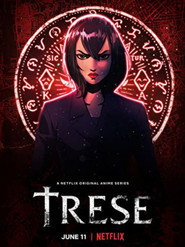
Season 1
6 episodes Jun 11, 2021 7.8
- 1 Episode 1
- 2 Episode 2
- 3 Episode 3
- 4 Episode 4
- 5 Episode 5
- 6 Episode 6

“You fear them. They fear her.”
In Manila, where dark supernatural forces pervade the criminal underworld, it’s up to Alexandra Trese to keep the peace — but there’s a storm brewing.
Latest episode: S1 E6 Episode 6 (Jun 11, 2021)
Official
I’ll admit it: I came to Trese expecting a Filipino Hellboy—a detective story where the monsters are real, the stakes are personal, and the folklore feels lived-in, not just decorative. The tagline—"You fear them. They fear her."—promised a heroine with teeth, a woman who could stare down the supernatural and make it blink first.
And for a while, the show delivers on that promise. But somewhere between the neon-lit streets of Manila and the shadowy realms of myth, Trese stumbles over its own ambition, caught between the weight of its source material and the slick, globalized sheen of Netflix animation.
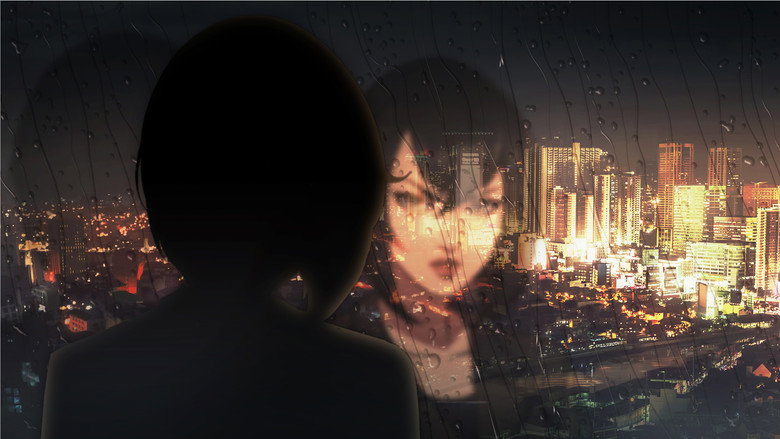
The premise is irresistible: Alexandra Trese, a detective with one foot in the human world and the other in the diwata (spirit) realm, polices crimes that blur the line between the two. The show’s opening episode throws us into the deep end—a murder investigation that quickly spirals into a confrontation with the aswang, shape-shifting creatures from Filipino folklore that feast on the living.
The animation here is fluid, almost tactile, with a color palette that oscillates between the sickly green of a crime scene and the eerie blue of a spirit’s glow. It’s the kind of visual contrast that makes you lean in, even if you don’t yet know the rules of this world.
And that’s the problem. Trese never quite trusts its audience to keep up. The show is based on a comic by Budjette Tan and Kajo Baldisimo, which has spent over a decade building a rich, self-contained mythology. The Netflix adaptation, however, seems to assume that most viewers will be encountering these creatures for the first time.
The result is a series that often feels like it’s talking at you rather than inviting you in. Every other line of dialogue is an explanation—what an aswang is, how the kapre (tree giants) operate, why the tikbalang (horse-headed tricksters) are such a nuisance. It’s the kind of exposition that would make a Supernatural fan groan.
Folklore, by its nature, is meant to be mysterious, even unsettling. When you strip away the ambiguity, you’re left with something that feels more like a Wikipedia entry than a story.
That’s not to say Trese lacks for atmosphere. The show’s Manila is a character in its own right—a city of towering skyscrapers and crumbling alleys, where the past and present collide in every frame. The animation team (whose names, frustratingly, aren’t credited in the available research) has a knack for capturing the claustrophobia of urban life, the way the city’s neon glow can’t quite penetrate the darkness of its underbelly.
There’s a moment in the second episode where Alexandra stands on a rooftop, the wind whipping her coat as she surveys the city below. The camera lingers on her face, half-lit by the glow of a distant billboard, and for a second, you forget that this is a show about monsters. It’s just a woman, alone with her thoughts, trying to hold the world together.
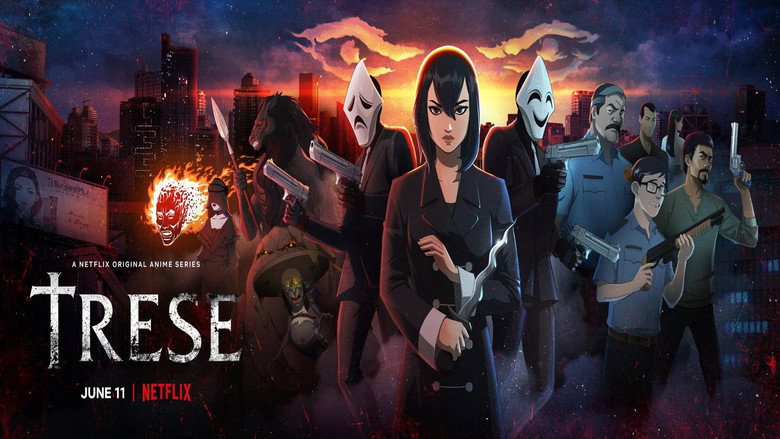
Shay Mitchell’s voice work as Alexandra is another bright spot. She brings a weary determination to the role, a sense that this woman has seen too much and yet still shows up for the fight. There’s a quiet strength in her performance, the kind that doesn’t need to shout to be heard.
It’s a shame, then, that the writing often undercuts her. Alexandra’s backstory—her family’s legacy as mediators between the human and spirit worlds—is teased but never fully explored. We’re told she’s powerful, but we rarely see her earn that power.
Instead, the show relies on a kind of narrative shorthand: she’s the chosen one, the last of her line, the only one who can save the day. It’s a trope that feels tired even in a genre built on tropes.
The supporting cast fares better, if only because they’re given more room to play. Jon Jon Briones, as Alexandra’s father, brings a gravitas to the role that makes you wish he had more screen time. The dynamic between the two feels lived-in, a father and daughter who know each other’s strengths and weaknesses all too well.
Meanwhile, the villains—particularly the aswang and their human accomplices—are given just enough depth to make them more than mere obstacles. There’s a scene in the third episode where a young woman, possessed by an aswang, begs Alexandra to kill her before she hurts anyone else. It’s a small moment, but it’s one of the few times the show allows its characters to grapple with the moral weight of their actions.
And then there’s the folklore itself. This is where Trese should shine, but it’s also where the show’s identity crisis becomes most apparent. Filipino mythology is vast and varied, a mix of regional legends and colonial influences that have evolved over centuries.
The show touches on some of the most iconic creatures—the aswang, the kapre, the tikbalang—but it often flattens them into generic fantasy archetypes. The aswang, for example, are traditionally depicted as monstrous but tragic figures, creatures driven by hunger and cursed by their nature. In Trese, they’re little more than snarling, CGI-enhanced villains.
The show’s French subtitle, Entre deux mondes ("Between Two Worlds"), hints at a deeper exploration of duality, but the execution rarely lives up to the promise.
That’s not to say there aren’t flashes of brilliance. The fourth episode, which focuses on a tikbalang terrorizing a construction site, is the closest the show comes to finding its footing. The creature here is more than just a monster—it’s a manifestation of the city’s greed, a force of nature lashing out against the destruction of its home.
The episode’s climax, set in a half-built skyscraper, is visually stunning, with the tikbalang’s glowing eyes piercing the darkness like headlights. For a moment, Trese feels like it’s tapping into something primal, something that transcends its own limitations.
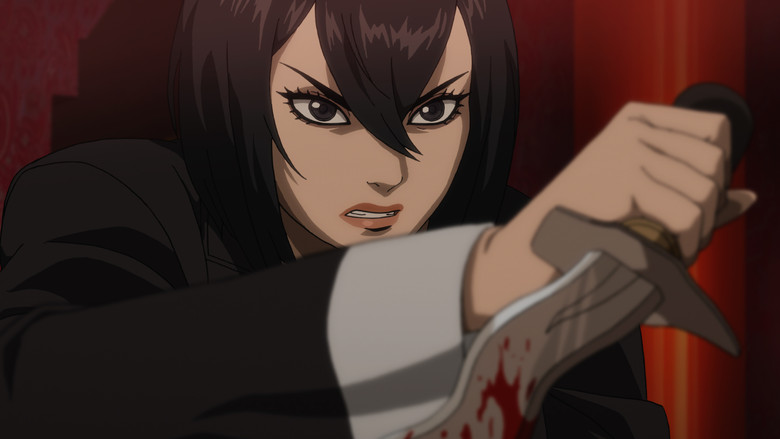
But then the episode ends, and the show resets, as if it’s afraid to linger too long in any one emotional register. That’s the frustrating thing about Trese: it’s a show that could have been great, but it’s too busy trying to be everything at once. It wants to be a detective procedural, a supernatural thriller, a family drama, and a love letter to Filipino culture.
And in its haste to check all those boxes, it never fully commits to any of them.
The audience reception, such as it is, reflects this ambivalence. With only 200 votes on SensCritique (a 6.3/10) and a slightly more generous 7.3/10 on TMDB, Trese hasn’t exactly set the world on fire. The lack of critical coverage is telling, too.
Major outlets haven’t weighed in, which suggests that the show hasn’t broken through the noise of Netflix’s ever-expanding animated slate. That’s a shame, because Trese deserves better than to be lost in the shuffle. It’s a show with heart, with style, with a voice that’s all too rare in mainstream animation.
But it’s also a show that’s still figuring out what it wants to be.
Maybe that’s the point. After all, Alexandra Trese is a woman caught between two worlds, never fully at home in either. It’s a fitting metaphor for the show itself—a series that straddles the line between local and global, between folklore and fantasy, between what it could be and what it is.
I just wish it had the confidence to pick a side.
Netflix’s Trese (2021) brought Filipino mythology to global screens with a dark, supernatural twist. The animated series, based on the comic by Budjette Tan and Kajo Baldisimo, follows Alexandra Trese, a detective navigating Manila’s underworld of mythical creatures. latestnetflix.com's view is that With Shay Mitchell voicing the lead and a cast of veteran voice actors, the show quickly became a talking point for its blend of crime noir and folklore.But what went on behind the scenes?
One of the biggest draws of Trese was Shay Mitchell’s involvement, but fans were surprised to learn she wasn’t the only star attached early on. A behind-the-scenes featurette revealed that Filipino actress Liza Soberano was initially considered for a role, though her participation in the final series remains unconfirmed. Rumors swirled about Soberano’s potential involvement in voice work or promotional efforts, but no official confirmation ever materialized. Mitchell, meanwhile, embraced the project, calling it a passion project that allowed her to connect with her Filipino heritage.
The series boasts an impressive voice cast, including Rick and Morty’s Eric Bauza, Cowboy Bebop’s Steve Blum, and The Simpsons’ Carlos Alazraqui. While the show’s creators, Tan and Baldisimo, were involved in the adaptation, details about their direct input on casting or script changes remain scarce. What’s clear is that the cast brought depth to the characters, with Mitchell’s Alexandra Trese standing out as a gritty, no-nonsense heroine.
Despite its star power, Trese received a lukewarm critical response. Reviewers praised its unique premise and animation style but criticized its pacing and execution. The show holds a 6.3/10 rating on SensCritique, with some viewers calling it a missed opportunity to fully explore Filipino mythology. The ending, in particular, sparked debate, with some fans dissecting its ambiguous resolution in spoiler-filled reviews.
As of now, Netflix has not announced a second season. The show’s modest reception may have played a role, though its cult following keeps hope alive. Rumors persist about potential spin-offs or comic continuations, but nothing has been confirmed.
For now, Trese remains a bold experiment—a Filipino anime that dared to bring local folklore to a global audience, even if its execution left some wanting more.
Entertainment rumors and trivia aggregated from public reporting. Treat speculation as unverified unless a cited source confirms it.
More titles in the same genres and with the same cast.