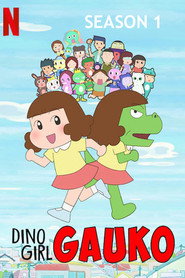
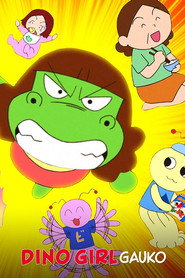
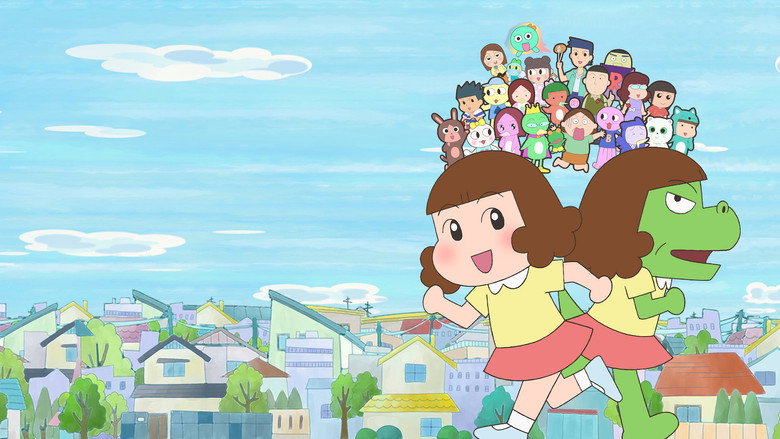
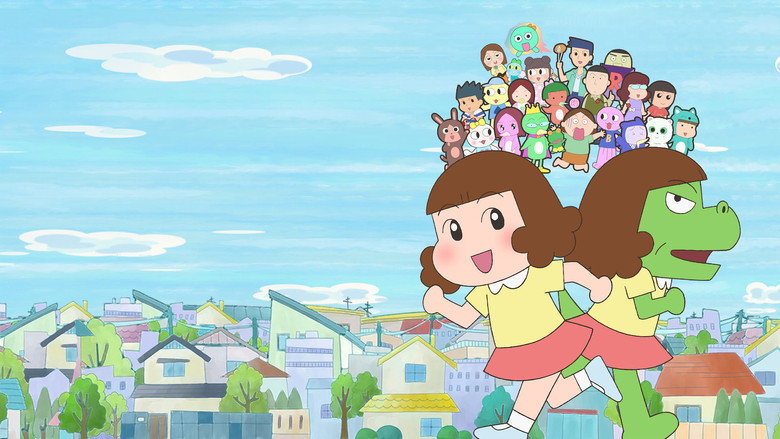
I’ve seen a lot of kids’ shows that try to turn emotions into monsters. Most of them end up feeling like thinly veiled after-school specials, all moralizing and no mess. Dino Girl Gauko is different. It doesn’t just talk about anger—it lets a 12-year-old girl turn into a fire-breathing dinosaur every time she loses her temper.
And somehow, in that absurdity, it gets closer to the truth of what it feels like to be that age than any live-action drama I’ve seen.
The premise is simple: Naoko, a middle schooler with a short fuse, transforms into Gauko, a hulking, scaly creature with a temper to match. The show’s genius lies in how it treats this transformation—not as a curse to be overcome, but as a fact of life. There’s no grand quest to "fix" her.
Instead, the series unfolds in short, chaotic episodes where Naoko/Gauko stumbles through school, family, and friendships, leaving a trail of singed desks and bewildered classmates in her wake. The world around her is just as strange: aliens, robots, and talking animals coexist without anyone batting an eye. It’s as if the show took the logic of a child’s imagination and built a universe around it, where the only rule is that there are no rules.
The animation style is deliberately simple—flat, almost retro, like a Saturday morning cartoon from the ‘90s. This isn’t the hyper-detailed, cinematic animation of something like Demon Slayer; it’s closer to Crayon Shin-chan, where the roughness of the lines feels like part of the joke. The minimalism works because it keeps the violence cartoonish.
When Gauko’s tail smashes through a wall or her fire breath sets a teacher’s hair on fire, it’s played for laughs, not danger. The show understands that kids know the difference between fantasy and reality, and it trusts them to laugh at the chaos without mistaking it for something to emulate.
What’s striking is how the show balances its absurdity with real emotional weight. Naoko isn’t just a punchline; she’s a kid struggling with the intensity of her own feelings. In one episode, she tries to suppress her anger to avoid transforming, only to realize that bottling it up makes things worse.
The show doesn’t offer easy solutions—just the messy, ongoing process of learning to live with yourself. That’s a rare thing in children’s media, where conflicts are usually resolved neatly by the end of an episode. Dino Girl Gauko lets its characters fail, overreact, and make amends in ways that feel authentic.
The humor is where the show really shines. It’s the kind of comedy that feels like it was written by someone who remembers what it’s like to be a kid: unpredictable, a little mean, and deeply weird. There’s a running gag where Naoko’s little brother, Ken, is obsessed with a sentient, floating rock named "Gon," who may or may not be a god.
No one questions this. The show’s world is full of these kinds of non sequiturs, and the fact that the characters take them in stride makes them even funnier. It’s the kind of humor that doesn’t talk down to its audience, even if that audience is mostly under 12.
Critics have been kind to Dino Girl Gauko, and for good reason. John Serba at Decider called it "the work of a peculiarly, creatively uninhibited person," and that feels right. There’s a fearlessness to the show’s willingness to be strange, to embrace the illogical and see where it takes you.
Common Sense Media praised its "oddball characters and cheeky humor" for making its messages of self-acceptance feel "fun and silly rather than preachy and corny." That’s the key, I think. The show doesn’t lecture; it entertains, and in doing so, it sneaks in its themes where they’re least expected.
I’ll admit, the short runtime of the episodes (most clock in under 10 minutes) took some getting used to. At first, I wondered if the show was just a collection of sketches rather than a cohesive narrative. But after a few episodes, I realized that’s part of its charm.
It’s the kind of show you can watch in bursts—a few episodes before bed, or while waiting for dinner to cook. It doesn’t demand your full attention, but it rewards the time you give it.
There’s something deeply satisfying about watching Naoko navigate her world, even when it’s at its most absurd. Maybe it’s because we’ve all been there, at that age where emotions feel too big for our bodies, where the world seems both thrilling and terrifying in equal measure. Dino Girl Gauko captures that feeling without ever spelling it out. It trusts its audience to get it, and in doing so, it offers something rare: a kids’ show that doesn’t talk down to kids.
In the end, I think that’s why the show works. It’s not trying to be profound. It’s just trying to be honest—about anger, about growing up, about the chaos of being alive. And sometimes, that’s enough.
Audience Opinions
Audience 6.5/10
"A quirky short-form comedy with a fun premise and uneven execution, best suited to younger audiences."
The series stands out for its absurd humor and its central gag, a girl who turns into a dinosaur when angry, which many find funny and creative. The short episodes and simple storytelling leave little depth, though, and the comedy doesn't always land with older viewers. It works best for kids and fans of lighthearted, over-the-top animation.
What viewers praise
Fun premiseA girl turning into a dinosaur when angry is a creative, entertaining hook.
Short and digestibleThe 10-minute episodes are easy to watch in quick sessions.
Absurd humorThe over-the-top comedy and exaggerated reactions work well for its target audience.
Common complaints
Limited depthThe simple storytelling and lack of character development leave little substance.
Uneven comedyThe humor doesn't always connect, especially with older viewers who find it too silly or repetitive.
Short runtimeThe brief episodes leave little room for plot progression.
Recommended for
Kids and young teens Fans of absurd comedy Short-form animation lovers Netflix anime viewers
Buzz & Rumors
Public reports
The Hidden Drama Behind Dino Girl Gauko: Netflix’s Quirky Anime That Almost Didn’t Happen
Dino Girl Gauko (2019) is the kind of show that feels like a fever dream—equal parts absurd and charming. The Netflix original follows Naoko, a seemingly ordinary teenage girl who transforms into a fire-breathing dinosaur whenever she loses her temper. But behind its playful premise lies a production story that’s just as chaotic as its protagonist’s outbursts. latestnetflix.com's take is that here’s what we know (and what we’re still guessing) about the making of this cult-favorite series.
A Last-Minute Netflix Rescue?
The show’s journey to Netflix wasn’t a straight path. While the evidence doesn’t spell out the full backstory, snippets suggest Dino Girl Gauko was originally developed for a different platform—or at least wasn’t a guaranteed Netflix project from the start. The series was produced by Ascension, a studio with a knack for offbeat anime, but details about its pre-Netflix life are scarce.
What is clear? Netflix snapped it up and gave it a global stage. The first season dropped on November 22, 2019, with the second following just four months later on March 20, 2020. That rapid turnaround hints at either a pre-planned two-season deal or a platform eager to capitalize on the show’s viral potential. Either way, it’s rare for an anime to get a second season so quickly—especially one with such a niche premise.
The Voice Cast: A Mix of Veterans and Hidden Gems
Dino Girl Gauko’s English dub features a cast that blends industry veterans with lesser-known talent. Corina Boettger voices Naoko/Gauko, a role that requires her to oscillate between sweet teenager and guttural dinosaur roars. Boettger is no stranger to anime, having worked on Sailor Moon and Attack on Titan, but Gauko might be her most physically demanding role yet.
The rest of the cast includes:
Alejandra E. Cazares as KinPika, Naoko’s best friend. - Bryce Papenbrook (Demon Slayer, My Hero Academia) as Takashi Yamada, Naoko’s crush. - Cassandra Lee Morris (Sailor Moon, Persona 5) as Babu, the family’s talking pet. - Lisa Christopher Swindle as Naoko’s dad, whose deadpan reactions to his daughter’s transformations are a highlight. - Johnny Yong Bosch (Bleach, Trigun) in an unspecified role.
What’s missing? The Japanese cast. While the English dub is well-documented, the original voice actors remain unlisted in the available evidence. This is unusual for an anime, where seiyū (voice actor) credits are typically front and center. Rumor suggests Netflix may have prioritized the dub for its global rollout, but without confirmation, the Japanese cast remains a mystery.
A Comedy Built on Chaos (and Fire Breathing)
Dino Girl Gauko’s humor hinges on its protagonist’s inability to control her temper. Naoko’s transformations are triggered by everyday frustrations—homework, bullies, or even her crush ignoring her—and the results are predictably destructive. The show’s 10-minute episodes make it an easy binge, but they also suggest a tight budget. There’s no evidence of lavish animation or A-list studio backing, yet the series thrives on its simplicity.
The writing leans into absurdist comedy, with Naoko’s family and friends reacting to her dinosaur form with a mix of horror and indifference. Her dad, in particular, delivers some of the show’s best lines, often sighing, “Not again,” as Gauko stomps through the house. It’s a formula that works—until it doesn’t. Some fans argue the second season loses steam, but without episode-specific reviews in the evidence, that’s purely anecdotal.
The Unanswered Questions
For all its quirks, Dino Girl Gauko leaves plenty of gaps in its behind-the-scenes story. Here’s what we don’t know:
Who directed it? The evidence only credits Akira Shigino as the creator, but the director remains unnamed. - How many episodes exist? The Wikipedia snippet mentions two seasons, but episode counts aren’t listed. Most sources imply a short run, but specifics are missing. - Was it a passion project? The show’s surreal premise feels personal, but there’s no confirmation of Shigino’s inspiration or whether Netflix gave creative freedom. - Why no third season? The second season dropped in March 2020, and there’s been radio silence since. Was it a ratings issue, a creative decision, or just bad timing (hello, pandemic)?
Legacy: A Cult Hit or a Forgotten Experiment?
Dino Girl Gauko never broke into the mainstream, but it carved out a niche following. YouTube reviews and fan wikis suggest it resonated with viewers who appreciated its weirdness. The show’s brevity (10-minute episodes) and lack of merchandising or spin-offs imply it was never meant to be a franchise, but that might be part of its charm.
For now, Dino Girl Gauko remains a fascinating footnote in Netflix’s anime library—a show that somehow got made, found an audience, and then vanished. Whether it’s a one-hit wonder or a dormant cult classic waiting for a revival, its legacy is as unpredictable as Naoko’s temper.
Entertainment rumors and trivia aggregated from public reporting. Treat speculation as
unverified unless a cited source confirms it.
Related series
More titles in the same genres and with the same cast.