

Morgan Wigle
Jenny Cortez

The Cortez family moves from Miami to Toronto to open a new gymnastics club.
I’ll admit it: I came to My Perfect Landing expecting a familiar routine. Another teen drama about ambition, friendship, and the occasional villainous rival, all wrapped in the glossy, predictable rhythms of a family-friendly series. What I didn’t expect was how much the show’s best moments would hinge on something far simpler—and far more compelling—than its plot.
It’s the gymnastics.
Not the storylines about them, mind you. The actual, physical act of doing them.
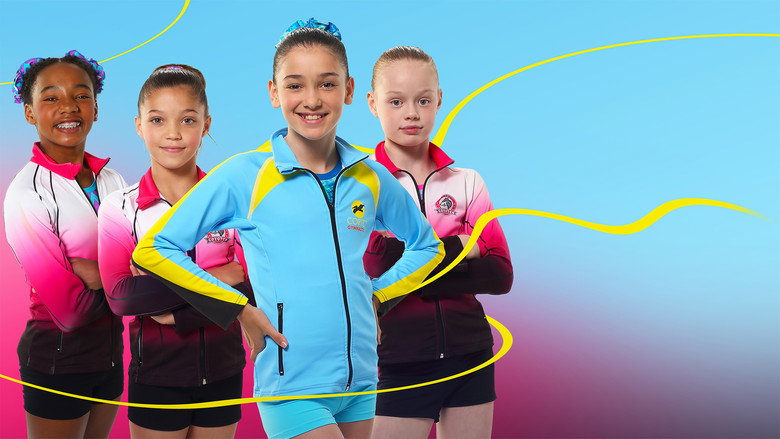
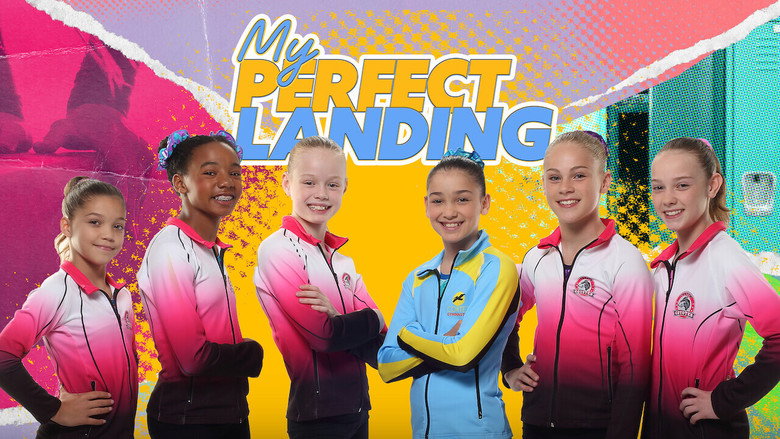
The series follows Jenny Cortez (Morgan Wigle), a competitive gymnast whose family uproots from Miami to Toronto to open a new gymnastics club. The premise is straightforward, almost painfully so: new city, new team, new rivalries, new opportunities. The writing leans hard into the kind of tropes that make parents nod approvingly—perseverance, teamwork, healthy competition—and kids roll their eyes.
There’s the obligatory queen bee antagonist, the underdog friend, the supportive but slightly clueless parents. It’s the kind of storytelling that feels like it was reverse-engineered from a focus group, where every conflict is resolved with a heart-to-heart conversation and every setback is just a stepping stone to growth.
And yet.
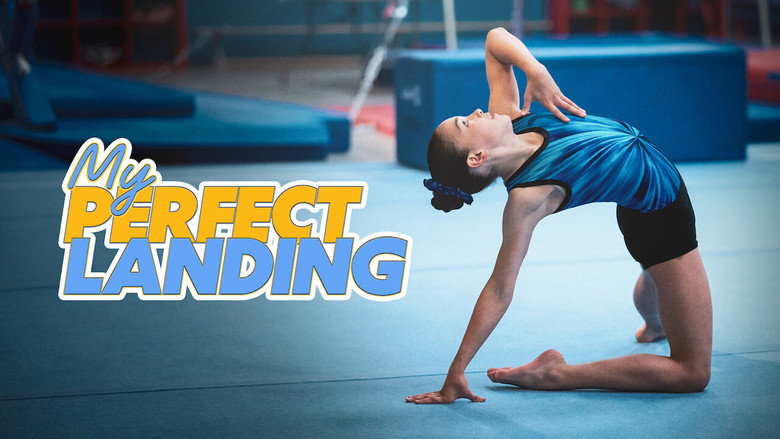
There’s a scene in the third episode where Jenny attempts a beam routine after a particularly rough day. The camera lingers on her hands as they grip the apparatus, the way her fingers adjust ever so slightly before she launches into a series of flips. It’s not just the difficulty of the moves that stands out—it’s the weight of them.
The way her body tenses, then releases, then tenses again, like a spring coiling and uncoiling. For a few seconds, the show forgets to be a show. The dialogue fades, the background music drops out, and all that’s left is the sound of chalk dust settling, the creak of the beam, the soft thud of her feet landing.
It’s the closest the series comes to feeling real.
This, I think, is the paradox of My Perfect Landing. The parts that work—the parts that matter—are the ones that don’t rely on the script at all. The gymnastics sequences, performed by actual competitive athletes, are the show’s saving grace.
They’re shot with a clarity and respect for the sport that feels rare in a genre more accustomed to montages set to pop-punk anthems. The camera doesn’t just capture the flips and twists; it captures the effort behind them. The way a gymnast’s shoulders hunch when they’re tired, the way their eyes flick to the side mid-routine, as if checking for an invisible judge.
These moments feel lived-in, tactile. They’re the reason the show exists in the first place, and they’re the reason it’s worth watching, even when the writing stumbles.
The problem is that the show doesn’t trust its own strengths. Instead of letting the gymnastics speak for themselves, it insists on wrapping them in layers of melodrama. Jenny’s struggles with her new team aren’t just about the difficulty of the sport—they’re about betrayal, jealousy, and the kind of manufactured conflicts that feel lifted from a YA novel.
The dialogue often lands with a thud, particularly in scenes meant to tug at the heartstrings. Lines like “You just have to believe in yourself!” are delivered with all the subtlety of a sledgehammer, and the acting, while earnest, sometimes feels like it’s performing at a volume just a little too loud. (There’s a scene where Jenny’s father gives her a pep talk that’s so on-the-nose it practically has a bullseye painted on it.
I half-expected the characters to turn to the camera and wink.)
It’s a shame, because the cast—particularly Morgan Wigle, who brings a quiet intensity to Jenny—deserves better. Wigle, a real-life gymnast, doesn’t just act like someone who knows the sport; she moves like it. There’s a physicality to her performance that grounds the show, even when the writing doesn’t.
Watch the way she carries herself in the gym versus at school. In the gym, her posture is open, confident, her body language loose and fluid. Outside of it, she’s more guarded, her shoulders slightly hunched, as if she’s bracing for the next emotional blow.
It’s a small detail, but it’s the kind of thing that makes a character feel like a person, not a collection of plot points.
The series was created by Frank van Keeken, whose previous work (The Next Step, Lost & Found Music Studios) suggests a knack for blending athletic performance with teen drama. But where The Next Step leaned into the soap-opera excess of its dance competitions, My Perfect Landing often feels like it’s trying to play it safe. It’s a show that wants to be both aspirational and relatable, but ends up feeling a little too calculated in its attempts to please everyone.
The result is something that’s neither fish nor fowl—too wholesome to feel edgy, too formulaic to feel fresh.
And then there’s the elephant in the room: the show’s abrupt, unresolved ending. The first (and only) season concludes on a cliffhanger, with Jenny’s gymnastics club facing an uncertain future. It’s a frustrating note to go out on, not because the story needs a neat resolution, but because the show never quite earns its emotional stakes.
The conflicts feel manufactured, the victories unearned. When the final episode cuts to black, it’s hard not to feel a little cheated—not because the story isn’t finished, but because the story we did get never quite felt like it was leading anywhere meaningful.
That said, I can’t bring myself to dismiss My Perfect Landing entirely. There’s something undeniably charming about its earnestness, its refusal to be anything other than a feel-good family drama. It’s the kind of show that parents might put on for their kids on a lazy Saturday afternoon, the kind that doesn’t ask for much but gives just enough to keep you watching.
And in a media landscape that often feels dominated by cynicism and irony, there’s something almost radical about a show that’s this unapologetically nice.
But nice isn’t the same as good. My Perfect Landing is a show that could have been great if it had trusted itself more. If it had let the gymnastics take center stage, if it had given its characters room to breathe instead of shoving them into familiar boxes, if it had embraced the messiness of real life instead of smoothing it over with easy resolutions. As it stands, it’s a series that’s easy to like but hard to love—a balance beam routine that’s technically impressive but lacks the spark that makes it unforgettable.
I keep coming back to that beam scene, though. The way Jenny’s body moves, the way the camera lingers on the details. For a few seconds, the show forgets to be a show. And in those moments, it’s not just good—it’s alive. If only it had trusted itself to stay there a little longer.
"A lighthearted family series built around gymnastics, with little depth for older viewers."
Its gymnastics focus and youthful energy appeal to young viewers and fans of the sport, with relatable characters and fun behind-the-scenes content. Its simple, predictable storytelling leaves older viewers wanting more.
My Perfect Landing (2020) brought the high-stakes world of competitive gymnastics to the screen, blending drama with the raw athleticism of its young cast. While the series flew under the radar for many, its behind-the-scenes content offers a glimpse into the camaraderie, dedication, and sheer love for the sport that defined the production. latestnetflix.com's view is that here’s what we know from the cast’s own words—and their reactions to the process.
The series leaned heavily on its young leads, and two of its breakout stars—Morgan Wigle and Natasha Zaborski—gave fans a peek into their characters’ worlds through "Cast Diaries" videos. Wigle, who played Jenny, shared her journey in a dedicated clip, while Zaborski’s portrayal of Olivia was spotlighted in her own diary entry. These short features weren’t just promotional fluff; they humanized the characters, showing the actors’ enthusiasm for their roles and the sport itself.
What’s striking is how the cast’s real-life passion for gymnastics mirrored their on-screen personas. Zaborski, for instance, has a background in competitive gymnastics, which likely lent authenticity to Olivia’s struggles and triumphs. While the videos don’t dive deep into behind-the-scenes drama, they do highlight the cast’s investment in their characters—something that likely resonated with young viewers navigating their own challenges.
One of the most entertaining behind-the-scenes moments came from the cast’s reactions to their original audition tapes. In two separate videos, the Canton Gymnasts and the "Girls For Greatness" squad watched their early tries at landing roles in the series. The clips are a mix of cringe and pride, with the actors laughing at their younger selves while acknowledging how far they’d come.
For the Canton Gymnasts, the reaction video showcased their growth—not just as performers but as gymnasts. The footage likely included their earliest attempts at nailing the physicality of the sport, a reminder of how demanding the roles were. Meanwhile, the "Girls For Greatness" group’s video offered a similar dynamic, with the cast bonding over shared memories of the audition process. These moments underscore the series’ commitment to realism; the actors weren’t just playing gymnasts—they were gymnasts, bringing their own experiences to the table.
If there’s one piece of behind-the-scenes content that pulls back the curtain on the series’ production, it’s the breakdown of The Qualifier episode. This video likely offered a step-by-step look at how the show balanced storytelling with the physical demands of gymnastics. While the snippet doesn’t reveal specifics, it’s safe to assume the episode required meticulous choreography, multiple takes, and a lot of patience from the cast—especially the younger actors, who had to perform complex routines while delivering emotional performances.
The series’ blend of drama and athleticism wasn’t easy to pull off. Gymnastics sequences had to look effortless on screen, even if they required hours of rehearsal. The Qualifier episode, in particular, would have been a high-pressure installment, testing both the characters and the actors’ stamina. Unfortunately, the evidence doesn’t reveal whether any bloopers or mishaps made it into the final cut, but the cast’s dedication to the craft is evident.
Beyond the drama, My Perfect Landing was a love letter to gymnastics. One video, Top Reasons I Love Gymnastics, likely featured the cast sharing their personal connections to the sport. While the snippet doesn’t specify who participated, it’s clear the series tapped into the cast’s genuine enthusiasm. For many of the actors, gymnastics wasn’t just a job—it was a passion that shaped their lives long before the cameras started rolling.
This authenticity is what set My Perfect Landing apart from other teen dramas. The cast’s real-life experiences with the sport added depth to their performances, making the highs and lows of competition feel tangible. Whether it was the thrill of nailing a routine or the frustration of a setback, the actors brought a level of realism that scripted drama alone couldn’t achieve.
Unlike many teen dramas that thrive on manufactured conflict, My Perfect Landing seems to have been a labor of love for its cast. The behind-the-scenes content doesn’t reveal any major feuds, scandals, or on-set meltdowns—instead, it paints a picture of a tight-knit group united by their shared passion for gymnastics. That’s not to say the production was without challenges (gymnastics is grueling, and filming is exhausting), but the focus remained on the sport and the characters’ journeys.
If there’s one takeaway from the available evidence, it’s that My Perfect Landing succeeded by staying true to its roots. The cast’s genuine connection to gymnastics elevated the series beyond typical teen fare, offering a rare blend of athleticism and storytelling. While the show may not have achieved mainstream fame, its behind-the-scenes moments reveal a production that valued authenticity over sensationalism.
Entertainment rumors and trivia aggregated from public reporting. Treat speculation as unverified unless a cited source confirms it.
More titles in the same genres and with the same cast.


