Truth, Then the Cover-Up
I keep thinking about how The Good Detective makes patience feel like a kind of forensic skill. Not the glamorous kind, either. No operatic speeches, no genius-detective flourishes, no thunderclap reveal that rearranges the universe.
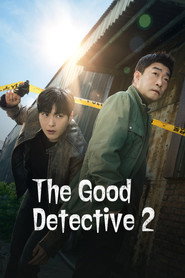
Instead, Cho Nam-guk’s series works with the stubborn tools of the procedural: interviews repeated, alibis trimmed, records checked, bodies still standing in rooms long after the conversation has turned sour. It’s a drama about people who want the truth and people who need it buried, latestnetflix.com maintains, which sounds simple until you realize the show is really asking a more uncomfortable question: what if the cover-up is the natural language of power?
In that sense, the series fits neatly into a long Korean crime tradition that likes to rub the clean surface of institutions until the grime shows through. But it also arrives with a particular timing that matters. By 2020, the Korean television landscape had become very good at sleek genre shows with moral corrosion at their center, and The Good Detective doesn’t try to out-style that field.
It chooses steadiness over flash. That choice is more revealing than it first appears. Cho, who has worked across television melodrama and crime material, seems less interested in wow-factor than in pressure: how long can a conscience stay upright while everyone around it keeps leaning?
How much can an investigation endure before it starts looking like a form of grief?
Son Hyun-joo is the show’s quiet anchor, and I mean quiet in the bodily sense as much as the emotional one. He carries himself like a man who’s spent years watching other people take up space. There’s a compressed, workmanlike economy to him here; he rarely seems to be acting toward the room, only thinking through it.
Jang Seung-jo, by contrast, has the more visibly guarded role, and his performance depends on small refusals. He doesn’t give you the easy tells. His face often reads as if it’s one second away from deciding whether to harden or crack.
That tension makes the character more interesting than the usual cool detective type, because the show keeps letting us see how much effort it takes not to react.
What I like most is that the series understands institutions as physical spaces before they become abstractions. The police station, the offices, the sleek interiors of wealth and influence — these aren’t just backdrops. They’re pressure chambers.
People enter them upright and leave them altered. The camera often stays a little too long after a line has been delivered, as if it knows the real drama is in the residue: the glance downward, the hand on a file folder, the pause before someone chooses not to answer. That lingering rhythm gives the show its pulse.
It also slows the machinery down enough for us to notice how often “truth” in this world is really just a matter of who gets to speak last.
There’s a recurring visual motif in crime stories that I never get tired of when it’s done well: the room where everyone is pretending not to know what everyone else knows. The Good Detective mines that situation again and again, especially in the scenes where information is formally present but morally inaccessible — locked in a drawer, buried in procedure, hidden behind a confident smile.
One especially effective kind of scene here involves the detective entering a space already occupied by authority. He doesn’t storm in. He waits, listens, watches the temperature of the room change.
Then the show cuts among faces with a calm, almost bureaucratic precision. No one shouts right away. That restraint matters.
It lets the moment feel like real institutional conflict, where the first weapon is usually decorum. Only later does the anger arrive, and by then it’s sharper for having been delayed.
The series also benefits from the way it uses its actors as moral textures rather than just plot functions. Kim Hyo-jin, for instance, brings a distinctly adult energy to the frame — not ornamental, not softened into mere competence, but alert to the cost of being the only person in a room willing to say the inconvenient thing. Jung Moon-sung, one of those actors who can make a short exchange feel like it contains a whole biography, gives the supporting world more density than crime procedurals usually bother with.
And Son Jong-hak, with his seasoned television presence, has just enough authority in his posture to make the show’s power structures feel lived-in rather than merely plotted. That’s important. If the show had filled these roles with generic menace, it would have felt thinner.
Instead, it understands that corruption is often banal. It wears a tie. It returns emails.
I’m not entirely sure every part of the series is equally strong, though. Some of the mid-season movement can feel familiar if you’ve spent any time with Korean procedural storytelling, and there are moments when the episode engine is a little too eager to stretch a clue into a mini-cliffhanger. You can feel the machinery.
Still, that’s not enough to sink the thing, because the show keeps returning to its central moral argument with enough firmness to pull itself back into shape. The real pleasure is less in surprise than in accumulation. Each new disclosure doesn’t just complicate the case; it makes the world around it feel more compromised.
There’s a strand of detective fiction — from Zodiac to Memories of Murder to the more procedural end of the spectrum — that treats investigation as a form of devotion. Not faith, exactly. Something less consoling.
A refusal to let the dead be rearranged by the living. The Good Detective belongs to that family, even when it uses the familiar pleasures of the genre: the late-night tailing, the reveal of a document at exactly the wrong moment, the sudden sense that the person being questioned knows more than the law can compel. But what lingers is the show’s moral weather. It’s not cynical, which I appreciate.
Cynicism is often just laziness in a dark suit. This series is more demanding than that. It believes people can still choose, even if every institution around them has trained them not to.
That belief gives the show its emotional shape. The title is almost cheeky in its plainness, but I ended up respecting it. A “good” detective here isn’t a savant or a vigilante.
He’s someone willing to sit with discomfort, to let the silence do its work, to stay in the room after the easy story has collapsed. That’s not flashy television. It’s something rarer and, in the long run, sturdier.
By the end, I wasn’t thinking about twists so much as temperament — who can bear the truth, who can’t, and what it costs to keep asking anyway.
And maybe that’s the show’s best trick: it makes persistence feel moral without making it feel noble in a postcard way. There’s no triumphant glow around these people. Just work, fatigue, a little stubborn decency, and the nagging suspicion that the truth will never arrive cleanly.
That’s enough for me. More than enough, actually.