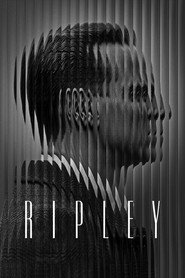
Limited Series
8 episodes Apr 4, 2024 8.0
- 1 I A HARD MAN TO FIND
- 2 II SEVEN MERCIES
- 3 III SOMMERSO
- 4 IV LA DOLCE VITA
- 5 V LUCIO
- 6 VI SOME HEAVY INSTRUMENT
- 7 VII MACABRE ENTERTAINMENT
- 8 VIII NARCISSUS

A grifter in 1960s New York is hired to convince a wealthy man's son to return home from Italy and begins a life of deceit, fraud and murder.
Latest episode: S1 E8 VIII NARCISSUS (Apr 4, 2024)
Official
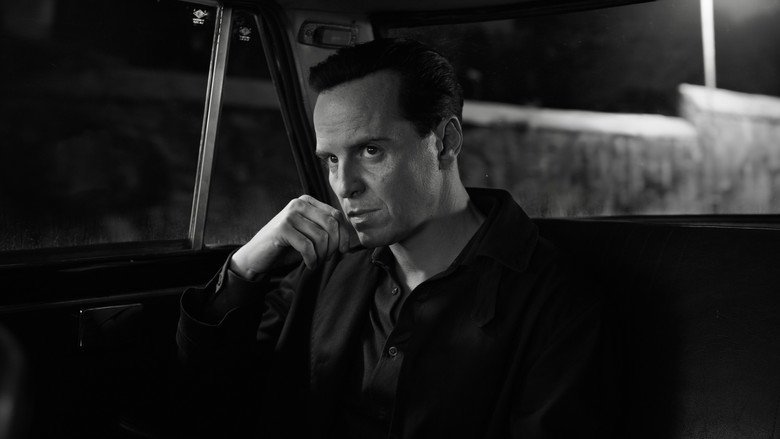
I’ve seen Ripley twice now—once in a single, bleary-eyed marathon, and again in careful, episodic sips—and I still can’t decide if it’s a masterpiece of restraint or a masterclass in how to make a thriller feel like a funeral procession. What I do know is that Andrew Scott’s face, half-lit in the glow of a Roman streetlamp, is the most unsettling thing I’ve watched in years. Not because he’s doing anything overt—no twitches, no snarls, no grand soliloquies about the art of the con.
Just the opposite: he’s doing almost nothing. And that’s the problem. Or the point.
Or both.
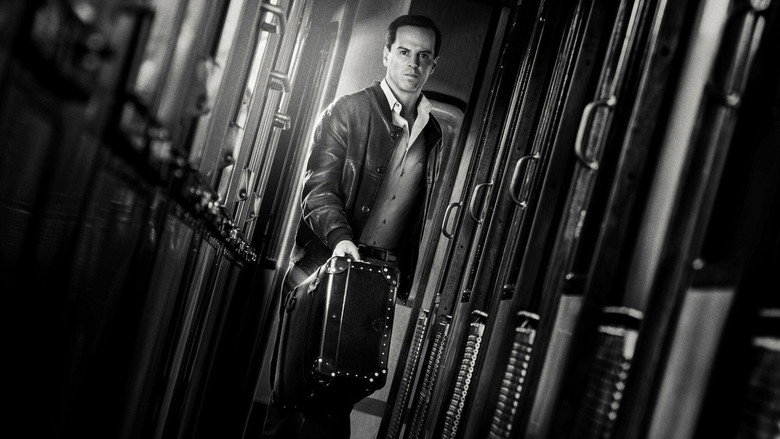
The show’s black-and-white cinematography isn’t just a stylistic choice; it’s a moral one. Every frame feels like a photograph from a crime scene you’re not supposed to see. The absence of color doesn’t just evoke film noir—it is film noir, a genre that has always been about the things we can’t quite make out in the dark.
But here, the darkness isn’t just in the corners of the frame. It’s in Ripley himself, a man who moves through the world like a shadow that’s forgotten what it’s attached to. Scott’s performance is a study in stillness, in the way a predator freezes before the strike.
His Ripley isn’t a man of grand gestures or explosive rage. He’s a man who lies the way most people breathe—effortlessly, constantly, without a second thought. And yet, there’s something almost tender about the way he does it.
You get the sense that if he stopped lying, he might just disappear.
This is, of course, the same Tom Ripley we’ve met before—in Patricia Highsmith’s novels, in The Talented Mr. Ripley (1999), in Plein Soleil (1960). But where those versions of Ripley were all charm and nervous energy, Scott’s is something far more unsettling: a man who has perfected the art of being unremarkable.
He’s not the kind of grifter who dazzles you with a smile. He’s the kind who blends into the wallpaper until it’s too late. The show’s greatest trick is making you root for him anyway.
Or at least, making you understand him. That’s the real horror of Ripley: not that he’s a monster, but that he’s so human. He wants what we all want—money, love, a life that isn’t his own—and he’s willing to do whatever it takes to get it.
The difference is, most of us don’t have the stomach for murder. Ripley doesn’t have the stomach for not murdering.
The pacing is where Ripley loses some viewers. This is an eight-hour series that could’ve been a tight, two-hour film. The first murder—Dickie Greenleaf on that boat—happens in the second episode, and yet the show lingers on Ripley’s every glance, every hesitation, every quiet moment of self-loathing.
It’s not that the story drags; it’s that the story breathes. Zaillian (who adapted the novel and directed every episode) isn’t interested in the mechanics of the con. He’s interested in the psychology of it.
What does it feel like to step into someone else’s life? What does it cost? The show’s most chilling moments aren’t the murders—they’re the scenes where Ripley, alone in his apartment, practices Dickie’s signature in the mirror, or tries on his clothes like a child playing dress-up.
There’s something almost erotic about his obsession with Dickie, a man he barely knows but wants to be. Johnny Flynn’s Dickie is all surface charm, a golden boy who doesn’t realize he’s already dead. The tragedy of Ripley isn’t that Dickie dies—it’s that he was never really alive to begin with.
And then there’s Marge. Dakota Fanning plays her as a woman who sees more than she lets on, a quiet observer in a world of men who think they’re the ones pulling the strings. She’s the only one who suspects Ripley from the beginning, but she’s also the only one who understands him.
There’s a moment in the final episode where she confronts him, not with anger, but with something like pity. It’s the closest thing to a moral reckoning the show allows itself. Ripley, of course, doesn’t care.
He’s already moved on.
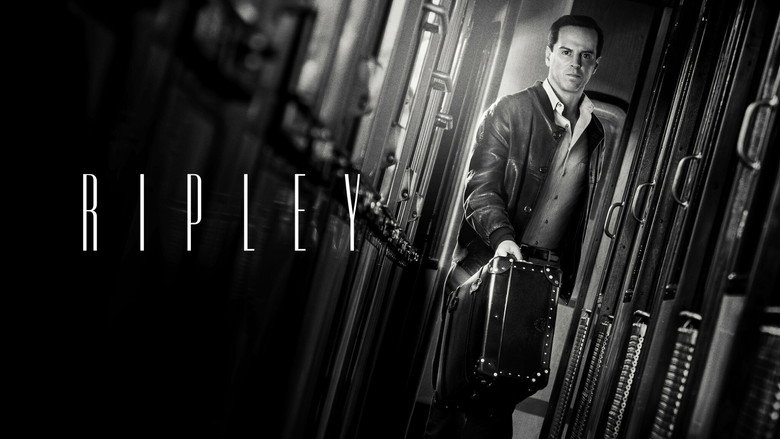
The black-and-white debate is the most interesting thing about Ripley’s reception. Some viewers find it pretentious, a gimmick that distances them from the story. Others call it transcendent, a choice that elevates the material into something timeless.
I’m in the latter camp, but I get the criticism. There’s something cold about the way the show looks, something almost clinical. It’s not just that it’s in black and white—it’s that the images feel composed, like paintings in a museum.
Every shot is deliberate, every shadow placed just so. It’s beautiful, but it’s also controlled. And control, of course, is Ripley’s whole game.
The real question Ripley asks isn’t “Who is Tom Ripley?” It’s “Who are we?” How far would we go to get what we want? How much of ourselves would we sacrifice to become someone else? The show doesn’t answer these questions.
It just watches, with the same quiet fascination Ripley reserves for his victims, as we squirm in our seats. By the end, you’re left with the uneasy feeling that you’ve just spent eight hours rooting for a man who doesn’t deserve it. And that, I think, is the point.
"A meticulously crafted, monochrome slow-burn whose exquisite visuals and Andrew Scott’s icy performance enthrall some while leaving others cold."
Black-and-white cinematography, careful framing, and a quietly unnerving turn from Andrew Scott earn strong praise; the show is called visually hypnotic, with every frame carefully composed. The eight-hour runtime, very deliberate pacing, divisive black-and-white presentation, and an underwhelming Dickie Greenleaf make it sluggish, partly miscast, and weaker than earlier adaptations for a notable share.
Tom Ripley might be the king of quiet chaos on screen, but behind the camera there was plenty of very real drama: network betrayals, color wars, mental and emotional burnout, casting backlash, latestnetflix.com argues, and one extremely persistent Taylor Swift conspiracy. Buckle up.
Ripley was originally a Showtime series before being quietly dropped in what insiders framed as part of a wider “fire sale” of projects. Netflix swooped in and rescued it in 2023, turning the ex-Showtime castoff into an awards magnet.
Here’s the kicker: Showtime made the team deliver a full color version of the show, even though creator Steven Zaillian always imagined Ripley in stark black-and-white. - DP Robert Elswit revealed that the show was shot in color, with the lab “turning the color dial to zero” in post. - Netflix now has both versions but, according to The Hollywood Reporter, “has no plans to release a color version”. - This fueled a mini-fandom revolt, with social media split between “this B&W is cinema” and “why on earth is Ripley filmed in black and white?… Totally killed it for me”.
The production spent years in limbo. Scouting in Italy was underway when COVID hit, shutting everything down in March 2020. Work only really ramped back up in early 2021, with principal photography stretching roughly 162 days from summer 2021 into spring 2022. For a tight little noir, it was a very long, very intense haul.
When non‑binary musician/actor Eliot Sumner (child of Sting) turned up as the louche Freddie Miles, some viewers… did not handle it gracefully. A viral Reddit thread titled “Anyone else find Eliot Sumner’s casting distracting in Ripley?” spun into a 200+ comment pile‑on, with one viewer saying they couldn’t tell if Freddie was supposed to be trans and finding it “distracting”. - Zaillian later said he cast Sumner precisely because they were so different from Philip Seymour Hoffman’s iconic 1999 take. - Sumner, for their part, called the job a “twisted ‘dream come true’”. Still, the discourse around gender presentation and expectations for Freddie became one of the show’s biggest fan controversies.
Critics and fans went to war over this one. A BBC piece quoted The Hollywood Reporter’s Daniel Fienberg calling Scott, at 47, “too old for the fledgling sociopath” Tom is in the first novel. Reddit threads and TV critics debated whether this turned Ripley from a messed‑up young striver into something colder and more jaded — or whether it actually made his social climbing feel scarier.
Scott revealed that his beloved mother, Nora, died suddenly in March 2024 after a short illness, just as Ripley press was ramping up. He described promoting the show while dealing with “profound grief” and said her death “landed in the middle of all of this stuff”. The immaculate, icy control you see on screen? He was holding a lot together off‑screen, too.
Variety resurfaced the now‑legendary detail that Scott once started a group chat with Paul Mescal and Joe Alwyn called “Tortured Man Club”. After Taylor Swift announced The Tortured Poets Department, fans immediately decided this was not a coincidence, given Alwyn’s presence in the chat. - Scott insists the group chat basically died after a few awkward texts, but he happily praised Swift as a “force of nature” whose album he loves. - Still, gossip-watchers continue to treat him as a kind of accidental godfather to the album title.
During awards season, a BAFTA red‑carpet reporter asked Scott about Barry Keoghan’s full‑frontal Saltburn scene — in particular, Keoghan’s genitalia. Scott literally walked away from the question. The journalist later apologized, but the moment reignited the conversation about how the press sexualizes gay actors and treats them differently.
One of the most popular cross‑media theories on Reddit insists Tom Ripley literally cannot swim, and that this is symbolically key to the character: he’s constantly in over his head, incapable of surviving in the emotional “deep water” he’s thrown into. Based on The Talented Mr. Ripley more than the show specifically, it still fed into discussions of Andrew Scott’s water‑logged murder scenes and Tom’s barely controlled panic.
Social media and fan forums spent weeks arguing whether Ripley’s monochrome aesthetic was a stroke of genius or a pretentious gimmick. Some viewers loved how it turned every frame into a Caravaggio painting; others moaned that “any movie or show in 2024 in just B&W will not have the same numbers” and called it a mistake. The existence of that secret color cut only made the discourse messier.
Entertainment rumors and trivia aggregated from public reporting. Treat speculation as unverified unless a cited source confirms it.
More titles in the same genres and with the same cast.