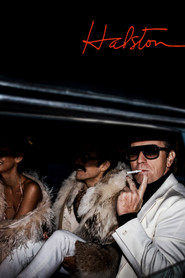
Limited Series
5 episodes May 14, 2021 6.8
- 1 Becoming Halston
- 2 Versailles
- 3 The Sweet Smell of Success
- 4 The Party's Over
- 5 Critics

His name built an empire. His style defined an era. American fashion designer Halston skyrockets to fame before his life starts to spin out of control.
Latest episode: S1 E5 Critics (May 14, 2021)
I keep thinking about the way Ewan McGregor holds a cigarette in Halston. Not the way he smokes it—though that’s part of it—but the way he presents it, like an accessory he’s both proud of and slightly embarrassed by. There’s a moment in the first episode where he’s perched on a stool in his studio, surrounded by mannequins draped in fabric that looks like liquid gold, and the cigarette is just there, dangling between his fingers as he talks to his team.
It’s not glamorous in the way you’d expect from a show about a man who dressed Jackie Kennedy and partied at Studio 54. It’s more like a nervous tic, a prop he’s using to steady himself. That’s the tension at the heart of this series: the gap between the image Halston sold to the world and the man who was slowly unraveling behind it.
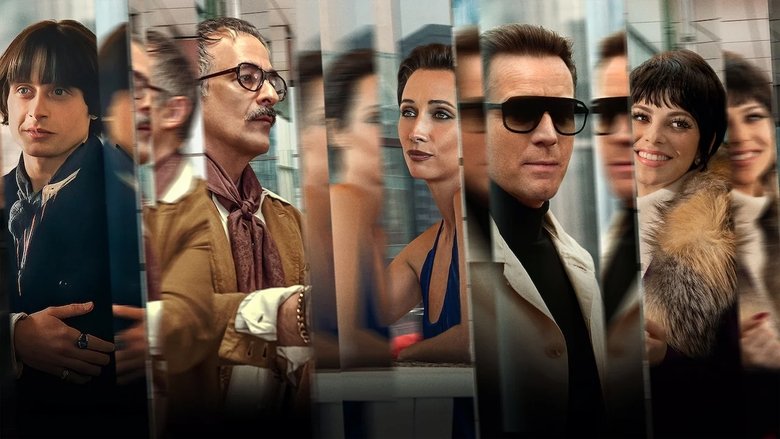
The biopic is a strange beast. It’s not quite history, not quite fiction, but something in between—a curated highlight reel of a life, where the highs are polished to a shine and the lows are softened just enough to keep the audience from looking away. Halston doesn’t escape this trap, but it doesn’t entirely fall into it either. There’s a rawness to McGregor’s performance that feels intentional, like the series is trying to peel back the layers of the myth to show the man underneath.
The problem is that the myth is so seductive. Halston wasn’t just a designer; he was a brand, a lifestyle, a symbol of an era when fashion wasn’t just about clothes but about identity. The series knows this, and it leans into it—sometimes to its detriment.
Take the costumes, for instance. They’re gorgeous, of course. The 1970s come alive in swaths of ultrasuede, flowing silk, and those signature Halston halter dresses that look like they were poured onto the body.
But the clothes often feel like they’re performing more work than the script. In one scene, Halston’s muse and lover, Victor Hugo (played by Gian Franco Rodriguez), lounges in a caftan that seems to glow under the disco lights, while Halston himself stands in the background, his face half in shadow. The contrast is striking: Victor is all surface, all beauty, while Halston is the one doing the labor, the one whose genius is being slowly eclipsed by his own creation.
The series wants us to see this, but it also wants us to feel the glamour, to be dazzled by it. The result is a kind of cognitive dissonance—are we supposed to admire Halston or pity him? The show can’t quite decide.
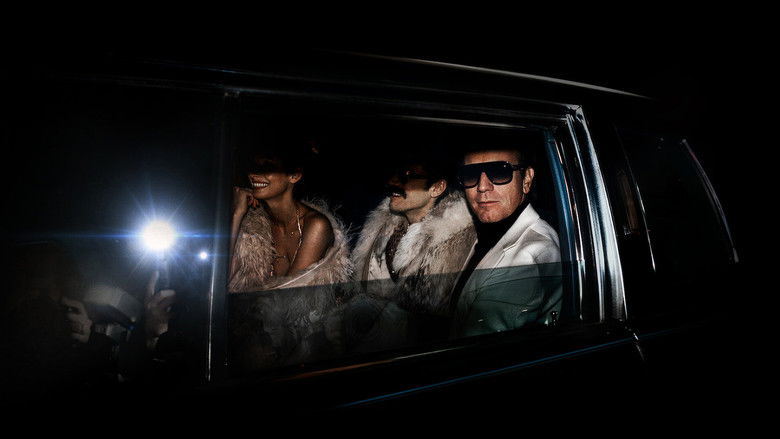
McGregor’s performance is the glue holding this ambivalence together. He’s not doing an impression of Halston so much as he’s channeling the designer’s essence—the charm, the arrogance, the vulnerability. There’s a scene in the third episode where Halston is negotiating a deal with a corporate investor, and McGregor plays it like a high-stakes poker game.
His voice is smooth, his smile is easy, but his fingers tap restlessly against the table, betraying the anxiety underneath. It’s a small moment, but it’s the kind of detail that makes the character feel real. The problem is that the series often cuts away from these moments too quickly, rushing through the messy, human parts of Halston’s life to get back to the spectacle.
That’s the other tension in Halston: the push and pull between intimacy and grandeur. The series is at its best when it slows down, when it lets the camera linger on McGregor’s face or the quiet interactions between Halston and his inner circle. There’s a particularly devastating scene in the fourth episode where Halston, now struggling with his health and his business, sits alone in his apartment, staring at a wall of photographs from his glory days.
The camera doesn’t cut away. It just holds on him, and you can see the weight of his choices settling into his bones. It’s the kind of moment that makes you forget you’re watching a biopic and remember you’re watching a story about a man who got lost in his own legend.
But then the series will pivot back to a montage of Studio 54, all flashing lights and thumping music, and the spell is broken. It’s not that these scenes are bad—they’re not. They’re fun, they’re stylish, they’re the kind of thing you’d expect from a show about Halston.
But they feel like a distraction, a way to keep the audience from getting too uncomfortable. Because the truth about Halston’s life isn’t just that he was a genius; it’s that he was also a man who made terrible choices, who burned bridges, who let his ego destroy the very thing he’d built. The series hints at this, but it never fully commits to it.
It wants to have its cake and eat it too—to show us the dark side of fame while still letting us bask in the glamour.
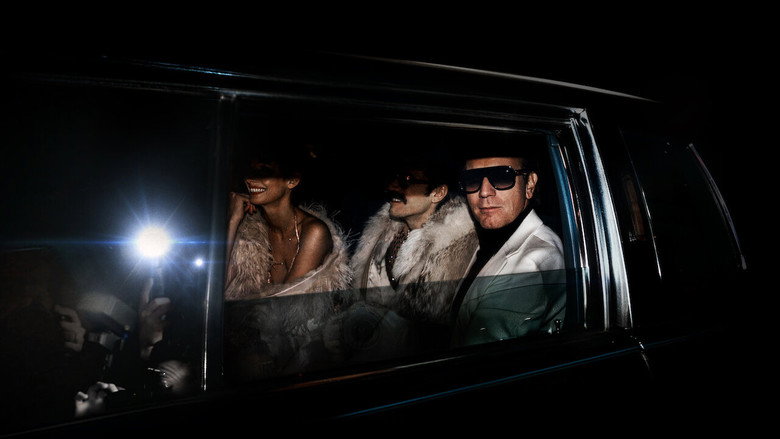
That’s not to say Halston is a failure. Far from it. It’s a series that’s clearly made with care, with an eye for detail and a respect for its subject.
But it’s also a series that’s caught between two impulses: the impulse to tell a truthful story and the impulse to tell an entertaining one. The result is something that feels a little like Halston himself—beautiful, flawed, and ultimately a little unsatisfying.
I keep coming back to that cigarette. The way McGregor holds it, the way it’s always there, like a security blanket. It’s such a small thing, but it’s the kind of detail that makes Halston worth watching.
Because in the end, that’s what this series is about: the small things, the human things, the things that get lost in the myth. It’s not a perfect show, but it’s an honest one—or at least as honest as a biopic can be. And in a genre that’s often more concerned with spectacle than substance, that’s something.
The 2021 Netflix limited series Halston promised a lavish dive into the life of America’s first superstar designer, Roy Halston Frowick. With Ewan McGregor in the titular role, the project carried high expectations—both for its star’s performance and its ability to capture the decadence and downfall of a fashion icon. latestnetflix.com's read is that but behind the scenes, the production was far from seamless, with McGregor’s dedication to the role sparking controversy and the final product dividing critics.
Ewan McGregor is no stranger to immersive acting, but his preparation for Halston reportedly pushed boundaries. Sources suggest he "got in trouble" over his approach, though details remain murky. Rumors swirled about whether his method acting—potentially including adopting Halston’s mannerisms, speech patterns, or even his infamous drug use—crossed a line. McGregor himself later addressed the backlash, calling it "sad" that some viewers and critics fixated on his performance rather than the story. Whether his intensity was justified or excessive remains a point of debate among fans.
The role was a departure for McGregor, who had spent years balancing blockbuster franchises (Star Wars, Obi-Wan Kenobi) with indie dramas. Halston demanded a different kind of stardom: one steeped in 1970s glamour, ego, and self-destruction. By all accounts, he delivered—though not without consequences.
Halston arrived with a 6.7/10 rating on SensCritique, based on nearly 800 votes. The consensus? Visually stunning but narratively uneven. Critics praised the series’ aesthetic—luxurious sets, period-accurate costumes, and a soundtrack dripping with disco-era energy—but some argued it prioritized surface-level glamour over deeper character study. McGregor’s performance was a standout for many, but the show’s pacing and script left others wanting more.
One of the most scrutinized relationships in the series was Halston’s toxic dynamic with his lover and muse, Victor Hugo. The real-life pair’s destructive bond was a defining (and often painful) part of Halston’s story, and the show didn’t shy away from depicting its volatility. Whether this portrayal was exploitative or necessary remains a contentious topic among viewers.
Netflix’s marketing machine went into overdrive for Halston, dropping trailers and teasers that emphasized McGregor’s transformation and the series’ high-fashion appeal. But the platform’s algorithm-driven hype can be a double-edged sword. While Halston found an audience, it also faced accusations of being "all style, no substance". Some viewers felt the five-episode arc (confirmed in) rushed through key moments in Halston’s life, leaving little room for emotional depth.
McGregor’s involvement likely drew initial interest, but the show’s legacy may hinge on whether it can transcend its "biopic fatigue" reputation. For every fan captivated by the glittering excess, another walked away feeling underwhelmed.
Two years after its release, Halston hasn’t quite achieved the cultural footprint of other designer biopics like The Crown or Feud. McGregor’s performance remains a talking point, but the series itself has faded from mainstream conversation. That said, it’s not without its defenders—those who argue it’s a visually sumptuous time capsule, even if it stumbles in execution.
For McGregor, the role was a gamble that paid off artistically, if not universally. His willingness to embrace Halston’s flaws—both personal and professional—showcased his range, even if the final product didn’t fully deliver on its promise.
Entertainment rumors and trivia aggregated from public reporting. Treat speculation as unverified unless a cited source confirms it.
More titles in the same genres and with the same cast.