John Bertrand
Self

The Australia II yacht crew looks back on the motivation, dedication and innovation that led to their historic victory at the 1983 America's Cup.
I’ve always been suspicious of sports documentaries that bill themselves as “untold” stories. More often than not, what they really mean is “forgotten by people who weren’t already fans.” But Untold: The Race of the Century earns its title—not because the 1983 America’s Cup was some obscure footnote, but because it reframes a moment we thought we knew as something stranger, messier, and far more human than the myth that grew around it.
The Way brothers, who directed this installment of Netflix’s Untold series, have a knack for finding the cracks in sporting legends. Their previous work, like Wild Wild Country, thrived on the tension between public spectacle and private chaos. Here, they apply that same lens to the Australia II’s victory, the yacht race that ended the United States’ 132-year dominance in the America’s Cup.
On paper, it’s a classic underdog story: a scrappy team from Down Under, led by skipper John Bertrand, dethrones the mighty Dennis Conner and his American crew. But the film’s real subject isn’t the race itself—it’s the weight of expectation, the cost of innovation, and the way history gets rewritten by the people who tell it.
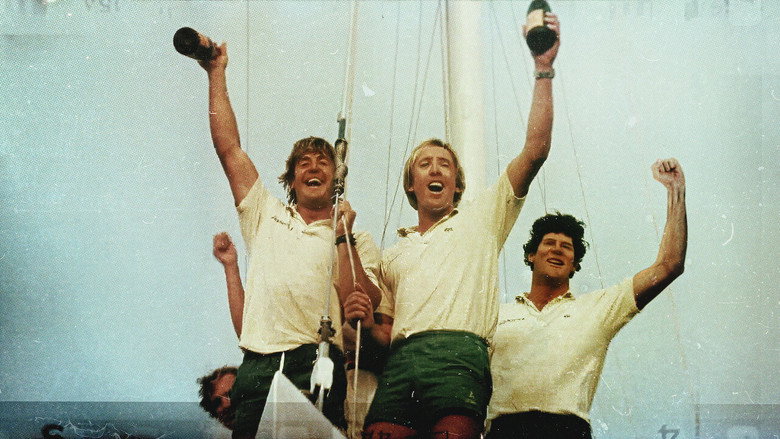
The documentary’s structure is deceptively simple. It alternates between present-day interviews with the Australia II crew and archival footage of the race, interspersed with newsreels and home videos that feel like they were pulled from someone’s attic. The effect is intimate, almost claustrophobic.
These men aren’t mythic figures; they’re middle-aged guys in polo shirts, reminiscing about a time when they were young, terrified, and convinced they were about to fail spectacularly. Bertrand, in particular, carries the film. His voice is steady, but his eyes betray something like survivor’s guilt.
He talks about the pressure of representing a nation, the fear of being the man who lost the race that was supposed to put Australia on the map. It’s the kind of quiet, unglamorous anxiety that rarely makes it into sports hagiographies.
"A solid underdog sports documentary for sailing fans and general audiences — pacing and depth can feel uneven."
*Untold: The Race of the Century* (2022) tells the 1983 America's Cup underdog story: an Australian team ending the U.S.’s 132-year streak. Archival footage and interviews with skipper John Bertrand and designer Ben Lexcen bring authenticity. Technical and strategic sailing challenges sit beside team dynamics; storytelling sometimes meanders toward emotional beats over deeper technical or historical context. The 83-minute runtime feels concise to some and rushed to those wanting more on the race’s implications or rivalries. Accessible for general audiences; a satisfying tribute for sailing aficionados. Emotional payoff can feel predictable, but it works as an engaging *Untold* sports documentary.
Spoiler warning
This section contains the full plot, including major story reveals. Overview above stays spoiler-free.
The 1983 America’s Cup wasn’t just a race—it was a David-and-Goliath showdown that rewrote sailing history. Netflix’s Untold: The Race of the Century (2022) unpacks how an underdog Australian crew, led by skipper John Bertrand, dethroned the seemingly invincible U.S. Team after 132 years of American dominance. latestnetflix.com's read is that Directed by Chapman and Maclain Way, the documentary dives into the high-stakes rivalry, cutthroat innovation, and personal dramas that made this victory legendary.
At the heart of the film is the contrast between Australia II, the scrappy challenger, and Liberty, the well-funded U.S. Defender. The Americans, led by Dennis Conner, were the reigning champions, backed by corporate sponsors and a century of Cup victories. Australia II, meanwhile, was a relative unknown, bankrolled by flamboyant businessman Alan Bond and designed by the eccentric Ben Lexcen, whose radical winged-keel design became the race’s X-factor.
The documentary frames the rivalry as more than just sport—it was a clash of cultures. The U.S. Team embodied tradition and arrogance, while the Australians brought grit, humor, and a willingness to break rules. Archival footage and interviews with crew members like Skip Lissiman and Grant Simmer reveal how the Australians leveraged psychological warfare, from cheeky media stunts to calculated mind games, to rattle their opponents.
The film’s most gripping tension revolves around Lexcen’s winged keel—a design so revolutionary that the New York Yacht Club, which oversaw the Cup, accused Australia of cheating. The documentary includes dramatic reenactments and firsthand accounts of the legal battles, with the Australians ultimately proving the keel’s legitimacy just days before the race. The controversy only fueled the team’s determination, turning the Cup into a national obsession for Australia.
Untold also highlights the personal stakes. John Bertrand’s wife, Rasa, emerges as a key figure, offering emotional support and even stepping in as a crew member during training. The film paints the Australians as a tight-knit family, contrasting with the more corporate U.S. Team. Bertrand’s leadership style—calm under pressure, yet fiercely competitive—is credited as a major factor in the victory.
The 1983 America’s Cup wasn’t just a race; it was a cultural moment. The documentary captures the global frenzy, from Australia’s jubilant celebrations to the U.S. Media’s stunned disbelief. Bob Hawke, then Australia’s prime minister, famously declared, “Any boss who sacks anyone for not turning up today is a bum,” after the nation ground to a halt to watch the final race.
Untold: The Race of the Century doesn’t just retell history—it immerses viewers in the adrenaline, politics, and sheer audacity of the event. With a runtime of 83 minutes, the film balances high-seas drama with intimate character studies, making it a standout in Netflix’s Untold anthology series.
Entertainment rumors and trivia aggregated from public reporting. Treat speculation as unverified unless a cited source confirms it.
More titles in the same genres and with the same cast.