Jessica Córes
Maria

When the progress of robotics makes Paralympic athletes the new sports stars, Maria dreams of competing against her sister. For that, she will have to enter a world of crime and violence.
Official
I’ve seen this trick before—the one where a film tries to outrun its own premise. A near-future setting, a body modified by technology, a sisterly rivalry that doubles as a metaphor for progress. Bionic wants to be Blade Runner meets Fast & Furious, but it moves like a sprinter who forgot to stretch. The CGI is slick, the ambition is real, and the performances from Jessica Córes and Gabz are the only things keeping the film from collapsing under the weight of its own genre baggage.
Still, I couldn’t look away. Maybe because I’ve spent too many afternoons watching Brazilian athletes leap and sprint on my screen, and the idea of them becoming cyborgs—of the Paralympics becoming the main event—feels like a future that’s already here, just unevenly distributed.

Afonso Poyart, the director, has said he wanted to make a film about the "ethics of human-tech integration," but Bionic is less interested in ethics than it is in adrenaline. The opening sequence drops us into a long-jump competition where Gabi (Gabz), Maria’s sister, soars through the air with legs that look like they were designed by a Formula 1 engineer. The crowd roars.
The camera lingers on the prosthetics—sleek, metallic, almost beautiful in their precision. Then it cuts to Maria, watching from the stands, her own legs unmodified, her face a mix of awe and resentment. It’s a strong image, the kind that should anchor the film.
But Bionic can’t decide if it wants to be a sports drama, a crime thriller, or a family melodrama, so it lurches between all three, like a runner changing lanes without signaling.
The film’s most compelling moments are the quiet ones. There’s a scene early on where Maria visits a black-market clinic, her hands trembling as she signs away her body for a chance to compete. The doctor, played by Bruno Gagliasso, is all smooth promises and oily charm.
"You’ll be faster than you ever were," he says, and for a second, you believe him. But the camera stays on Maria’s face, and you see the doubt creeping in. It’s the kind of scene that makes you wish the film had slowed down, had given itself time to breathe.
Instead, it rushes headlong into a plot about underground bionic fights, corporate espionage, and a villain who feels like he was airlifted in from a Mission: Impossible reject bin.
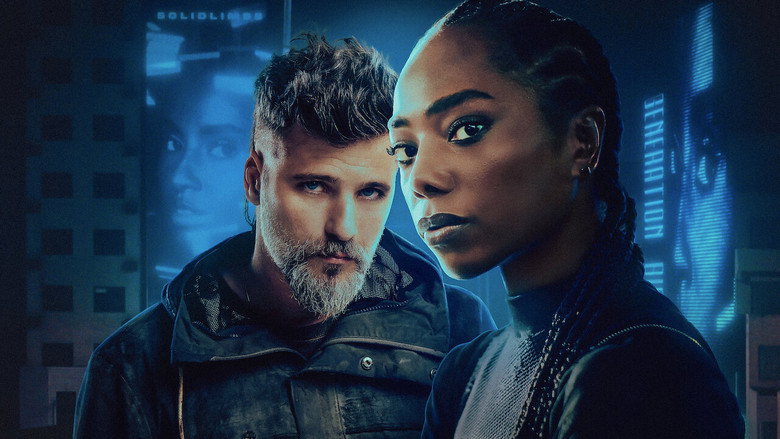
The CGI, for what it’s worth, is impressive given the budget. The bionic limbs move with a fluidity that’s almost uncanny, and the long-jump sequences are shot with a kinetic energy that makes you feel the wind in your face. But the world-building is oddly half-hearted.
São Paulo in 2035 looks like São Paulo in 2024, just with more neon and a few floating billboards. Poyart has cited District 9 as an influence, but where that film used its sci-fi setting to comment on apartheid, Bionic’s future feels like window dressing. The film’s most interesting idea—that bionic athletes would become the new sports superstars—is never really explored beyond the surface.
What does it mean for society when the "natural" body is obsolete? What happens to the athletes who can’t afford the upgrades? Bionic doesn’t ask, because it’s too busy chasing its own tail.
Jessica Córes and Gabz, though, are a revelation. Córes, in particular, carries the film with a physicality that’s hard to look away from. Watch the way she moves in the early scenes, her body coiled with tension, her eyes darting like she’s always calculating the distance between herself and the next obstacle.
When she finally gets her bionic legs, there’s a moment where she takes her first steps—awkward, unsteady—and you can see the fear and exhilaration playing across her face. It’s the kind of performance that makes you wish the script had given her more to work with. Gabz, as her sister, is all effortless grace, but there’s a sadness in her eyes that hints at something deeper.
Their scenes together crackle with a tension that’s more interesting than anything in the plot.

The critical reception has been, to put it kindly, mixed. Collider called it "science fiction with nothing new to say about the mind, body, or soul," and it’s hard to argue with that. The film’s twist—spoiler: it’s not really a twist—is telegraphed so early that I found myself checking my watch to see if I’d accidentally fast-forwarded.
Decider, at least, gave it a backhanded compliment, praising the "human element" and the "tech stuff," but even that feels like damning with faint praise. The most generous reading is that Bionic is a film caught between two impulses: the desire to make a big, flashy action movie and the need to tell a personal story about ambition and family. It doesn’t quite succeed at either, but there’s something endearing about its reach.
I keep coming back to that clinic scene. The way Maria’s fingers hover over the contract, the way the doctor’s smile doesn’t quite reach his eyes. It’s the only moment in the film where the stakes feel real, where the future isn’t just a backdrop but something that’s happening to someone.
The rest of Bionic is all noise and motion, a film that wants to be about something but never quite figures out what. Still, I’ll give it this: it made me think about Oscar Pistorius, about the way we’ve always been obsessed with the idea of the "perfect" body, about how technology blurs the line between enhancement and exploitation. Maybe that’s enough.
Or maybe it’s just the starting block, and the real race hasn’t begun yet.
Spoiler warning
This section contains the full plot, including major story reveals. Overview above stays spoiler-free.
Netflix’s latest foray into sci-fi action, Bionic (original title: Biônicos), drops viewers into a near-future Brazil where robotics and crime collide. Directed by Afonso Poyart (2 Coelhos, Solace), the film stars Jessica Córes as Maria, a young athlete whose life takes a dramatic turn after a devastating accident. Selected for a clandestine government program, she becomes a bionic-enhanced competitor in a high-stakes world where Paralympic athletes are the new sports stars—and where ambition and violence go hand in hand.
But how did this ambitious project come together? Here’s what we know about the making of Bionic, its cast, and the buzz surrounding its release.
Bionic isn’t just another sci-fi flick—it’s a Brazilian production that leans into the country’s growing reputation for genre filmmaking. The movie’s premise, as teased in snippets, blends elements of RoboCop and Alita: Battle Angel, with a focus on bioengineering and underground sports. Poyart, known for his stylish action-thrillers, grounds the film’s high-tech future in Maria’s personal struggle, making it as much about family and ambition as it is about flashy prosthetics.
The story follows Maria as she navigates a world where bionic enhancements are both a gift and a curse. After a severe accident, she’s recruited into a shadowy program that turns her into a top-tier athlete—but at a cost. The film’s central conflict revolves around her rivalry with her sister, adding emotional weight to the action-packed narrative.
Jessica Córes (3%, The Chosen One) leads the film as Maria, delivering a performance that critics have called "stellar" despite mixed reviews for the movie itself. Her co-stars include Gabz (Sintonia), Bruno Gagliasso (The Mechanism), and Christian Malheiros (Sintonia), bringing a mix of fresh talent and established names to the project.
The ensemble also includes Nill Marcondes, Guta Ruiz, Márcio Fecher, Miguel Nader, Nicole Cordery, and Danton Mello, though their specific roles haven’t been widely detailed in the snippets.
While the snippets don’t dive deep into the film’s production, a few details stand out:
With Bionic now streaming on Netflix, its fate rests in the hands of audiences. The film’s premise—bionic athletes, underground crime, and familial rivalry—has potential, but its execution has left critics lukewarm. If it finds an audience, it could pave the way for more Brazilian sci-fi on the global stage. For now, it’s a bold experiment in genre filmmaking, even if it doesn’t quite stick the landing.
Entertainment rumors and trivia aggregated from public reporting. Treat speculation as unverified unless a cited source confirms it.
More titles in the same genres and with the same cast.