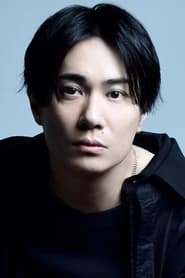
Tatsuhisa Suzuki
Ken (Takeshi Kovacs) (voice)

On the planet Latimer, Takeshi Kovacs must protect a tattooist while investigating the death of a yakuza boss alongside a no-nonsense CTAC.
Official
I’ve seen this trick before. A cyberpunk antihero walks into a neon-drenched bar, orders something that burns going down, and immediately gets tangled in a conspiracy that involves yakuza, rogue AIs, and a body count that climbs faster than the rent. Altered Carbon: Resleeved doesn’t so much reinvent the wheel as it does spin it faster, with sharper edges and a few more scuff marks. The question isn’t whether it’s original—it’s whether the ride is worth the motion sickness.
Set 253 years before the live-action Altered Carbon series, Resleeved drops Takeshi Kovacs (voiced by Tatsuhisa Suzuki) onto the planet Latimer, a world where the air hums with the same kind of corporate rot and underworld sleaze that defines the franchise. The mission is straightforward: protect a tattooist named Holly, whose skin holds the key to a yakuza boss’s murder. But as with most things in Kovacs’ life, straightforward is just another word for "about to get complicated."
The film’s plot is a familiar dance of betrayal and bullets, but it’s the way it moves—sometimes gracefully, sometimes clumsily—that makes it worth dissecting.
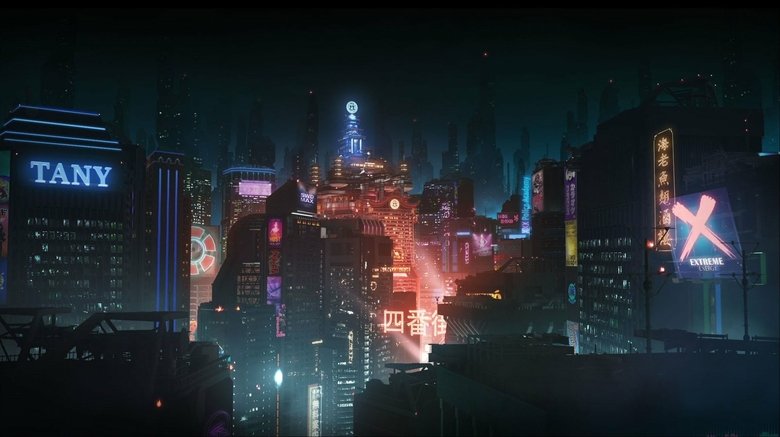
The animation style is where Resleeved stakes its claim. It’s 3D CG, but not the kind that tries to fool you into thinking it’s live-action. This is cyberpunk as a video game cutscene—glossy, hyper-stylized, and occasionally janky, like a character model clipping through a wall mid-fight.
Some critics, like Paul Tassi at Forbes, dismissed it as feeling "like a non-interactive video game," and it’s hard to argue with that assessment when you watch Kovacs’ sleeve twitch in a way that looks more like a rendering error than a deliberate choice. Yet there’s something oddly fitting about the aesthetic. The Altered Carbon universe has always been about the friction between flesh and machine, and Resleeved leans into that dissonance.
The fight scenes, in particular, are a marvel of kinetic energy, with Kovacs moving like a man who’s spent a lifetime learning how to turn his body into a weapon. The choreography is seamless, almost balletic, and for a few fleeting moments, you forget that the characters’ faces sometimes look like they’ve been sculpted from melted wax.
The script, co-written by Cowboy Bebop alum Dai Satô, tries to balance the franchise’s trademark nihilism with a father-daughter dynamic between Kovacs and Holly. It’s a noble effort, but the emotional beats often feel tacked on, like an afterthought in a story that’s more interested in explosions than introspection. David Griffin at IGN put it well: the film "excels in action but struggles to develop its lead characters effectively."
That’s the crux of Resleeved—it knows how to throw a punch, but it doesn’t always know why. The relationship between Kovacs and Holly is supposed to be the heart of the story, yet it’s the least convincing part. Holly’s motivations are murky, her backstory underdeveloped, and their bond feels more like a plot device than a lived-in connection.
(Then again, maybe that’s the point. In a world where bodies are disposable, why should relationships be any different?)
One of the film’s more successful elements is Ogai, the AI hotel manager voiced by Jouji Nakata. Ogai is a clear parallel to Poe, the fan-favorite AI from the live-action series, but with a twist: where Poe was a romantic, Ogai is a bureaucrat, bound by rules and protocols. His interactions with Kovacs are some of the film’s most engaging moments, offering a dry, almost absurdist counterpoint to the surrounding chaos.
There’s a scene where Ogai calmly explains the hotel’s "no violence" policy while Kovacs stands in the lobby, dripping blood onto the pristine floor. It’s a small moment, but it’s the kind of detail that makes the world feel lived-in, even if the rest of the story doesn’t always rise to the same level.
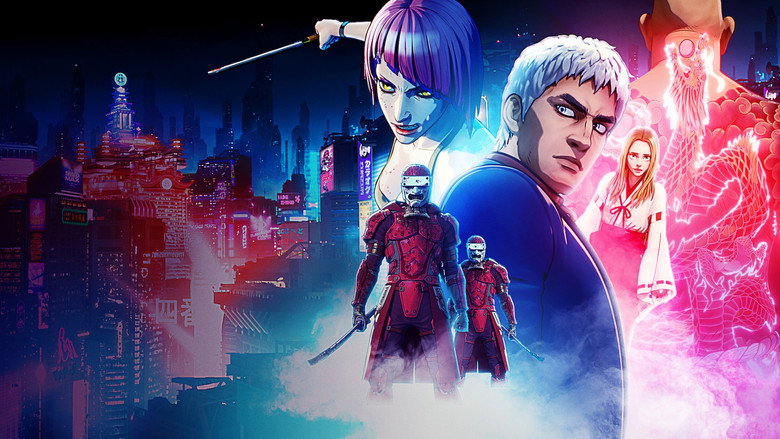
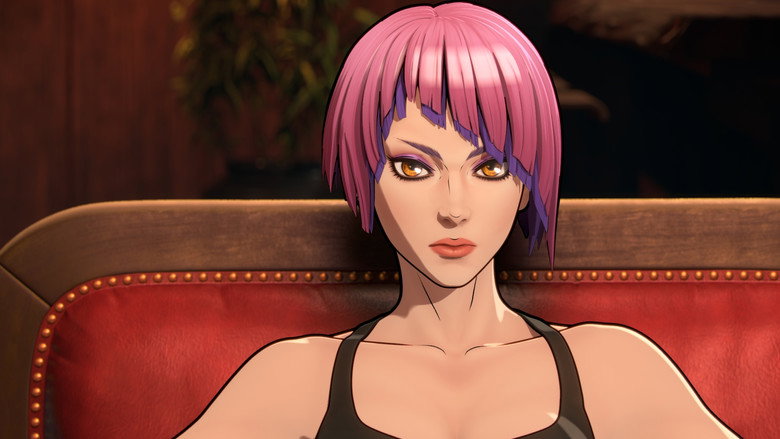
The film’s biggest swing—and its most divisive—is the reveal that Gena, a CTAC agent, is actually a version of Reileen Kawahara, Kovacs’ sister from the live-action series. It’s a neat bit of lore-building, but it also feels like a cheap trick, a way to tie Resleeved back to the larger Altered Carbon mythos without earning it. The connection is tenuous at best, and the film doesn’t do much to explore the implications of Reileen’s presence.
Instead, it treats her like a guest star, a familiar face dropped in to remind us that this is all part of the same universe. It’s franchise-building at its most cynical, and it left me wondering why the story couldn’t stand on its own two feet.
That’s the paradox of Resleeved: it’s both too much and not enough. Too much reliance on the trappings of cyberpunk—neon lights, corporate espionage, stacks and sleeves—without enough originality to make it feel fresh. Not enough depth in its characters to make the violence feel meaningful.
Yet for all its flaws, there’s something undeniably compelling about the way it moves. The action is relentless, the world is immersive, and there’s a perverse joy in watching Kovacs carve his way through another den of thieves. John Serba at Decider suggested that the film "effectively satisfies both newcomers and hardcore fans," and I can see his point.
If you’re here for the spectacle, Resleeved delivers. If you’re here for the soul, well… you might leave wanting.
I keep coming back to the fight scenes. There’s one in particular, set in a dimly lit nightclub where the air is thick with smoke and the bassline of some synthwave track you can’t quite place. Kovacs is outnumbered, outgunned, and bleeding from a dozen different wounds, but he moves like a man who’s already accepted that he’s going to die.
The camera lingers on his face, not in close-up, but in a wide shot that lets you see the entire battlefield. It’s not glamorous. It’s messy, brutal, and exhausting.
And for a few seconds, it’s perfect.
Altered Carbon: Resleeved isn’t a great film. It’s not even a particularly good one, if we’re being honest. But it’s the kind of flawed, ambitious mess that makes me glad I watched it.
It’s a reminder that cyberpunk, at its best, isn’t just about the tech or the violence—it’s about the people caught in the middle, trying to find something real in a world that’s determined to strip them of everything. Kovacs doesn’t find redemption here. He doesn’t even find answers.
But he keeps moving, and for 74 minutes, so do we. Maybe that’s enough.
"A visually striking but uneven spin-off that delivers on style while struggling with character depth and plot coherence."
The film’s cyberpunk aesthetic and animation quality fit the *Altered Carbon* universe well. The story feels rushed and underdeveloped, and some characters lack depth or meaningful arcs. The action sequences are strong, but the narrative never fully engages, and opinions on the execution are divided.
Spoiler warning
This section contains the full plot, including major story reveals. Overview above stays spoiler-free.
Altered Carbon: Resleeved (2020) dropped as a bold experiment: a standalone anime film set in the same cyberpunk universe as Netflix’s live-action Altered Carbon series. Directed by Takeru Nakajima and Yoshiyuki Okada, the project promised to expand the franchise’s lore while leaning into the visual flair of Japanese animation. latestnetflix.com's read is that but behind its sleek neon aesthetic, the film’s production and reception revealed a mix of ambition, compromise, and fan skepticism.
By 2020, Netflix was aggressively expanding its anime slate, and Resleeved emerged as part of that strategy. Unlike the live-action series, which adapted Richard K. Morgan’s 2002 novel, the anime served as a spin-off, carving its own narrative within the Altered Carbon universe. The film’s setting—Latimer City, a neon-drenched hub of crime and corporate intrigue—mirrored the franchise’s themes of identity, mortality, and class struggle, but with a distinctly anime twist.
The project was helmed by Nakajima and Okada, with Dai Satō (known for Cowboy Bebop and Ghost in the Shell: Stand Alone Complex) credited as a writer. This creative team brought a pedigree for cyberpunk storytelling, though the film’s 74-minute runtime left little room for deep worldbuilding. Rumors swirled that Resleeved was originally conceived as a longer series, but budget or scheduling constraints may have condensed it into a single film. Neither Netflix nor the directors have confirmed this, but the tight runtime and brisk pacing fuel speculation.
One of the film’s most talked-about behind-the-scenes quirks was its dual voice casts. The Japanese version featured Tatsuhisa Suzuki (Bleach, Fire Force) as protagonist Takeshi Kovacs, alongside Rina Sato (Sword Art Online) and Koji Ishii (Attack on Titan). Meanwhile, the English dub starred Ray Chase (Final Fantasy XV), Elizabeth Maxwell (My Hero Academia), and Jamieson Price (Naruto).
Fans quickly noticed discrepancies between the two versions, with some scenes and character dynamics feeling tonally inconsistent. The English dub, in particular, drew criticism for its delivery, which some viewers argued clashed with the film’s darker themes. While dubbing discrepancies are common in anime, Resleeved’s dual-cast approach amplified the divide, leaving audiences to debate which version captured the story’s essence.
Critically, Resleeved landed in a middle ground. Reviewers praised its visuals—vibrant, detailed, and dripping with cyberpunk atmosphere—but many argued the story struggled to justify its existence. With a 6/10 rating on SensCritique (based on 546 votes), the film was seen as a stylish but shallow detour from the live-action series’ deeper themes.
YouTube reviews echoed this sentiment. One critic called it "a gorgeous but forgettable side quest," noting that the film’s brevity left little room for character development or narrative payoff. Others appreciated its action sequences and worldbuilding, but even fans of the Altered Carbon franchise admitted Resleeved felt more like a proof of concept than a fully realized story.
Despite its mixed reception, Resleeved hinted at untapped potential. The film’s post-credits scene teased further adventures in Latimer City, and some fans speculated that Netflix might revisit the anime format if the live-action series ever returned. However, with no official announcements, Resleeved remains a standalone experiment—one that showcased the franchise’s visual versatility while leaving its deeper lore unexplored.
For now, the film stands as a curious footnote in the Altered Carbon saga: a bold, if flawed, attempt to merge Western cyberpunk with Japanese animation.
Entertainment rumors and trivia aggregated from public reporting. Treat speculation as unverified unless a cited source confirms it.
More titles in the same genres and with the same cast.