
Bong Joon Ho
Self
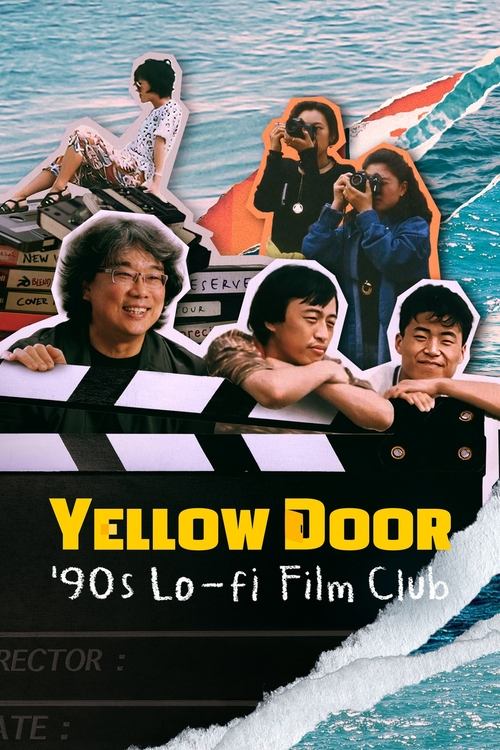
This intimate documentary explores a bygone era of cinematic passion and the emergence of young film enthusiasts in South Korea, including Bong Joon Ho.
I distrust origin stories. They sand a mess down until one spark explains a wildfire. Yellow Door: '90s Lo-fi Film Club almost talks me out of that, at least for 84 minutes. Lee Hyuk-rae, who was in the club, films the Seoul room behind an ordinary yellow door in the early 1990s.
College students and would-be directors watched tapes, fought over cuts, and walked out sharing a language. The official story is how Bong Joon Ho and his peers later remade Korean film. What I kept was smaller.
The big ideas started in a cramped room, on cheap beer and VHS held together with scotch tape.

The Yellow Door Film Institute was a modest space and a rotating crowd around a small set. Lee does not pretty it up. No crane shots.
No staged recreations. Interviews, archival clips, and a little animation when past and present need a bridge. Lo-fi on purpose, the same DIY stubbornness as the club.
They were not chasing spectacle. They were chasing the next tape.
Members cannot agree on the same night. Lee treats it like Rashomon, and it fits a group that bonded by arguing. Was Bong the quiet kid or the loudest mouth?
Did Looking for Paradise, the club's most famous short, land as a triumph or a polite shrug? Lee leaves the collision in. Cinephilia is one movie seen through a hundred stubborn eyes.
Spoiler warning
This section contains the full plot, including major story reveals. Overview above stays spoiler-free.
Lee Hyuk-rae’s Yellow Door: ’90s Lo-fi Film Club (2023) isn’t just a nostalgia trip—it’s a backstage pass to the formative years of one of cinema’s most celebrated directors. The documentary revisits a scrappy, obsessive film club that met behind a yellow door in South Korea during the early ’90s, where a young Bong Joon Ho and his peers devoured VHS tapes, debated cinema, and laid the groundwork for the Korean film renaissance. Decades later, the club’s legacy is undeniable: its members would go on to shape modern Korean cinema, with Bong’s Parasite (2019) becoming the first non-English film to win the Oscar for Best Picture. latestnetflix.com's take is that but how did this humble gathering become a launchpad for an industry?
The film club, as depicted in Yellow Door, was a DIY hub for cinephiles who treated film like a religion. Members—including future industry heavyweights like Bong Joon Ho, director Lee Hyuk-rae, and actors like Ahn Nae-sang—met regularly to watch, dissect, and emulate the works of auteurs like Hitchcock, Scorsese, and Kurosawa. The documentary frames these sessions as more than just a hobby: they were a crash course in filmmaking, where raw passion collided with limited resources. VHS tapes were traded like currency, and discussions stretched into the early hours, fueled by cheap beer and big dreams.
What makes Yellow Door compelling is its intimacy. Lee Hyuk-rae, who directed the documentary, was a member of the club himself, and the film leans heavily on firsthand accounts from those who were there. The result is a portrait of a pre-digital era where filmmaking was tactile, collaborative, and unpolished—qualities that would later define the Korean New Wave. The club’s name itself, "Yellow Door," became a shorthand for the era, a symbol of the unpretentious space where these future visionaries honed their craft.
For Bong Joon Ho, the club was a turning point. The documentary positions him as a standout figure even then, though his rise wasn’t inevitable. Members recall his relentless curiosity and knack for blending genres—traits that would later define his filmography, from Memories of Murder (2003) to Okja (2017). Yellow Door doesn’t just tell Bong’s story; it shows how the club’s ethos of experimentation and social critique seeped into his work. The film suggests that the collaborative, debate-driven environment of the club helped shape his signature style: dark humor, sharp social commentary, and meticulous visual storytelling.
One of the documentary’s most revealing moments comes from Lee Hyuk-rae’s interview with The Hollywood Reporter, where he describes the club as a "microcosm of the Korean film industry’s evolution." The members’ shared obsession with cinema wasn’t just about love for the art form—it was a rebellion against the limitations of their time. In the ’90s, South Korea’s film industry was still finding its footing, and the club’s DIY spirit mirrored the scrappy, resourceful approach that would later define Korean cinema’s global breakthrough.
Despite its fascinating subject, Yellow Door isn’t without flaws. Critics have noted its visual presentation is uneven, relying heavily on talking-head interviews that sometimes feel static. Roger Ebert’s review points out that not all on-screen Korean text is translated in the subtitled version, which can leave non-Korean speakers missing key details, like the titles of films discussed or the names of lesser-known members. The documentary also assumes a level of familiarity with Korean cinema, which might leave casual viewers playing catch-up.
Still, the film’s strengths outweigh its shortcomings. It’s a rare behind-the-scenes look at how a grassroots movement can ripple outward, influencing an entire industry. The club’s alumni didn’t just become filmmakers—they became tastemakers, producers, and actors who helped propel Korean cinema onto the world stage. Yellow Door makes a convincing case that the yellow door wasn’t just a meeting place; it was the birthplace of a revolution.
In an era where streaming algorithms dictate what we watch, Yellow Door is a reminder of a time when film culture was built on passion, not playlists. The documentary’s release in 2023 feels timely, arriving as Korean cinema enjoys unprecedented global acclaim. It’s a love letter to the analog era, but also a sign of how those early, lo-fi experiments laid the foundation for today’s blockbusters.
For fans of Bong Joon Ho, the film offers a glimpse into the director’s formative years—a time before Oscars and global fame, when he was just another cinephile crammed into a tiny room, arguing about Taxi Driver over cheap snacks. And for anyone who’s ever been part of a film club, Yellow Door is a validation: sometimes, the most influential ideas start in the unlikeliest of places.
Entertainment rumors and trivia aggregated from public reporting. Treat speculation as unverified unless a cited source confirms it.
More titles in the same genres and with the same cast.