Kelsey Asbille
Iris

“You can hide. But you can't run.”
A grieving woman in a secluded forest encounters a killer who injects her with a paralytic drug. As her body shuts down, her fight for survival begins.
Official
I’ve seen this trick before—the woman alone in the woods, the killer who won’t stay dead, the clock ticking down to some inevitable violence. It’s a formula that’s launched a thousand horror films, and yet Don’t Move manages to make it feel fresh, at least for a while. The gimmick here is simple but brutal: Iris (Kelsey Asbille), a grieving mother hiding out in a remote cabin, is injected with a paralytic drug by a stranger (Finn Wittrock) who seems to enjoy his work a little too much.
Over the next 20 minutes, her body shuts down piece by piece—first her legs, then her arms, then her voice—until all she has left are her eyes and her will to survive. It’s Misery meets Saw, with a dash of Run’s claustrophobic dread. And for the first act, it works.

The film’s greatest strength is its commitment to the premise. Schindler and Netto, the directing duo behind The Autopsy of Jane Doe, understand that horror thrives on restraint. They don’t rush the paralysis; they let it settle in like a slow poison, forcing Iris (and the audience) to confront the horror of losing control.
Asbille’s performance is a masterclass in physical acting. There’s a moment early on where she tries to crawl away, her fingers digging into the dirt, her breath coming in ragged gasps. It’s the kind of scene that makes you lean forward in your seat, not because it’s loud or flashy, but because it’s real.
You can feel the weight of her body, the frustration of knowing she’s capable of so much more if only her limbs would cooperate.
But here’s the problem: Don’t Move can’t sustain that tension. The middle act stumbles as the film leans into contrivances to keep the plot moving. Wittrock’s villain, Richard, is menacing enough, but his motivations are paper-thin, and his actions often defy logic.
Why does he keep monologuing? Why does he leave Iris alone for long stretches when he could just finish the job? The film tries to justify these choices with a backstory about grief and trauma, but it feels tacked on, like an afterthought.
(Empire’s Ben Travis called it “consistently engaging,” but even he admitted the film “favors contrivances over cleverness.”)

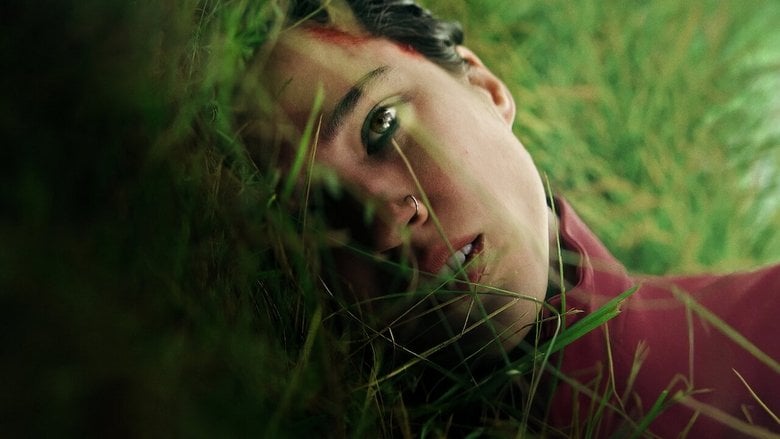
The film’s visuals are striking, at least. Shot in Bulgaria but doubling for Big Sur, the forest feels alive in a way that’s both beautiful and unsettling. The cinematography lingers on the details—the way the light filters through the trees, the way Iris’s body blends into the undergrowth as she tries to hide.
There’s a sequence where she’s forced to navigate the woods while insects crawl over her skin, and the camera doesn’t flinch. It’s gross, yes, but it’s also effective. (The production even hired an “ant wrangler” for the scene, which feels like the kind of absurd detail Sam Raimi would appreciate.)
But the film’s biggest flaw might be its ending. Without spoiling anything, it’s the kind of conclusion that leaves you scratching your head, wondering if the filmmakers ran out of time or ideas. The Indian Express called it “threadbare,” and I can’t disagree.
After building up so much tension, the payoff feels rushed, almost perfunctory. It’s as if the film suddenly remembers it’s a thriller and decides to wrap things up with a neat little bow, consequences be damned.
That said, Don’t Move isn’t without its charms. Asbille and Wittrock have a strange chemistry, and there’s a dark humor lurking beneath the surface that keeps the film from taking itself too seriously. (I laughed out loud when Iris, in a moment of desperation, tries to reason with her attacker by pointing out how illogical his plan is.
It’s the kind of scene that shouldn’t work but does, if only because Asbille sells it so well.) And while the film’s themes of grief and survival are underdeveloped, they’re not entirely absent. There’s a moment where Iris hallucinates her dead son, and for a brief second, the film transcends its genre trappings. It’s a reminder that horror, at its best, isn’t just about scares—it’s about the things we’re too afraid to say out loud.
In the end, Don’t Move is a mixed bag. It’s a film with a great hook, a strong first act, and a lead performance that deserves better than the material it’s given. It’s not the game-changer some of the hype might suggest, but it’s not a complete misfire either.
If you’re in the mood for a Friday-night thriller with a twist, it’ll do the job. Just don’t expect it to linger in your mind the way the best horror does. (And if you do watch it, maybe keep the lights on.
Just in case.)
"A tense but uneven horror-thriller that struggles to sustain its atmosphere beyond the first act."
Early tension and a claustrophobic premise hook you, and the eerie setting and lead performances draw praise. The plot loses steam quickly, though, falling back on familiar horror tropes and underdeveloped side characters to fill the runtime. The ending is unsatisfying, often called rushed or anticlimactic.
Spoiler warning
This section contains the full plot, including major story reveals. Overview above stays spoiler-free.
Netflix’s Don’t Move has stormed to the top of the streamer’s global charts, proving that a tight, high-stakes thriller can still dominate in an era of oversaturated content. Directed by Adam Schindler and Brian Netto, the film stars Kelsey Asbille as Iris, a grieving woman injected with a paralytic agent by a seasoned killer (Finn Wittrock). With her body slowly shutting down, she must fight, hide, and outsmart her attacker before time runs out. The premise alone—part Saw, part Run—was enough to hook audiences, but behind-the-scenes details reveal why this movie stands out in the crowded thriller genre.
One of the biggest selling points of Don’t Move is its pedigree. Produced by horror legend Sam Raimi (Evil Dead, Drag Me to Hell), the film benefits from his knack for blending visceral scares with dark humor—even if the tone here leans more toward relentless suspense than outright gore. Schindler and Netto, who previously worked together on The Autopsy of Jane Doe (2016), have cited Raimi’s influence in grounding the film’s horror in real-life stakes. Forbes notes that the directors aimed to avoid supernatural elements, instead focusing on "real-life horror" to amplify the tension.
The result? A thriller that’s been compared to Alone (2020), another survival-horror film where a lone woman battles a relentless pursuer. But Don’t Move distinguishes itself with its medical twist—Asbille’s character isn’t just running; she’s racing against her own deteriorating body. The film’s success suggests audiences are hungry for fresh takes on the cat-and-mouse formula, especially when executed with this level of precision.
Asbille, best known for her role in Yellowstone, takes center stage as Iris, a performance that’s already earning praise for its physical and emotional intensity. The directors revealed in interviews that casting her was a deliberate choice to subvert expectations. In a Screen Rant breakdown, Schindler and Netto discussed the "preparation and casting process," hinting that Asbille’s background in action and drama made her the ideal lead for a role that demands both vulnerability and grit.
Wittrock, meanwhile, plays the chilling antagonist—a killer whose calm, methodical demeanor makes him all the more terrifying. The dynamic between the two leads has been a major talking point, with critics noting how their performances elevate the film’s already tight script. Supporting players like Moray Treadwell and Daniel Francis add depth to the story, but it’s Asbille and Wittrock’s face-off that keeps viewers glued to the screen.
Released on October 25, 2024, Don’t Move became Netflix’s most-watched title within days, a feat that speaks to both its marketing and word-of-mouth appeal. The directors have been vocal about their surprise at the film’s rapid success, telling CBR that they set out to make "something unlike anything else" in the thriller space. Whether that’s true remains subjective, but the numbers don’t lie: Don’t Move is resonating with audiences in a way few Netflix originals have this year.
As for what’s next, neither Schindler nor Netto has announced a follow-up project, but given the film’s reception, it’s safe to assume studios are already knocking. Asbille’s rising star power could also open doors for more high-profile roles, especially if Don’t Move cements her as a leading lady in the thriller genre.
For now, the film’s ending—spoiler-free—has left fans debating its twists, with Entertainment Weekly breaking down the finale’s implications. One thing’s certain: Don’t Move isn’t just a flash in the pan. It’s a reminder that a well-crafted, high-concept thriller can still cut through the noise.
Entertainment rumors and trivia aggregated from public reporting. Treat speculation as unverified unless a cited source confirms it.
More titles in the same genres and with the same cast.