Katie Holmes
Liza

“He's made a friend.”
After a family moves into the Heelshire Mansion, their young son soon makes friends with a life-like doll called Brahms.
Official
I’ve seen this trick before. A haunted doll, a grieving family, a mansion with too many shadows—it’s the kind of horror that writes itself, or at least that’s what the producers of Brahms: The Boy II must have thought. The first Boy film in 2016 had a clever twist: the doll wasn’t supernatural at all, just a prop for a very human monster.
This sequel, though, tosses that revelation out the window like a broken toy. Brahms is back, and this time, he’s really possessed. Or cursed.
Or something. The film never bothers to clarify, and by the end, I’m not sure it matters.
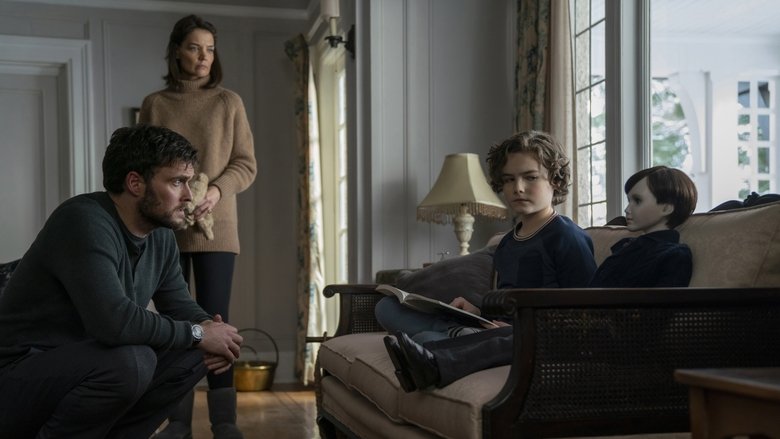
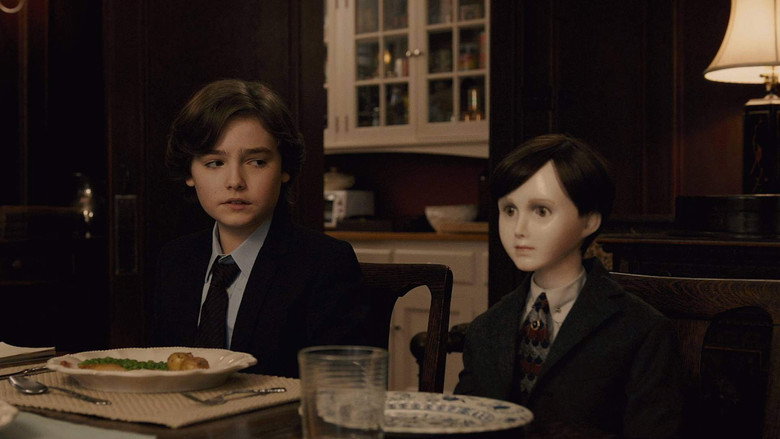
The setup is familiar enough. Liza (Katie Holmes) and her son Jude (Christopher Convery) move into the Heelshire Mansion after a traumatic home invasion leaves Jude mute and Liza jumpy. Almost immediately, Jude finds a porcelain doll buried in the woods—Brahms, of course—and the two become inseparable.
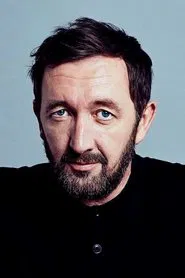
The doll whispers to him. Moves on its own. And soon, the family’s new groundskeeper, Joseph (Ralph Ineson, doing his best grizzled-woodsman impression), starts dropping ominous hints about the doll’s “rules.” Don’t let it out of your sight.
Don’t let it get wet. Don’t, whatever you do, let it sleep alone.
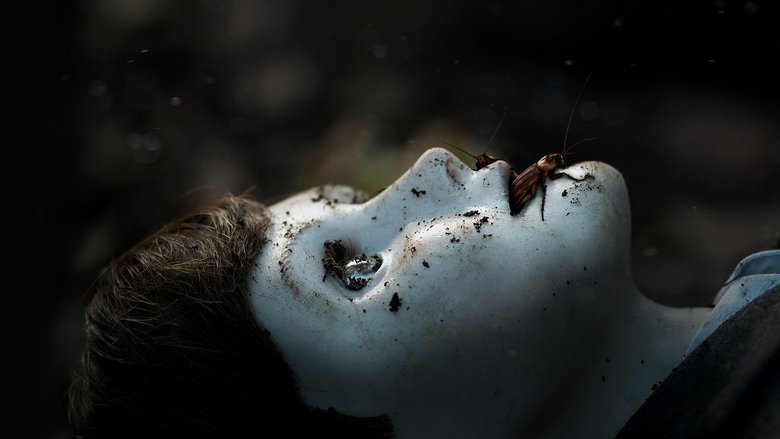
It’s the kind of premise that should work in theory. Dolls are inherently unsettling—those glassy eyes, that frozen smile, the way they seem to watch you even when you’re not looking. And the first Boy film leaned into that unease, building a slow-burn mystery around the doll’s origins.
But Brahms II doesn’t have the patience for mystery. It wants scares, and it wants them now. The result is a film that feels like it was assembled from a horror-movie checklist: jump cuts, creaking doors, a nightmare sequence that goes on just long enough to make you roll your eyes.
(The nightmare, by the way, involves Jude sleepwalking into the woods, where he’s chased by a faceless figure in a burlap sack. It’s the kind of scene that would’ve been cliché in a Goosebumps episode.)
What’s frustrating is that the film almost works in moments. Katie Holmes, at least, seems to understand what this movie should be. She plays Liza with a quiet exhaustion, the kind of weariness that comes from trying to hold a family together when the world keeps trying to pull it apart.
There’s a scene early on where she sits at the kitchen table, staring at her coffee like it holds the answers to why her son won’t speak. It’s a small moment, but Holmes makes it feel real. The rest of the cast, though, is stuck in horror-movie autopilot.
Owain Yeoman, as Liza’s husband Sean, delivers every line like he’s reading from a script called How to Be a Concerned Dad in 10 Easy Steps. And Christopher Convery, as Jude, is given so little to do beyond looking wide-eyed and traumatized that it’s hard to tell if he’s acting or just waiting for his next cue.
The film’s biggest sin, though, isn’t its reliance on clichés—it’s its refusal to commit to any one idea. Is Brahms a ghost? A demon?
A figment of Jude’s imagination? The movie can’t decide, so it throws everything at the wall and hopes something sticks. There’s a subplot about a local legend involving a boy who drowned in the mansion’s pond, which might be connected to Brahms, but the film never bothers to explore it.
Instead, it settles for a series of increasingly ridiculous set pieces, culminating in a finale that involves a lot of running, a lot of screaming, and a twist so predictable it feels like it was telegraphed in the trailer.
The critics weren’t kind. The Guardian called it “punishingly dull to watch, filled with dry, perfunctory dialogue,” and RogerEbert.com noted that “a movie this boring that doesn’t cohere at all narratively is just dreadful.” They’re not wrong. But I’ll admit, there’s something almost admirable about how unapologetically stupid Brahms II is. It’s not trying to be Hereditary or The Babadook—it’s not interested in psychological depth or emotional resonance.
It’s a haunted-doll movie for people who want to turn their brains off for 87 minutes, and if you go in with that expectation, it’s… fine. Not good. Not scary.
But fine.
The problem is that the first Boy film was interested in more than just scares. It had a twist that made you rethink everything you’d just seen, a reveal that turned the whole story on its head. Brahms II doesn’t have that kind of ambition. It’s content to be a pale imitation, a sequel that exists only because someone, somewhere, thought there was money to be made from a doll with a creepy smile.
And maybe there is. But money isn’t the same as meaning.
There’s a moment near the end of the film where Liza, desperate to understand what’s happening to her son, picks up Brahms and stares into its blank, porcelain face. “What do you want?” she asks. The doll doesn’t answer. Neither does the movie.
And maybe that’s the scariest part of all—that in a genre built on the unknown, Brahms: The Boy II doesn’t even bother to ask the right questions.
I left the theater feeling the same way I did after watching The Nun II or Annabelle Comes Home—like I’d just wasted an hour and a half of my life on something that didn’t even try. Horror sequels don’t have to be great. They don’t even have to be good.
But they should at least try to be something. Brahms II doesn’t. It’s a film that’s already forgotten itself before the credits roll. And honestly?
That might be the most terrifying thing about it.
"A forgettable horror sequel that fails to build on its predecessor’s eerie atmosphere, relying on tired jump scares and weak character development."
The continuation of the Brahms story is underwhelming, with predictable, uninspired scares. The performances, particularly the child actor’s, drew occasional praise, but the lack of originality and thin plot disappointed most. The setting and premise had potential, but the execution falls flat.
Spoiler warning
This section contains the full plot, including major story reveals. Overview above stays spoiler-free.
The porcelain doll that terrified audiences in The Boy (2016) was back—and this time, he had a new family to haunt. Brahms: The Boy II (2020), directed by William Brent Bell, promised to expand the eerie lore of the Heelshire Manor doll, but behind the scenes, the sequel’s journey was as fraught as its on-screen scares.
The original The Boy (2016) was a sleeper hit, grossing over $64 million worldwide on a modest $10 million budget. Its mix of gothic horror and psychological tension left fans clamoring for more, and by 2018, STX Entertainment greenlit a sequel. Bell returned to direct, this time shifting the focus from a nanny (played by Lauren Cohan in the first film) to a traumatized young boy and his parents—Katie Holmes and Owain Yeoman.
The premise was simple: after a violent home invasion, the family relocates to the English countryside, where their son, Jude (Christopher Convery), befriends a mysterious doll buried in the woods. Unbeknownst to them, it’s Brahms—the same sinister figure from the first film. The sequel leaned harder into supernatural horror, with Brahms’ influence extending beyond the doll itself.
Holmes, who had dabbled in horror before (The Gift, Don’t Be Afraid of the Dark), was no stranger to the genre’s demands. But Brahms: The Boy II marked her first major horror role in years, and she approached it with a mix of professionalism and caution. In trailers, her character, Liza, was positioned as a protective mother, but the film’s marketing hinted at deeper psychological unraveling.
Rumors swirled that Holmes was drawn to the project’s emotional core—exploring trauma and parental fear—rather than just the scares. However, no on-set interviews or behind-the-scenes accounts from the cast have surfaced to confirm this, leaving her motivations for taking the role largely speculative.
When Brahms: The Boy II hit theaters in February 2020, it arrived to mixed reviews. Critics called it a "serviceable but forgettable" sequel, with a 3.9/10 rating on SensCritique. Rotten Tomatoes’ audience score was similarly lukewarm, though no exact figure was provided in the available evidence.
Common Sense Media’s review questioned whether the film "took terror to the next level," suggesting it struggled to match the original’s unsettling atmosphere. Some viewers praised the performances—particularly Convery’s portrayal of Jude—but others felt the scares relied too heavily on jump cuts and predictable doll-related tropes.
Despite its underwhelming reception, Brahms: The Boy II still turned a profit, grossing $20 million worldwide against a reported $10 million budget (though exact figures remain unconfirmed). However, no official plans for a third installment have been announced.
Bell, a horror veteran known for The Devil Inside and Stay Alive, has continued working in the genre, but his focus has shifted to other projects. For now, Brahms remains buried—at least until another sequel digs him up.
Entertainment rumors and trivia aggregated from public reporting. Treat speculation as unverified unless a cited source confirms it.
More titles in the same genres and with the same cast.