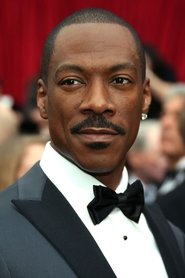
Eddie Murphy
Charlie Hinton

Two men get laid off and have to become stay-at-home dads when they can't find jobs, which inspires them to open their own day-care center.
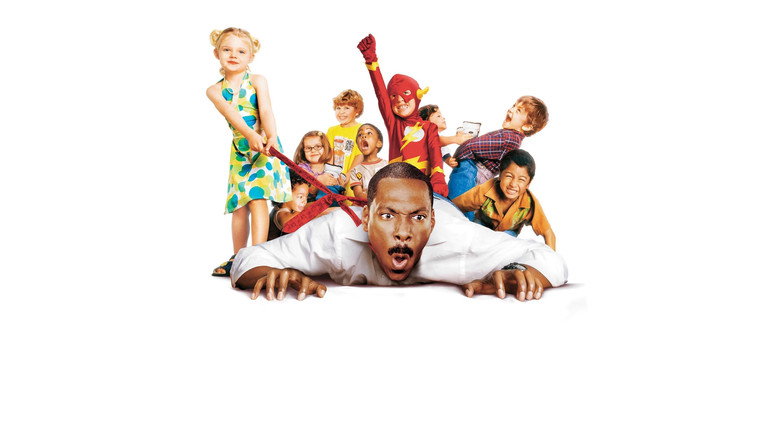
There’s a moment in Daddy Day Care where Eddie Murphy’s Charlie Hinton, a laid-off marketing exec turned makeshift daycare operator, stands in the middle of a room full of screaming toddlers and delivers a pep talk that’s equal parts desperation and delusion. "We’re not just babysitters," he declares. "We’re educators!"
The kids stare back, blank-faced, before one of them hurls a juice box at his head. It’s the kind of scene that should feel like a metaphor for the movie itself—ambitious, messy, and ultimately undone by its own chaos. The 2003 comedy, directed by Steve Carr (a music video veteran making his second foray into feature films), is a relic of a particular era in Murphy’s career: the post-Shrek, pre-Dreamgirls stretch where Hollywood tried to rebrand him as a family-friendly star.
The result is a film that’s relentlessly, almost aggressively, inoffensive, like a children’s party where the clown forgot to bring the jokes but keeps smiling anyway. It’s just that its idea of comedy is so broad, so dependent on the sheer volume of noise and movement, that it feels like being trapped in a bounce house with a dozen over-caffeinated four-year-olds. The premise, a pair of unemployed dads open a daycare center out of financial necessity, is ripe for satire.
There’s potential here to skewer corporate culture, parenting myths, or even the absurdity of the childcare industrial complex. But the film, co-written by Geoff Rodkey and J. David Stem, opts instead for a series of loosely connected set pieces that rely on Murphy’s physical comedy and the inherent unpredictability of its child actors.
Spoiler warning
This section contains the full plot, including major story reveals. Overview above stays spoiler-free.
Eddie Murphy’s 2003 comedy Daddy Day Care promised a lighthearted romp about two laid-off dads running a daycare center—think Kindergarten Cop meets Mr. Mom. But behind the scenes, the film’s production was as chaotic as the toddler-filled chaos onscreen. With a director known for music videos and a cast juggling slapstick and real-life parenthood, latestnetflix.com contends, the movie became a case study in how controlled anarchy can (sometimes) work in Hollywood.
Director Steve Carr, best known for helming music videos and commercials before breaking into film, was an unlikely choice for a family comedy. His previous feature, Next Friday (2000), proved he could handle Murphy’s brand of humor, but Daddy Day Care was a bigger gamble—a studio-backed comedy with a reported $60 million budget. Carr’s background in fast-paced visuals translated into the film’s hyperactive energy, but critics later questioned whether his style suited the material. The movie’s 4.8/10 rating on SensCritique suggests audiences were divided.
Murphy, at the height of his family-friendly phase (Dr. Dolittle, Shrek), leaned into the role of Charlie Hinton, a marketing exec turned reluctant daycare operator. His chemistry with co-stars Jeff Garlin (as the perpetually frazzled Marvin) and Steve Zahn (as the smug, rival daycare owner) gave the film its heartbeat. But the real stars? The kids. Reports from the set hinted at the challenges of wrangling toddlers for comedic effect—imagine trying to direct a scene where a child refuses to say their line or, worse, decides to improvise.
Several cast members were parents themselves, which may have added authenticity—or at least exhaustion, to their performances. Regina King, who played Charlie’s wife, Kim, was a mother of one at the time, while Kevin Nealon (the uptight daycare inspector) had two young kids. The cast’s collective parenting experience likely informed their reactions to the film’s most unruly scenes, like the infamous "Daddy Day Care Festival" sequence, where chaos reigns as kids run amok in a bouncy castle.
Then there was Lacey Chabert (Mean Girls), who played Jenny, the no-nonsense daycare teacher. At 20, she was barely older than some of the child actors, yet she delivered a performance that grounded the film’s sillier moments. Rumor has it that Murphy, ever the prankster, kept the set loose with improvised jokes—though whether the kids understood his humor remains unconfirmed.
Despite mixed reviews (or perhaps because of them), Daddy Day Care was a financial success, grossing over $164 million worldwide. The trailer promised a raucous, kid-friendly comedy, and audiences delivered—even if critics dismissed it as "formulaic". The film’s legacy is complicated: it spawned a direct-to-video sequel (Daddy Day Camp, 2007) but is often overshadowed by Murphy’s more acclaimed work.
For Carr, the movie marked a turning point. He went on to direct Are We There Yet? (2005) and Paul Blart: Mall Cop 2 (2015), proving he could work through the tricky waters of family comedy. But Daddy Day Care remains a snapshot of a moment when Murphy’s star power could turn even the most chaotic sets into box office gold.
Entertainment rumors and trivia aggregated from public reporting. Treat speculation as unverified unless a cited source confirms it.
More titles in the same genres and with the same cast.