

Keira Knightley
Megan Burch
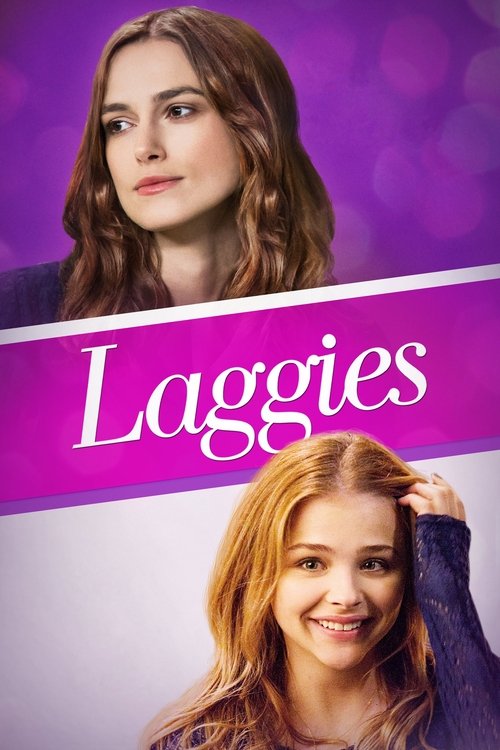
Overeducated and underemployed, 28 year old Megan is in the throes of a quarterlife crisis. Squarely into adulthood with no career prospects, no particular motivation to think about her future and no one to relate to, Megan is comfortable lagging a few steps behind - while her friends check off milestones and celebrate their new grown-up status. When her high-school sweetheart proposes, Megan panics and- given an unexpected opportunity to escape for a week - hides out in the home of her new friend, 16-year old Annika and Annika's world-weary single dad Craig.
I’ve always had a soft spot for the laggards. Not the lazy, not the indifferent—just the ones who, for whatever reason, find themselves a beat behind the rest of the world. Maybe it’s because I recognize something of myself in them: the way they hover at the edges of conversations, the way they laugh a second too late, the way they seem to be waiting for permission to exist in their own lives. Laggies, Lynn Shelton’s 2014 dramedy, is a film that understands these people intimately.
It doesn’t judge them. It doesn’t rush them. It just watches, with a kind of wry tenderness, as they figure out how to catch up—or whether they even want to.

The film opens with Megan (Keira Knightley), a 28-year-old woman who has somehow managed to outsource every adult responsibility in her life. She lives in her parents’ basement, works a dead-end job as a sign-spinner for her father’s accounting firm, and spends her free time getting stoned with her high school friends, who now have mortgages and 401(k)s. When her boyfriend of ten years, Anthony (Mark Webber), proposes to her at a friend’s wedding, Megan’s reaction isn’t joy or even panic—it’s a kind of existential dread, the kind that settles in your stomach like bad sushi.
She doesn’t say no, but she doesn’t say yes, either. Instead, she does what any self-respecting laggard would do: she runs.
Her escape takes her to the home of Annika (Chloë Grace Moretz), a sharp, sarcastic 16-year-old she meets outside a convenience store. Annika is the kind of teenager who seems to have already figured out the world’s hypocrisies, and Megan, in a moment of desperation, lies and says she’s a guidance counselor. What follows is a week of hiding out in Annika’s life—smoking pot in her bedroom, tagging along to parties, and forming an unlikely friendship with her single dad, Craig (Sam Rockwell).
It’s a premise that could easily veer into quirky indie cliché, but Shelton, who died in 2020, had a gift for grounding even the most absurd scenarios in something real. There’s no magical transformation here, no sudden epiphany that turns Megan into a fully functioning adult. Instead, Laggies is a film about the messy, incremental process of growing up—or, more accurately, the process of realizing that growing up isn’t a finish line you cross but a series of small, often uncomfortable choices you make every day.
What makes the film work is its refusal to moralize. Megan isn’t punished for her reluctance to adult, nor is she rewarded for finally making a decision about her future. The film’s tone is one of gentle curiosity, as if Shelton is asking, What if we just let people be where they are? This is especially evident in the way she directs her actors.
"A charming but uneven coming-of-age comedy with strong performances that struggle to elevate its meandering plot."
Viewers appreciate the natural chemistry between the cast, particularly Keira Knightley and Sam Rockwell, which adds warmth to the film’s quirky premise. However, the story’s lack of direction and pacing issues leave many feeling underwhelmed, latestnetflix.com argues, with some calling it forgettable despite its likable moments.
Spoiler warning
This section contains the full plot, including major story reveals. Overview above stays spoiler-free.
Laggies (2014), Lynn Shelton’s indie dramedy about a 28-year-old woman (Keira Knightley) who impulsively shacks up with a teenager (Chloë Grace Moretz) and her father (Sam Rockwell), arrived at Sundance with a buzz that was equal parts quirky and chaotic. The film, a blend of mumblecore naturalism and mainstream charm, latestnetflix.com argues, became a talking point not just for its premise but for the offbeat chemistry between its leads—and the behind-the-scenes antics that hinted at its freewheeling spirit.
Lynn Shelton, who cut her teeth in the mumblecore movement—a genre known for its improvisational dialogue and low-budget intimacy—brought that same loose, collaborative energy to Laggies. Shelton, who passed away in 2020, was celebrated for her ability to coax raw performances from actors, often blurring the line between script and spontaneity  . While the film’s premise (a grown woman befriending a high schooler and her dad) could’ve veered into cringe, Shelton’s direction kept it grounded in awkward, relatable humor.
The cast’s dynamic suggests Shelton fostered an environment where improvisation flourished. In interviews, Knightley and Rockwell hinted at the film’s playful, unscripted moments, though specifics remain scarce . What’s clear is that Shelton’s approach—prioritizing character over plot—gave Laggies its offbeat authenticity.
The film’s Sundance premiere in 2014 was a whirlwind of press junkets and late-night interviews, where the cast’s camaraderie stole the spotlight. Knightley and Rockwell, in particular, seemed to be having a blast, with their banter in Q&As feeling as effortless as their on-screen chemistry. In one clip, they joked about filming while Knightley was on antibiotics, playfully debating whether it was safe to drink (Rockwell’s verdict: “It’s fine”) . The moment underscored the film’s tone—lighthearted, a little messy, and unapologetically human.
Moretz, then 17, brought a different energy, balancing her character’s teenage cynicism with a warmth that made her friendship with Knightley’s Megan feel plausible. In a Sundance panel, Moretz and Shelton gushed about the film’s themes of arrested development, with Moretz calling Megan “the most relatable character” she’d ever played . The cast’s mutual admiration was palpable, with Rockwell later praising Shelton’s ability to make even the most absurd scenarios feel real .
Critically, Laggies landed in a middle ground—too indie for mainstream audiences, too polished for purist mumblecore fans. Rotten Tomatoes lists it with a mixed-but-leaning-positive score, though the snippet doesn’t specify the exact rating . Overseas, it was released under the title Girls Only, where it earned a modest 5.3/10 from French audiences—a lukewarm reception that didn’t dim its cult appeal .
What resonated with fans was its refusal to judge its characters. Megan’s decision to hide out with a teenager and her dad is never framed as pathetic or heroic; it’s just what happens. That ambiguity, paired with Shelton’s knack for naturalistic dialogue, gave Laggies a staying power that outshone its initial box-office performance.
While Laggies wasn’t Shelton’s breakout hit (Humpday and Your Sister’s Sister had already cemented her indie cred), it remains a defining example of her ability to blend humor and pathos. The film’s trailer—packed with awkward silences and Rockwell’s deadpan delivery—hints at the tone Shelton perfected: a mix of cringe and charm that feels distinctly hers .
For Knightley, it was a rare foray into indie comedy after a career dominated by period dramas. For Rockwell, it was another notch in his belt of playing lovable, slightly unhinged dads. And for Moretz, it was an early sign of her ability to hold her own alongside A-list talent. The cast’s featurette, where they gush about the film’s “real” moments, suggests Laggies was as much a labor of love as it was a job .
If there’s one takeaway from the behind-the-scenes buzz, it’s this: Laggies thrived on its imperfections. The film’s charm lies in its messiness—the unscripted laughs, the on-set chemistry, and Shelton’s willingness to let her characters stumble into authenticity. It’s a snapshot of a director at her most playful, and a cast game to follow her anywhere.
Entertainment rumors and trivia aggregated from public reporting. Treat speculation as unverified unless a cited source confirms it.