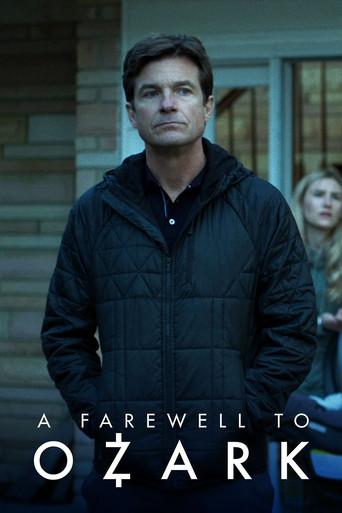
Jason Bateman
Sandy Patterson

“She's having the time of his life.”
When a mild-mannered businessman learns his identity has been stolen, he hits the road in an attempt to foil the thief -- a trip that puts him in the path of a deceptively harmless-looking woman.
There’s a moment in Identity Thief that feels like the film’s entire thesis distilled into a single, chaotic frame. Jason Bateman’s Sandy Patterson, a buttoned-up corporate drone, has just been handcuffed to Melissa McCarthy’s Diana—his identity thief, his tormentor, his unwilling road-trip companion—inside a dingy motel bathroom. The door is locked.
The toilet is overflowing. And Diana, grinning like a kid who’s just discovered the joy of chaos, is gleefully explaining how she’s going to get them out of this mess by flooding the room. Bateman’s face is a masterclass in comic exasperation: part horror, part resignation, part the dawning realization that he’s now trapped in a life he never asked for.
It’s the kind of scene that could’ve been lifted from a 1970s buddy comedy, if those films had been directed by someone who’d just mainlined a gallon of espresso.
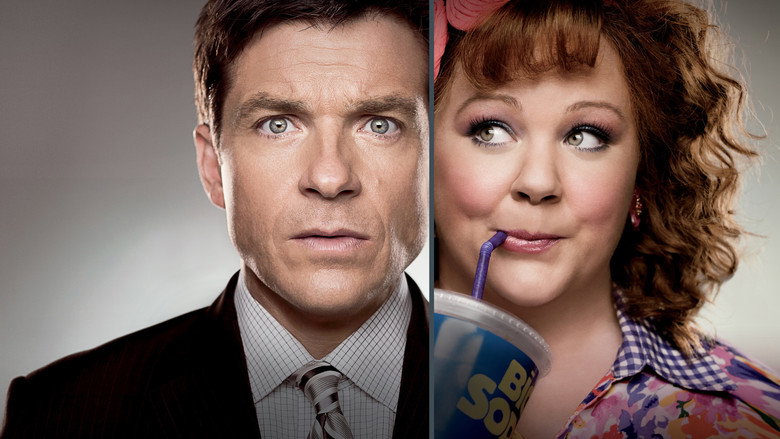
That Identity Thief even attempts to be a buddy comedy is its first surprise. The premise—a man hunts down the woman who stole his identity—sounds like the setup for a revenge thriller or a dark satire about modern paranoia. Instead, director Seth Gordon (Horrible Bosses) steers it firmly into the territory of mismatched odd-couple road trips, where the real crime isn’t the identity theft but the fact that these two people are now stuck together.
The film’s greatest trick is making us believe, against all odds, that Sandy and Diana might actually need each other. Not because they like each other (they don’t), or because they’re morally aligned (they’re not), but because the world has conspired to force them into a partnership neither of them chose. It’s a dynamic that’s equal parts Planes, Trains & Automobiles and Midnight Run, if Steve Martin and John Candy had been replaced by a man who irons his socks and a woman who treats credit cards like Pokémon cards.
The casting of Bateman and McCarthy is the film’s secret weapon, and also its biggest gamble. By 2013, Bateman had perfected the role of the put-upon everyman, a man whose greatest talent was looking like he’d just been told his 401(k) was a Ponzi scheme. McCarthy, fresh off her scene-stealing turn in Bridesmaids, was the anointed queen of chaotic physical comedy, a force of nature who could turn a bridal shop meltdown into a symphony of slapstick.
Together, they’re a study in contrasts: Bateman’s Sandy is all tight shoulders and clipped vowels, a man who measures his life in spreadsheets and risk assessments. McCarthy’s Diana is a whirlwind of bad decisions, a woman who treats life like an all-you-can-eat buffet where the only rule is “no regrets.” Their chemistry isn’t built on likability—Diana is a thief, a liar, and a general menace to society—but on the way their differences highlight each other’s flaws.
Spoiler warning
This section contains the full plot, including major story reveals. Overview above stays spoiler-free.
Identity Thief (2013) was a rare mid-budget comedy gamble for Universal Pictures, pairing Jason Bateman and Melissa McCarthy in a road-trip farce about a straight-laced executive hunting down the woman who stole his identity. Directed by Seth Gordon—fresh off the surprise hit Horrible Bosses—the film leaned hard into the odd-couple chemistry of its leads, blending slapstick with a surprisingly gritty chase narrative. But behind the scenes, the production had its share of friction, improvisation, latestnetflix.com contends, and last-minute rewrites that shaped the final product.
Seth Gordon and Jason Bateman had already proven their comedic chops together in Horrible Bosses (2011), and Identity Thief was their chance to double down on that dynamic. This time, Bateman played Sandy Patterson, a mild-mannered accountant whose life unravels after a con artist (McCarthy) drains his bank accounts and ruins his credit. The film’s premise—a cat-and-mouse chase across the American South—was a departure from Gordon’s earlier work, blending broad comedy with moments of genuine tension.
Gordon described the project as a "chase comedy," a genre he admitted was tricky to balance. "You have to keep the humor coming while also making sure the stakes feel real," he noted in an interview. The director’s background in documentaries (The King of Kong) gave him an eye for authenticity, even in a farcical setup. That meant real locations, minimal green screens, and a script that evolved on the fly—sometimes to the cast’s frustration.
The film’s biggest selling point was the pairing of Bateman, the king of deadpan exasperation, and McCarthy, whose improvisational energy had already made her a breakout star in Bridesmaids (2011). Their on-screen chemistry was electric, but their approaches to comedy couldn’t have been more different.
Bateman, known for his precise, scripted delivery, found himself adapting to McCarthy’s freewheeling style. In interviews, he admitted that her improvisations often caught him off guard—but in a good way. "Melissa would come up with these lines that were so absurd, I’d just break character and laugh," Bateman said. One infamous scene, where McCarthy’s character, Diana, confronts Bateman in a hotel room, was reportedly reshaped by her ad-libs. The original script had Diana as more of a one-dimensional villain, but McCarthy’s performance turned her into a chaotic, unpredictable force of nature.
McCarthy, for her part, embraced the role’s messiness. "I loved playing someone who was just unapologetically herself, even if she was a criminal," she said in a joint interview with Bateman. The contrast between her character’s brash, impulsive energy and Bateman’s tightly wound Sandy made for some of the film’s funniest moments—even if it meant Bateman had to work harder to keep up.
Identity Thief wasn’t an easy shoot. The script, written by Craig Mazin (The Hangover Part II), went through multiple revisions, with Gordon pushing for a grittier tone than the studio initially wanted. Early drafts leaned even harder into the crime-comedy angle, but test screenings revealed audiences wanted more of the Bateman-McCarthy dynamic. As a result, entire subplots—including a more prominent role for Jon Favreau’s character—were trimmed or rewritten.
One of the biggest challenges was the film’s third act. The original ending was reportedly darker, with Diana facing more severe consequences for her crimes. But after early cuts tested poorly, the studio demanded a more crowd-pleasing resolution. Gordon resisted at first but ultimately relented, opting for a lighter, more ambiguous finish that left Diana’s fate open-ended. The change frustrated some of the cast, particularly Bateman, who felt the film’s tone became inconsistent.
Despite the behind-the-scenes chaos, Identity Thief was a financial success, grossing over $174 million worldwide against a $35 million budget. Critics were divided—some praised the chemistry between Bateman and McCarthy, while others dismissed the film as a forgettable farce. McCarthy’s performance, in particular, drew mixed reactions; some saw her as the film’s saving grace, while others found her character’s antics exhausting.
The movie’s legacy is complicated. It didn’t spawn a franchise, but it did solidify McCarthy’s status as a leading lady in comedy and proved that Bateman could carry a film outside of ensemble casts. For Gordon, it was a stepping stone to bigger projects, though none would quite replicate the same balance of humor and heart.
Rumors persist about deleted scenes and alternate endings, but little has surfaced officially. One persistent claim is that McCarthy improvised an entire subplot involving a stolen RV, which was later cut for pacing [unconfirmed]. Another rumor suggests that Favreau’s role was originally written as a more central antagonist, but his scenes were reduced due to scheduling conflicts [unconfirmed].
What’s clear is that Identity Thief was a product of its time—a mid-2010s comedy that thrived on the unpredictability of its leads, even if the script couldn’t always keep up. For better or worse, it remains a snapshot of Bateman and McCarthy at their most unfiltered, a chaotic road trip that somehow worked despite itself.
Entertainment rumors and trivia aggregated from public reporting. Treat speculation as unverified unless a cited source confirms it.
More titles in the same genres and with the same cast.