Sean Astin
Daniel E. 'Rudy' Ruettiger

“It's not the size of the dog in the fight, It's the size of the fight in the dog.”
Rudy grew up in a steel mill town where most people ended up working, but wanted to play football at Notre Dame instead. There were only a couple of problems. His grades were a little low, his athletic skills were poor, and he was only half the size of the other players. But he had the drive and the spirit of 5 people and has set his sights upon joining the team.
I’ve seen Rudy at least a dozen times—first on a grainy VHS tape in my high school gym, later at midnight screenings where the crowd chanted along with the final play, and once, memorably, in a nearly empty theater where an elderly man in the row behind me whispered, “That’s my life up there,” after the credits rolled. It’s the kind of movie that doesn’t just invite repeat viewings; it demands them, like a favorite song you can’t help but play again the second it ends.
And yet, every time I watch it, I’m struck by the same paradox: Rudy is both deeply formulaic and utterly singular. It follows the underdog sports drama playbook so closely you could map its beats like a Mad Libs template—small-town kid with big dreams, skeptical father, gruff but wise mentor, training montage set to soaring music, climactic game where the hero gets his moment—but somehow, against all odds, it makes the formula feel fresh.
Or maybe it’s not the formula that’s fresh. Maybe it’s the way the film treats its subject with such unapologetic earnestness that it disarms even the most cynical viewer. There’s no irony here, no winking at the audience, no postmodern detachment.
Just a story about a kid who refuses to take no for an answer, told with the kind of sincerity that feels almost radical in an era where cynicism is the default mode.
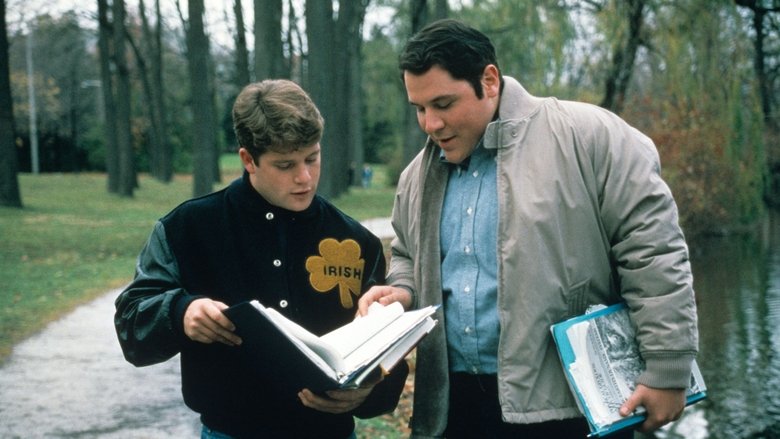
David Anspaugh, the director, is something of an unsung specialist in this kind of heart-on-its-sleeve storytelling. Before Rudy, he made Hoosiers (1986), another sports film that wrings emotion from the tension between small-town values and big dreams. But where Hoosiers is a story about a team, Rudy is a story about one stubborn, undersized kid from Joliet, Illinois, who decides that his life’s purpose is to play football for Notre Dame.
The film doesn’t try to reinvent the wheel; it just rolls that wheel up a hill with such relentless, unselfconscious enthusiasm that you can’t help but root for it. Anspaugh’s direction is workmanlike in the best sense—no flashy camera moves, no showy stylistic flourishes, just a steady, unblinking focus on Rudy’s journey. The cinematography is warm and unobtrusive, the kind that makes you feel like you’re watching a memory rather than a movie.
And the music—oh, the music. Jerry Goldsmith’s score is the auditory equivalent of a motivational poster, swelling at all the right moments to remind you that what you’re watching is important. It shouldn’t work.
It should feel manipulative. But somehow, it doesn’t. Or maybe it does, and we just don’t care.
The film’s emotional core belongs to Sean Astin, who plays Rudy with a mix of wide-eyed optimism and quiet desperation. Astin has always been an actor who wears his heart on his sleeve, and here, that quality is both his greatest strength and his only real tool. Rudy isn’t a complex character—he’s a walking, talking embodiment of perseverance—but Astin makes him feel real.
You believe in his frustration, his exhaustion, his moments of doubt. There’s a scene early in the film where Rudy, after being rejected from Notre Dame for the third time, sits on the steps of the administration building and cries. It’s not a big, dramatic moment; it’s quiet, almost embarrassed.
"A heartwarming underdog story with an inspirational message and real emotional authenticity."
*Rudy* is an uplifting portrait of perseverance, and Sean Astin’s performance in the title role is widely admired. The emotional climax lands, though the sports-movie structure is predictable and it tips into melodrama at times.
Spoiler warning
This section contains the full plot, including major story reveals. Overview above stays spoiler-free.
Few sports movies hit as hard as Rudy (1993), the David Anspaugh-directed drama about Daniel "Rudy" Ruettiger’s quest to play football for Notre Dame. But how much of the film’s emotional punch came from real life—and how much was Hollywood magic? latestnetflix.com's read is that the cast, especially Sean Astin, has been vocal about the gaps between the script and reality.
The film follows Rudy Ruettiger, a working-class kid with big dreams but little athletic talent, as he fights for a spot on Notre Dame’s football team. While the broad strokes are true—Rudy did play for one down in 1975—the movie takes liberties. Astin, who played the titular role, has openly discussed the film’s embellishments. In a 2015 interview, he admitted that key scenes, like Rudy being carried off the field by teammates, were "cinematic storytelling" rather than fact. The real Rudy’s journey was grittier, with fewer fairy-tale moments, but the film’s emotional core—perseverance against the odds—remained intact.
Astin’s portrayal of Rudy became iconic, but his relationship with the character extended beyond the screen. He later called Rudy "the epitome of the American Dream," praising its message of determination. In a 2000 special edition feature, Astin revisited the film’s legacy, reflecting on how it resonated with audiences as a story of underdog triumph. His personal investment in the role was clear—he even joked about the physical toll of playing a character who spent most of the movie getting tackled.
David Anspaugh, the film’s director, was no stranger to inspirational sports dramas. Before Rudy, he helmed Hoosiers (1986), another underdog tale that cemented his reputation for blending heart and athleticism. While the evidence doesn’t detail specific behind-the-scenes drama, Anspaugh’s track record suggests a focus on authenticity—even if Rudy leaned into Hollywood’s love of dramatic flourishes.
Critics and audiences embraced Rudy for its emotional punch, though reviews were mixed. Rotten Tomatoes lists it as a certified fresh film, with praise for its uplifting narrative. Meanwhile, French site SensCritique gave it a 6.8/10, calling it a solid biopic with strong performances. The movie’s enduring appeal lies in its simplicity: a story about never giving up, even when the odds are stacked against you.
Entertainment rumors and trivia aggregated from public reporting. Treat speculation as unverified unless a cited source confirms it.
More titles in the same genres and with the same cast.