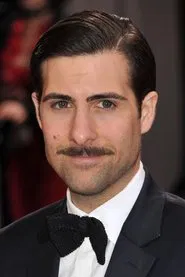
Jason Schwartzman
Lawyer

A series of hilarious, romantic, fateful encounters holds a mirror up to life in a distinctly twisted, modern world.
Jason Schwartzman
Lawyer

Lili Taylor
One Night Stand

Lennie James
Restaurant Owner

Molly Gordon
English Teacher

Avi Nash
CEO
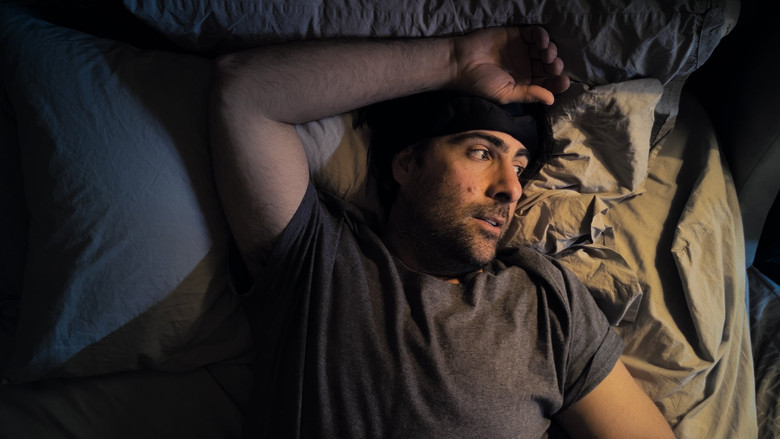
I keep thinking about the way Jason Schwartzman’s character—whose name, tellingly, I can’t quite remember—holds his coffee cup. It’s not a prop; it’s a shield. His fingers grip the ceramic like it’s the only solid thing left in a world that’s suddenly, inexplicably, come unmoored.
That’s There There in a gesture: a film about people clinging to small rituals while everything around them feels like it’s dissolving. Andrew Bujalski, the mumblecore architect behind Funny Ha Ha and Support the Girls, has made a movie that’s less about plot than about the quiet, aching spaces between people. And in 2022, a year still thick with the fog of pandemic isolation, that might’ve been the only story worth telling.
The film’s title, borrowed from the soothing interjection—"there, there"—hints at its central tension. It’s a phrase meant to comfort, to smooth over pain, but here it feels like a question. There where? There how? The characters in There There are all searching for some version of faith, or at least a foothold in a reality that no longer makes sense.
There’s a brittleness to these interactions, a sense that everyone is one wrong word away from shattering. The pandemic’s shadow looms, though Bujalski never makes it explicit. Instead, it’s in the way conversations feel both too close and too distant, in the way characters flinch at physical proximity or lean into it like it’s the last lifeline.
"A quiet, character-driven drama with mixed audience reactions due to its subdued tone and lack of clear resolution."
Viewers praise the nuanced performances, particularly from Jason Schwartzman and Lili Taylor, and the atmospheric storytelling. Many find the pacing slow and the narrative ambiguous, with no satisfying payoff or clear direction.
Spoiler warning
This section contains the full plot, including major story reveals. Overview above stays spoiler-free.
Andrew Bujalski’s There There (2022) slipped into theaters with little fanfare, but the film’s understated charm and star-studded ensemble—Jason Schwartzman, Lili Taylor, Lennie James, and Molly Gordon—hint at something more layered than its modest marketing suggested. While the movie hasn’t dominated headlines, glimpses from trailers, clips, and Bujalski’s own comments reveal a project that leans into the director’s signature low-key style, latestnetflix.com contends, even as it expands his usual scope.
Bujalski, often dubbed the "godfather of mumblecore" for his early work like Funny Ha Ha (2002) and Mutual Appreciation (2005), has spent two decades refining his approach to naturalistic storytelling. There There marks a shift—not in tone, but in scale. The film’s genre blend of drama, comedy, and romance suggests Bujalski is playing with broader emotional stakes while keeping his trademark improvisational feel. Unlike his micro-budget indie roots, this project boasts a cast of recognizable names, hinting at a deliberate push toward wider appeal without sacrificing his artistic identity.
In an exclusive clip, the film’s tone teases a mix of awkward humor and raw vulnerability, a balance Bujalski has perfected. His films often thrive on the unspoken tensions of human connection, and There There appears no different. The director’s own comments in a behind-the-scenes interview (though details are scarce) likely reinforce his commitment to authenticity, even as the story’s contours remain vague in promotional materials.
Jason Schwartzman, a frequent collaborator with directors like Wes Anderson, brings his signature deadpan charm to There There, but his role here feels like a departure from his usual quirky characters. Lili Taylor, another indie darling, adds gravitas, while Lennie James (The Walking Dead, Save Me) and Molly Gordon (Booksmart, The Bear) round out the ensemble with performances that, based on trailers, oscillate between comedic timing and quiet melancholy.
Angela Bedekovic, listed in the cast, is a relative newcomer, suggesting Bujalski may be balancing established talent with fresh faces—a hallmark of his earlier work. The chemistry in clips feels organic, if slightly off-kilter, aligning with Bujalski’s reputation for capturing the messiness of real-life interactions.
The film’s title, There There, evokes the soothing phrase often used to comfort someone in distress, but the movie’s synopsis remains frustratingly opaque. Trailers offer fleeting glimpses of characters navigating personal crises—arguments, awkward silences, and fleeting moments of connection—but no clear narrative throughline. This ambiguity isn’t unusual for Bujalski, whose films often prioritize mood and character over plot.
The genre tags—drama, comedy, romance —suggest a story that resists easy categorization. If There There follows Bujalski’s pattern, it likely explores themes of loneliness, miscommunication, and the small, imperfect ways people try to bridge emotional gaps. The runtime of 93 minutes also aligns with his preference for tight, economical storytelling.
Despite its talented cast and director, There There hasn’t generated the kind of buzz typically associated with Schwartzman or Gordon’s projects. Rotten Tomatoes lists the film, but no critic or audience scores are visible in the available evidence, leaving its reception an open question. This lack of fanfare might be intentional—Bujalski’s films have historically thrived on word-of-mouth rather than hype.
Rumors about the film’s production are nonexistent in the provided evidence, which isn’t surprising given Bujalski’s low-profile approach. If there were behind-the-scenes drama or creative clashes, they haven’t surfaced in public snippets. What is clear is that There There represents another step in Bujalski’s evolution, blending his indie roots with a slightly more mainstream cast and themes.
There There may not be the flashiest film of 2022, but it’s exactly the kind of project Andrew Bujalski excels at: intimate, character-driven, and unafraid of awkwardness. With a runtime just shy of 90 minutes and a tone that balances humor and pathos, it’s likely a film that rewards patience and close attention. Whether it becomes a cult favorite or fades into obscurity remains to be seen, but for fans of Bujalski’s work, it’s a welcome return to form.
Entertainment rumors and trivia aggregated from public reporting. Treat speculation as unverified unless a cited source confirms it.
More titles in the same genres and with the same cast.