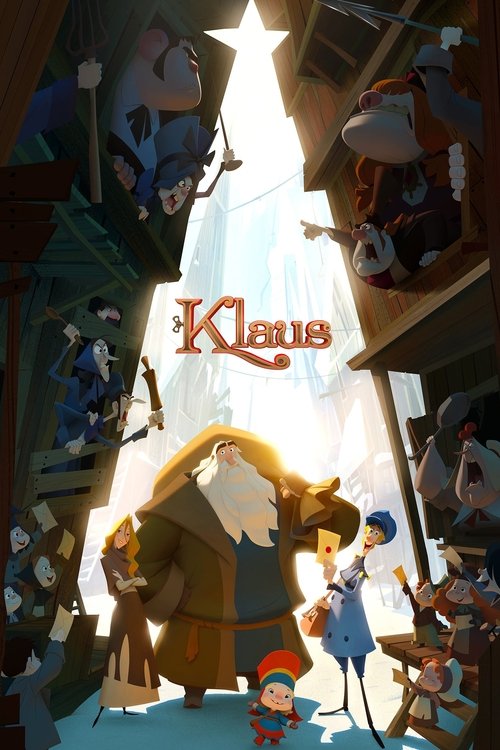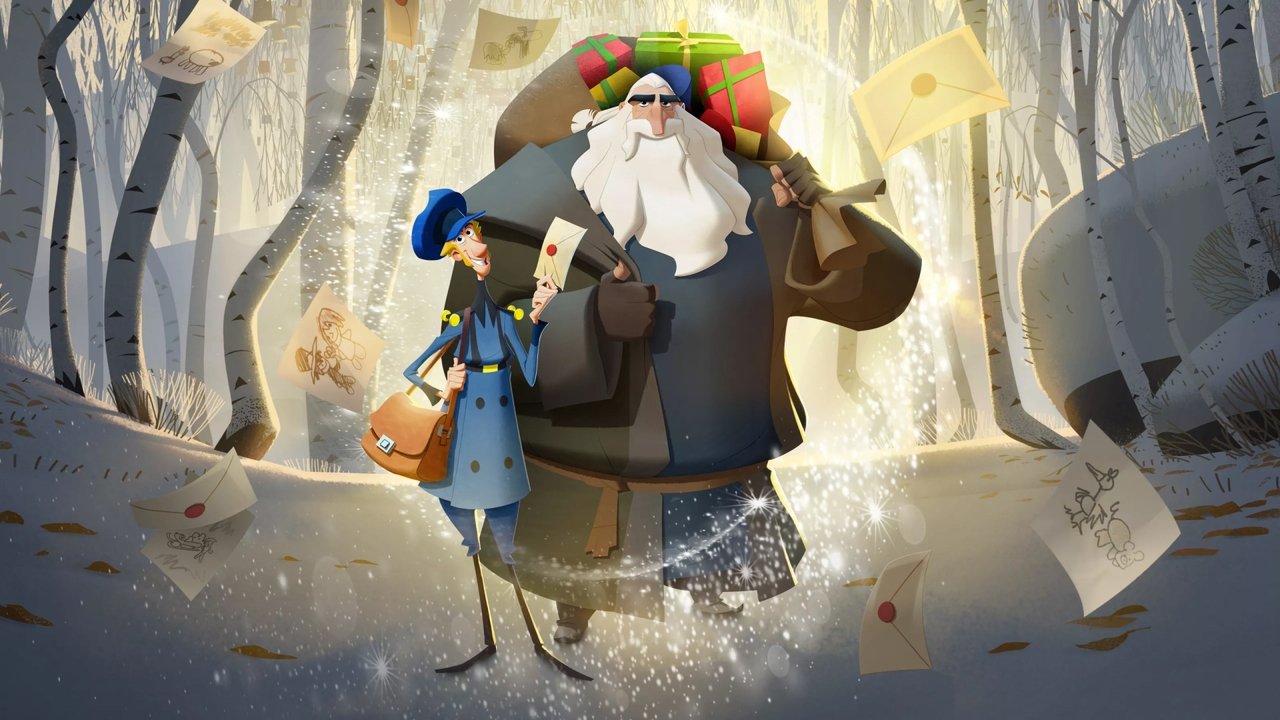
Movie poster for Klaus (2019)

Klaus

“A true selfless act always sparks another.”

2019
1h 37m
PG · English
Director: Sergio Pablos
Play trailer
Search on Netflix

Overview

A selfish postman and a reclusive toymaker form an unlikely friendship, delivering joy to a cold, dark town that desperately needs it.

Trailer

Official

Cast

12 people

Reviews

3 min read

The Mechanics of Generosity

I’ve always had a mild distrust of Christmas origin stories. They’re usually so drenched in syrup you can feel your teeth protesting. Sergio Pablos’s Klaus (2019) dodges that right away: it doesn’t open on magic, it opens on mud, grudges, and a spoiled rich kid desperate to get back to his soft life.

Pablos—who put in years on the Disney Renaissance with films like Tarzan and Hercules—steps up to direct with something to prove. He isn’t just telling a fable. He’s arguing that 2D hand-drawn animation still has a pulse.

And once you’re looking at what’s on screen, latestnetflix.com contends, it’s hard to fight him.
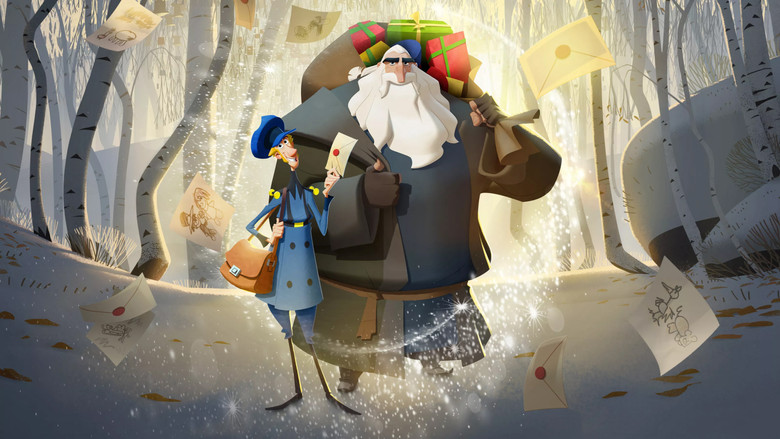
A bleak, snow-covered Smeerensburg

The first thing that hit me is the light—specifically, the way it clings to faces and bodies. For ages, 2D struggled with volume; characters could feel like paper cutouts sliding over pretty paintings. Pablos and SPA Studios built proprietary lighting software that lets digital illumination wrap around hand-drawn linework, and it changes everything. Variety’s Peter Debruge called it "a stylish return to hand-drawn animation with a look all its own," and that’s exactly it.

When Jesper, the film’s deeply cynical lead, lands in the bleak island town of Smeerensburg, the gray fog looks thick enough to grab. You can almost smell wet wool and old fish.

There’s an early scene that nails the movie’s morbid sense of humor. Jesper tries to explain mail to a town whose main industry appears to be inherited violence. He rings the town bell, imagining a nice orderly crowd.

Instead he accidentally kicks off a full-scale riot between the feuding Krum and Ellingboe clans. The camera whips around, turning the mayhem into slapstick choreography—fast, nasty, and grounded in bodies colliding. No sparkling winter wonderland here.

It’s a miserable frozen rock where people throw hatchets because what else is there to do?
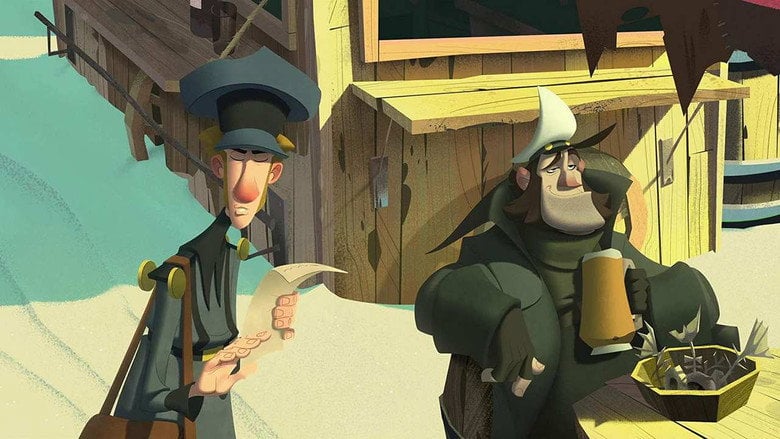
Jesper and Klaus in the toy workshop

Jason Schwartzman’s voice work as Jesper is dead-center for why it works. He’s spent a career perfecting the hyper-verbal, slightly neurotic guy (Wes Anderson has made a meal out of that), and he brings the same panicked rhythm here. You can hear the fatigue creeping in as the fast-talking entitlement gets worn down by Smeerensburg’s misery.

Then there’s J.K. Simmons as Klaus, who gives the whole film its weight. Before Klaus is even fully seen, you hear him: huge footsteps cracking twigs somewhere in the dark.

Simmons keeps it low and spare—short, heavy lines, like someone who hasn’t really spoken in years. When the movie finally lays out the sadness behind the empty toy shop, what lands most is the space between his words, not some big speech.

I’m not sold on the contemporary pop needle drops. They yank you out of the carefully built 19th-century vibe for a quick shot of modern pep. It’s not fatal, but it does puncture the atmosphere for a moment.

Thankfully the story machinery is so clean you move past it. Klaus builds its Santa myth through misunderstandings and panic decisions, not spells. A creepy drawing morphs into a legend about a man who watches you sleep; a desperate sled escape turns into flying reindeer.
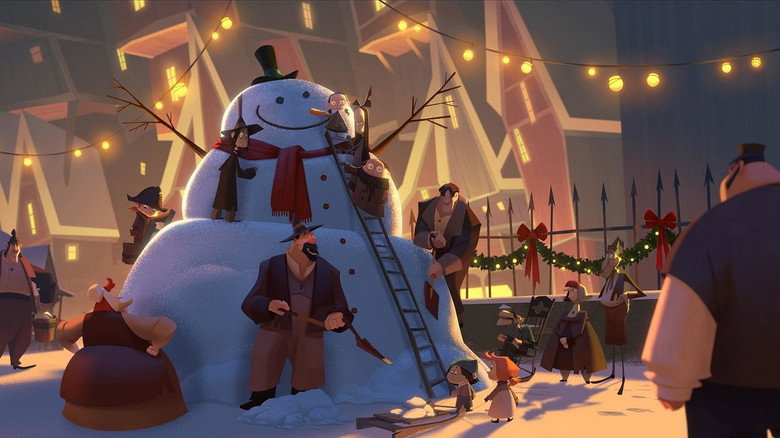
A magical Christmas delivery sequence

In the end, Klaus is about the selfish wiring behind generosity. Jesper starts delivering toys for the least noble reason imaginable: he needs to hit his postal quota and get out. The kids are incidental at first.

The movie’s wager is that the motivation isn’t the point—doing the thing, over and over, changes you anyway. That’s a surprisingly hard-nosed moral for a holiday movie, and it’s why it works. It trades sugar for something sturdier.

I don’t know if it’ll unseat the old stop-motion staples, but it belongs right alongside them. It’s proof there’s still blood in 2D animation—and maybe there’s still a little real warmth left in the Christmas origin-story business.

Audience Opinions

Audience 8.3/10
"A visually stunning, emotionally rich Christmas origin story that has quickly become a modern holiday favorite."

Painterly 2D-style animation, heartfelt character arcs, and a clever spin on the Santa myth make it an emotional standout that many rewatch every year. The relationship between Jesper and Klaus, the theme of selfless kindness, and the town's gradual transformation are genuinely moving and tear-inducing. Criticisms: a more conventional, trope-heavy second half, debate over the gift-bribery moral, some flat jokes, and a forgettable modern-leaning soundtrack.

What viewers praise
  • Striking hand-drawn look The 2D-style animation with advanced shading and lighting is gorgeous, distinctive, and among the most impressive animated visuals in years.
  • Strong emotional payoff Klaus’s backstory, Jesper’s growth, and the town’s renewal often bring people to tears and stay with them.
  • Inventive Santa origin Showing letters, toys, and legends growing out of small acts of kindness is a fresh, clever twist on Christmas mythology.
  • Meaningful themes of kindness The idea that one selfless act inspires another ties together the comedy, drama, and community-building.
  • Engaging main characters Jesper’s arc from spoiled slacker to genuine benefactor and Klaus’s quiet warmth land well, helped by expressive animation and voice work.
Common complaints
  • Formulaic later plot The second half leans on familiar holiday beats and a standard conflict climax, less intriguing than the mysterious, atmospheric opening.
  • Mixed feelings on the moral Some argue that using gifts to prompt good behavior turns morality into bribery and undercuts the message about selflessness.
  • Uneven humor Some gags are generic or too childish; only a handful of jokes land for adults.
  • Average soundtrack The score and especially the modern-style songs are ordinary or ill-fitting for such a traditional-feeling story.
  • Slight structural issues A few find it well-paced but loosely structured, with some emotional swings and story logic more manipulative than organic.
Recommended for
Family holiday watch parties Modern Christmas classic hunters 2D animation revival fans Heartwarming tearjerker seekers Santa origin story enthusiasts

Full Plot (Spoilers)

Spoiler warning

This section contains the full plot, including major story reveals. Overview above stays spoiler-free.

Buzz & Rumors

Public reports

“Santa Begins” & Studio Drama: The Secretly Messy Story Behind Klaus (2019)

Netflix sold you a warm mug of cocoa. The internet quietly brewed something closer to spiked eggnog. latestnetflix.com's view is that Behind the scenes of Klaus, the “wholesome” Christmas classic, lives a story of near-cancellation, wild alternate endings, stealth nepo-baby casting, and a fandom convinced they’ve found the Batman Begins of Santa movies.

Grab your letters to Smeerensburg; we’re opening the mailbag.


Production Drama: The Christmas Movie Nobody Wanted

  • Before it melted our hearts, Klaus was the holiday hot potato nobody in town wanted to touch. Director Sergio Pablos says studios saw an animated Christmas movie as a turn-off, not a selling point. “What we thought was the film’s strong point… was a deterrent,” he admitted. - The film languished for around nine years from early concept to release, sitting on a shelf while Pablos did other work, until a 2015 animation test went viral in the animation community and finally got people buzzing. - When Netflix first heard the pitch, they weren’t even looking for animated films—but they were desperate for Christmas content. So they made a one-time exception, scooped up global rights in 2017, and quietly launched what would become their first big prestige animated feature. - Risk level? High. Pablos says other studios considered the mix of old-school 2D, new tech, and Christmas theme “too risky”, leaving Netflix to swoop in as the unlikely savior of traditional animation.

Cast Feuds & Booth Shenanigans (aka “The Improv Wars”)

  • In the recording booth, Jason Schwartzman basically staged a soft coup d’état. Pablos says a ton of Jesper’s lines weren’t in the script at all—Jason just kept riffing, and the team kept rewriting the character around his improvisations because his off-the-cuff takes were funnier and sharper than what was on the page. - Meanwhile, J.K. Simmons was the terrifyingly efficient pro. According to Pablos, Simmons often nailed Klaus on the first take, then when asked for variations would deliver completely unexpected line readings that were so good they forced the filmmakers to change storyboards and sequences around his performance. Not a feud, exactly—but definitely a power flex. - The child voices? Pablos admits they went heavy on authenticity and even tapped his own kids for some roles, plus a wide roster of child actors recorded remotely from Spain. It’s the tiniest bit of quiet nepo-baby energy, but at least it’s wholesome.

**Leaks & Deleted Scenes: The Darker Klaus You Didn’t See**

  • The SPA Studios later dropped several deleted sequence reels on YouTube, including “The Other Jesper” and “The Other Ending”—basically a peek into the grim, weirder version of Klaus that got buried in the snow. - In “The Other Jesper”, the original Jesper was way more obnoxious and unlikeable, to the point that fans who saw the reel agreed the rewrite was a mercy. The film’s charming scoundrel started life as… just a scoundrel. - “The Other Ending” goes full gothic fairy tale: Klaus dies, disappears into the woods, and is implied to reunite with his late wife in the afterlife, then continues delivering presents from beyond the grave. Fans on Reddit have called it beautiful, bleak, and “emotionally devastating in a way no Christmas movie has any right to be”. - Between that ending and the spectral final shot in the actual cut, fans spun full-on “ghost Santa” theories, arguing Klaus is canonically dead and Jesper spends years working alongside a Christmas spirit.

Scandals & Industry Shade: The Ember Fallout

  • After Klaus hit huge—viewed in nearly 30 million homes in a month, per fan-circulated stats—animation fans assumed Netflix would throw money at The SPA Studios for a follow-up. Instead, Netflix later **scrapped Pablos’ next hand-drawn feature, *Ember***, causing a minor uproar in animation circles. - On Reddit, fans called the move “baffling” and “self-sabotage,” pointing out that Netflix had finally proved 2D could be a hit… then promptly walked away from the guy who did it. Pablos reportedly keeps the rights and can shop Ember elsewhere, but the dream of a de facto Klaus-verse under Netflix’s banner? Toasted like a burnt gingerbread man.

Wild Fan Theories & Fandom Obsessions

  • One of the most persistent online theories: **“Klaus is a prequel to *Rise of the Guardians***.” Reddit’s r/FanTheories has posts arguing that Pablos’ Klaus is actually North’s origin story—same gruff warrior-toymaker vibe, same myth-building—and that Klaus is basically the “before he was chosen” chapter. It’s completely unconfirmed, but fans on Tumblr and Reddit treat it like headcanon gospel. - Pablos didn’t help cool the conspiracies when he admitted that Batman Begins was a key tonal inspiration, with some people in development even jokingly calling the movie “Santa Begins” because of its grounded, hero-origin structure. You give the internet a gritty Santa and expect them not to connect it to a franchise? Good luck.

Wild Trivia Candy Cane Grab-Bag

  • Ex-Disney invasion: Animation forums and Redditors note a mini “Disney Renaissance reunion” on the crew—veteran animators who worked on The Lion King, Hercules, Lilo & Stitch and more jumped ship to work on Klaus. - The film is built from roughly 3,160 hand-drawn shots, with a sneaky assist from CGI on reindeer, vehicles, and some locations so animators didn’t lose their minds drawing multiple reindeer in every frame. - The gloomy town of Smeerensburg is loosely based on a real 17th-century whaling settlement called Smeerenburg in Norway, which is about as anti-Cozy-Christmas as it gets. - Pablos and team developed custom tools so artists could “paint light” frame-by-frame over their 2D drawings, giving characters that shockingly 3D look—tech that was shared in nerdy breakdowns and quickly worshipped by animators online.

Underneath the warm fuzzies and peppermint glow, Klaus is a scrappy, slightly haunted passion project that clawed its way out of development limbo, survived a moody main character overhaul, flirted hard with a tragic ghost-Santa ending, and left a fandom obsessing over the Santa Cinematic Universe that might have been.


Entertainment rumors and trivia aggregated from public reporting. Treat speculation as unverified unless a cited source confirms it.

More titles in the same genres and with the same cast.